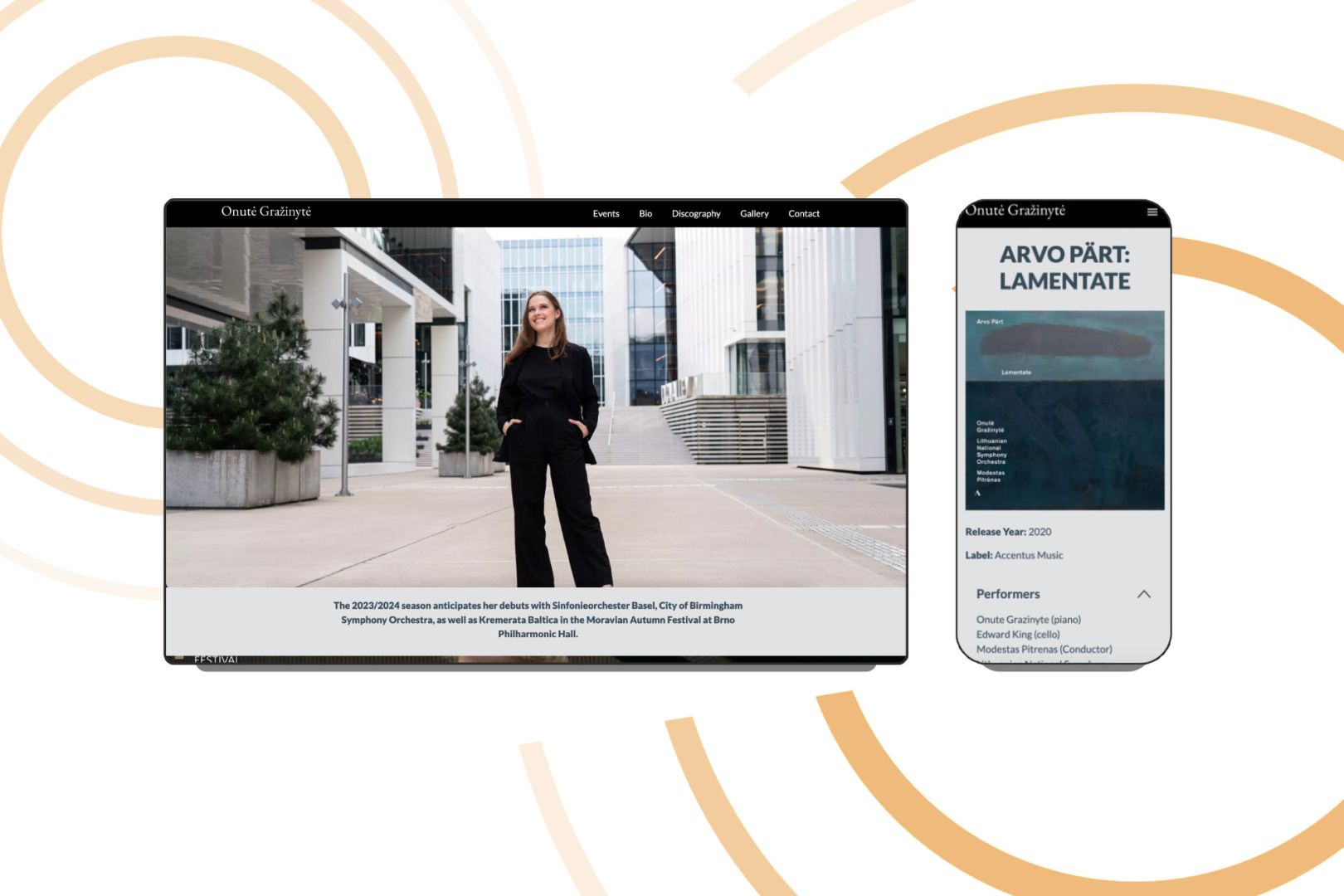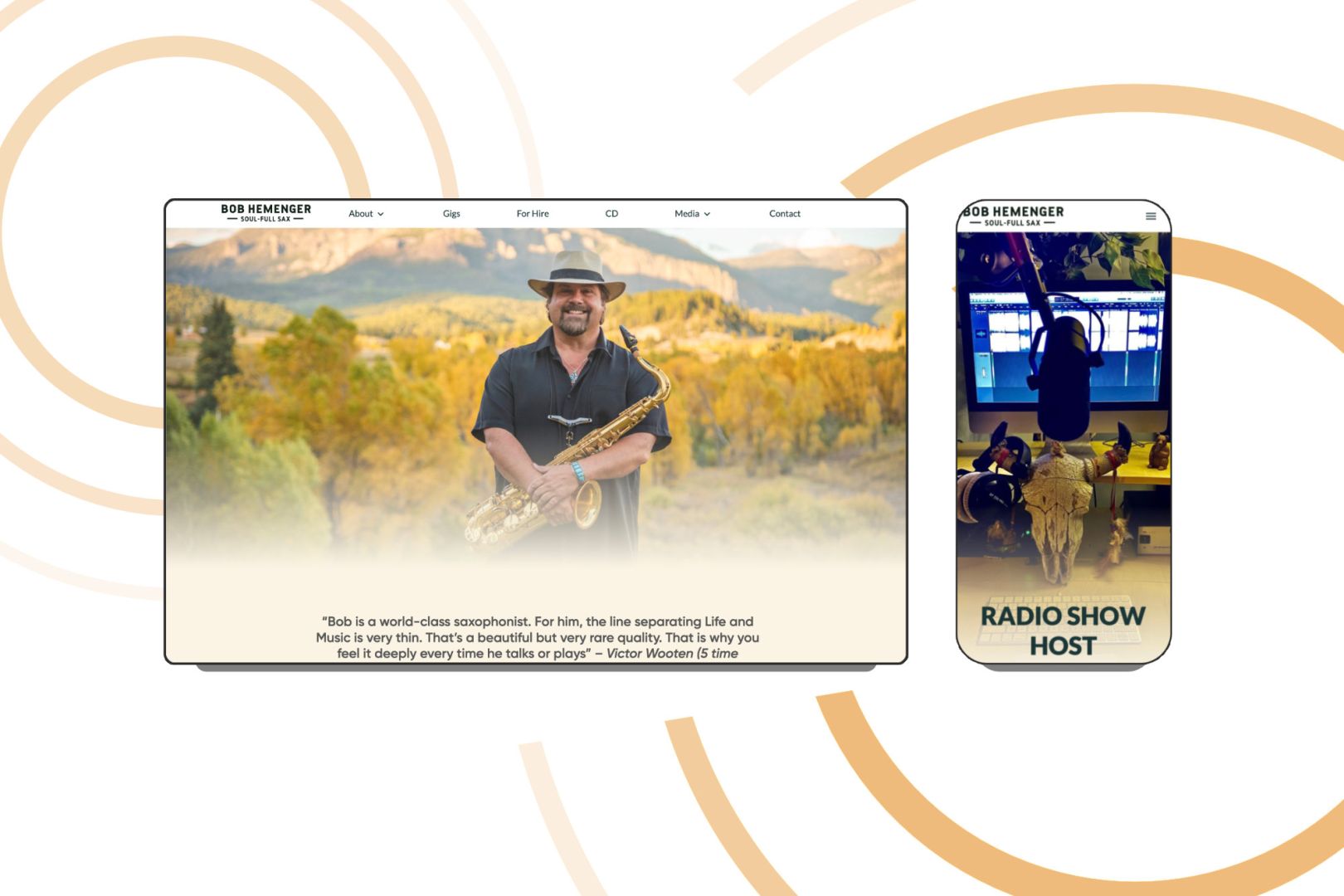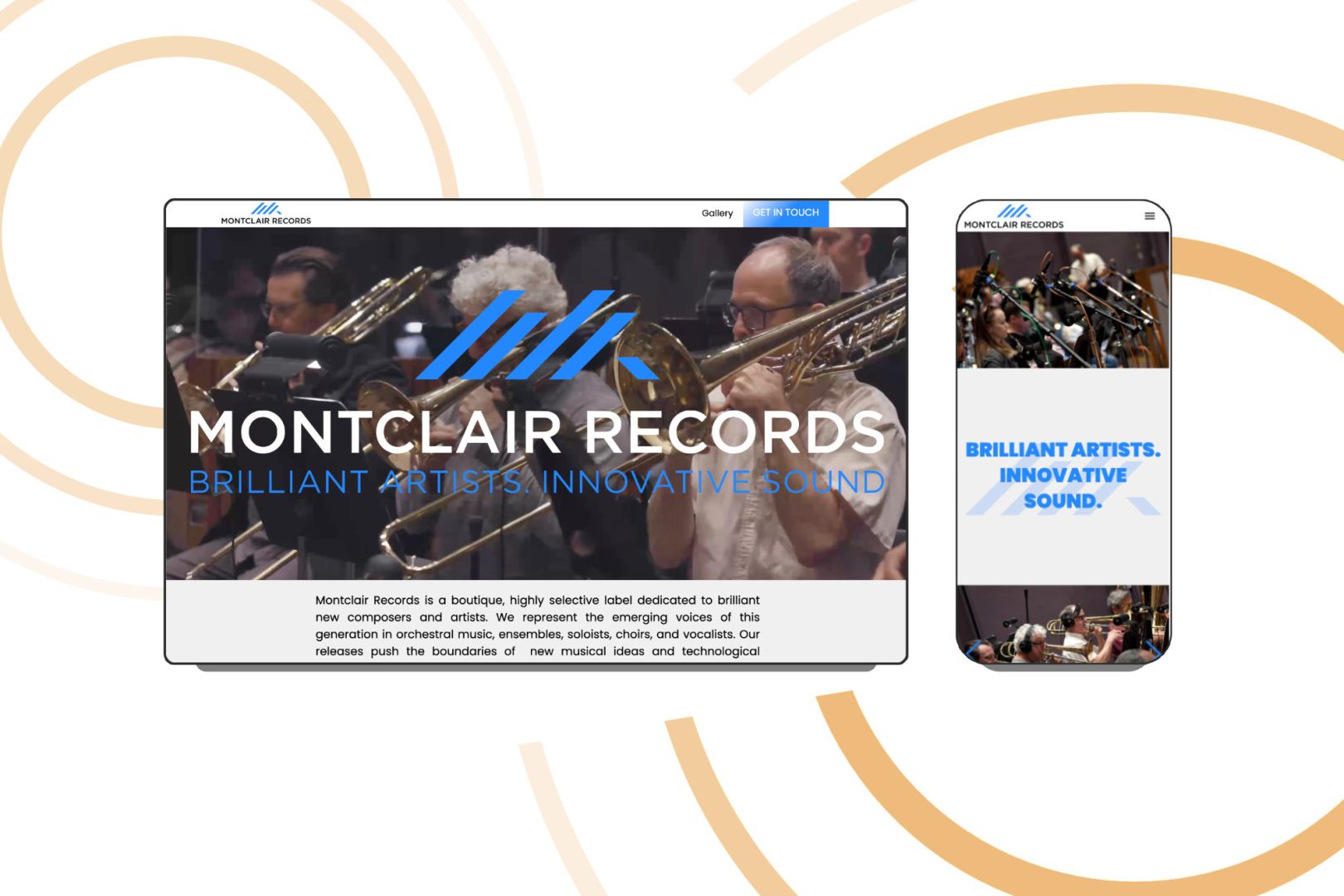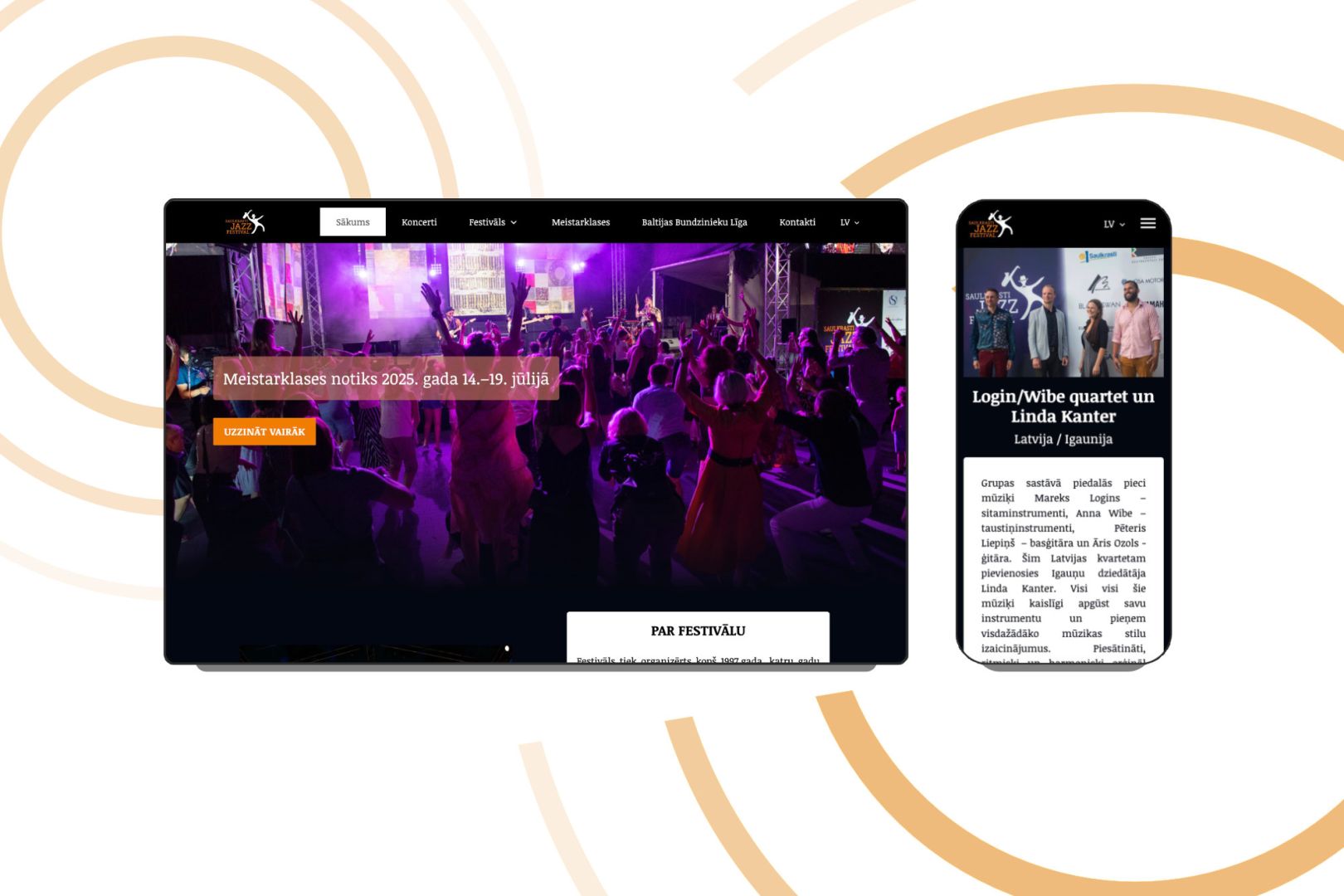
Website Design for Classical Musicians (quick start guide)
Table of Content
Introduction
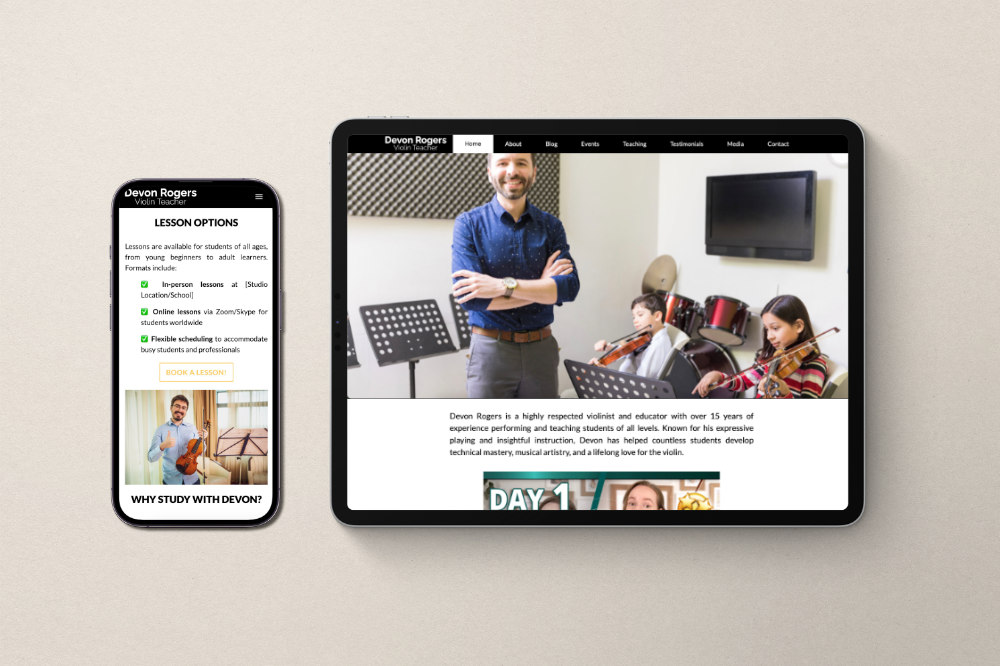
A professional website is an essential aspect of building an online presence and reaching a larger audience for classical musicians and arts organizations. A well-structured website with modern design and simple layouts can help musicians showcase their talents, promote upcoming performances, and connect with fans and music industry professionals.
Whether you are looking for a web designer to create your website or you want to create it yourself using a website builder or template, there are a few things you need to know about web design.
User Experience
First, your musician website should be visually appealing and easy to navigate. This includes a clean and simple layout, high-quality images and videos, intuitive navigation.
Decide on the most important pages of your website and create a clear hierarchy in your navigation menu. Each page should serve only one purpose and provide visitors with the information they expect to find there.
For the best user experience, don't overload your home (starting) page with information. Provide your visitors with a short bio, a few of your upcoming events, the latest news, CDs etc. Make it easy for visitors to find their way around and provide links to pages where they can learn more.
Color and Typography
Choose your color scheme and typography before you start designing your website. The size of your typography will affect every design element, so if you decide to change it later, you may need to make many additional adjustments to make it fit.
You can use platforms like mycolor.space and colorhunt.co to choose the color palette you like and websites like dribbble.com and www.awwwards.com for web design inspiration.
Essential pages
Bio
Every website should include a bio or artist statement. This provides visitors with a brief overview of the your background and accomplishments.
It is also a great opportunity to showcase your unique style and approach to music.
Enhance your bio with images and videos. You should also include download links to long and short versions of you bio here.
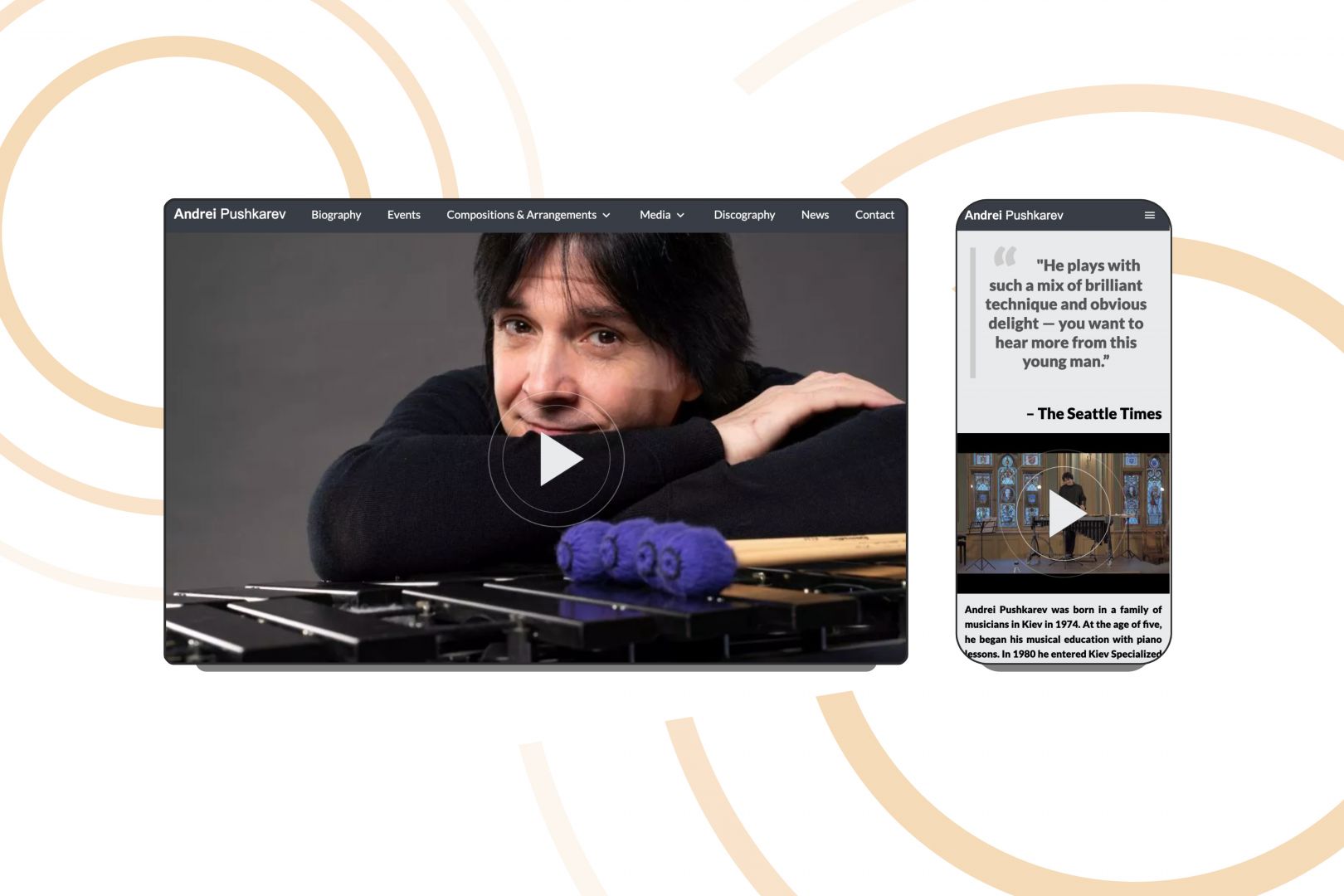
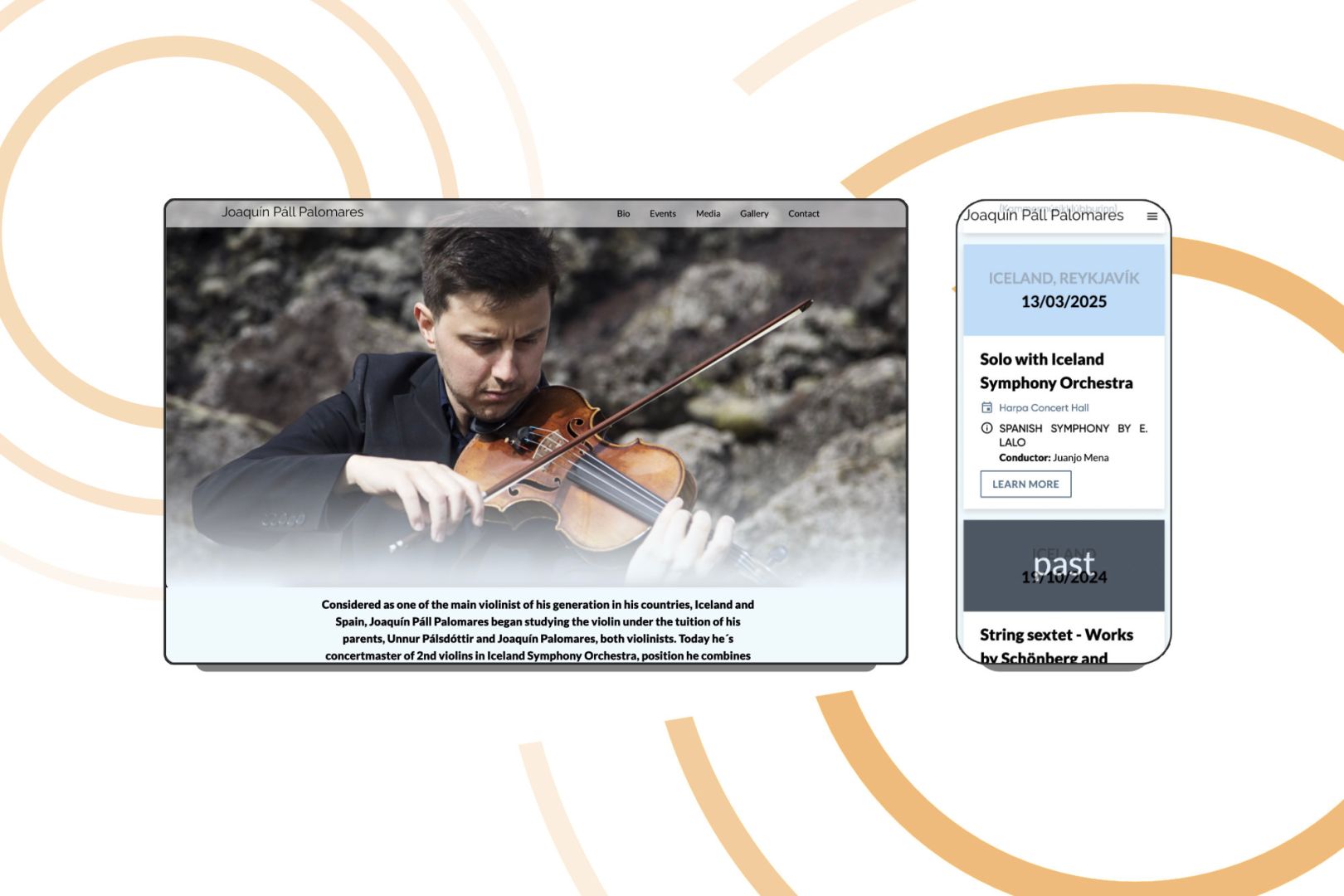
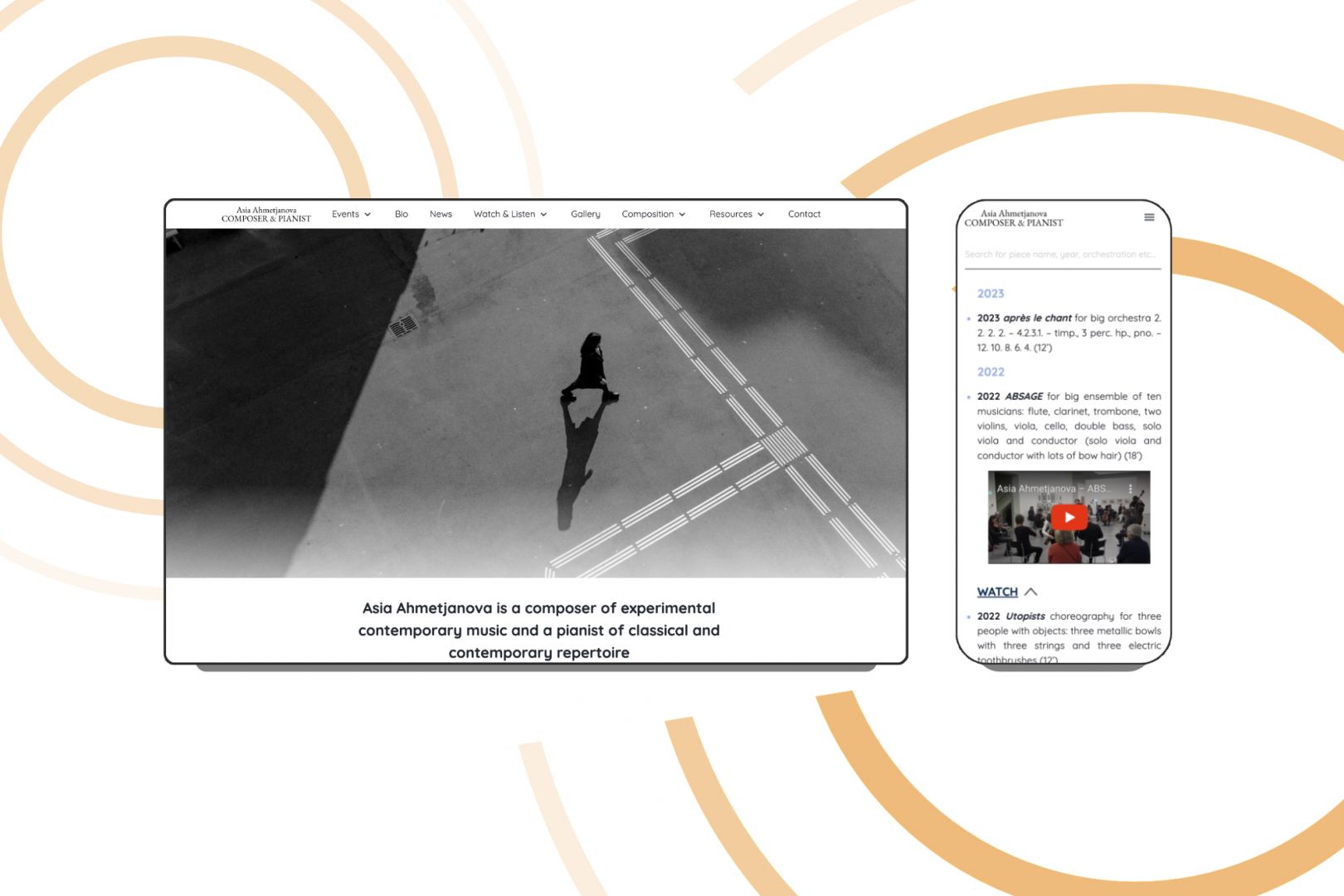
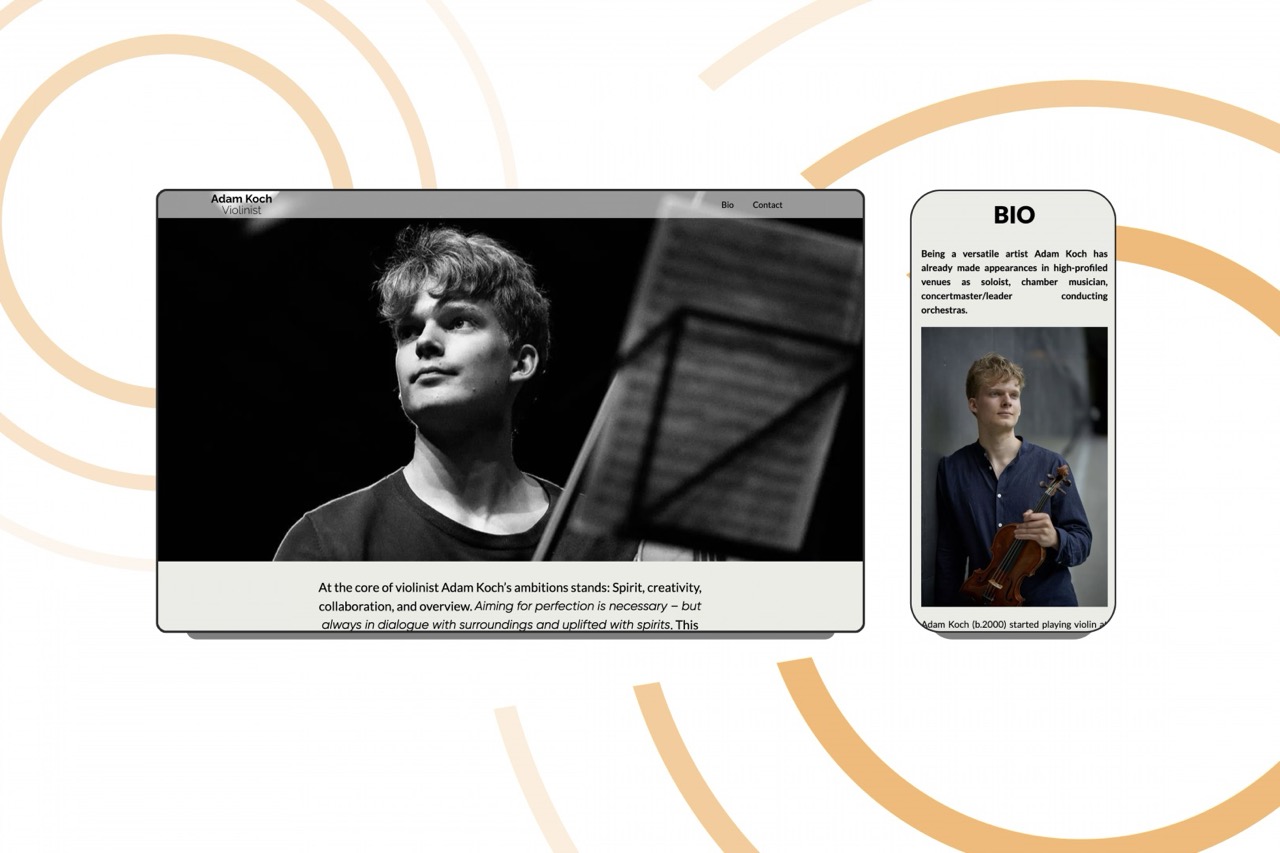
Here is an example of a simple biography page we created with photos and videos.
Calendar
Every website for a classical musician should also include a calendar of upcoming performances and events. This allows visitors to stay informed about where and when they can see you perform.
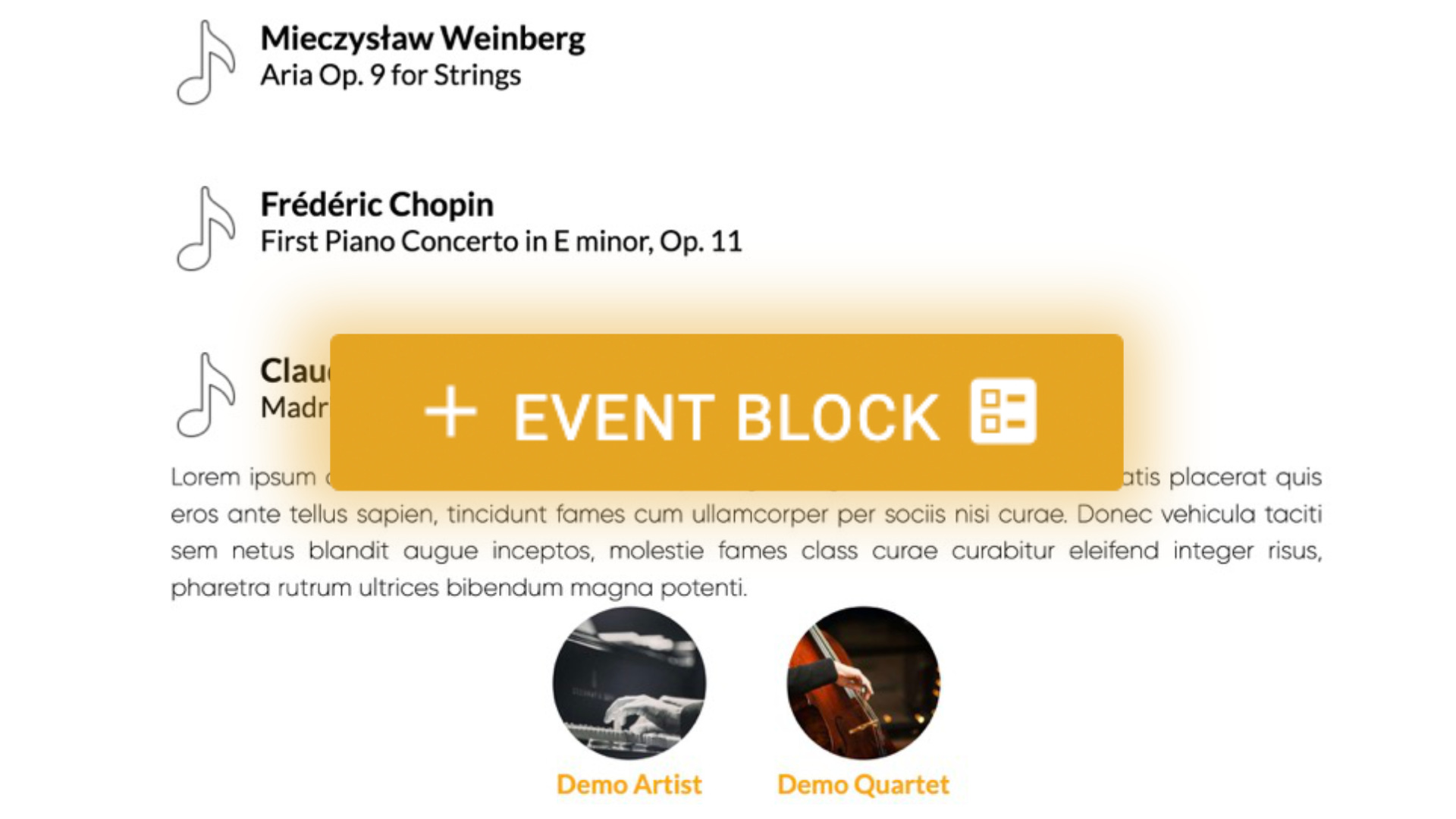
Always include a detailed program, program notes, a list of artists, and any other information about the concert that you can provide.
Even after your event has passed, this information can attract classical music lovers from search engines when they search for a performer, orchestra, composer, conductor or program you have posted on your site. This is especially true if you perform new music or programs by lesser-known composers.
If you are looking for a website template, you should make sure that it includes an event calendar where you can save and reuse concert venues and their address, as this will greatly increase the speed of publishing upcoming events. You should also check if the template allows you to duplicate your existing events and make some changes so that you do not have to copy/paste the same information every time.
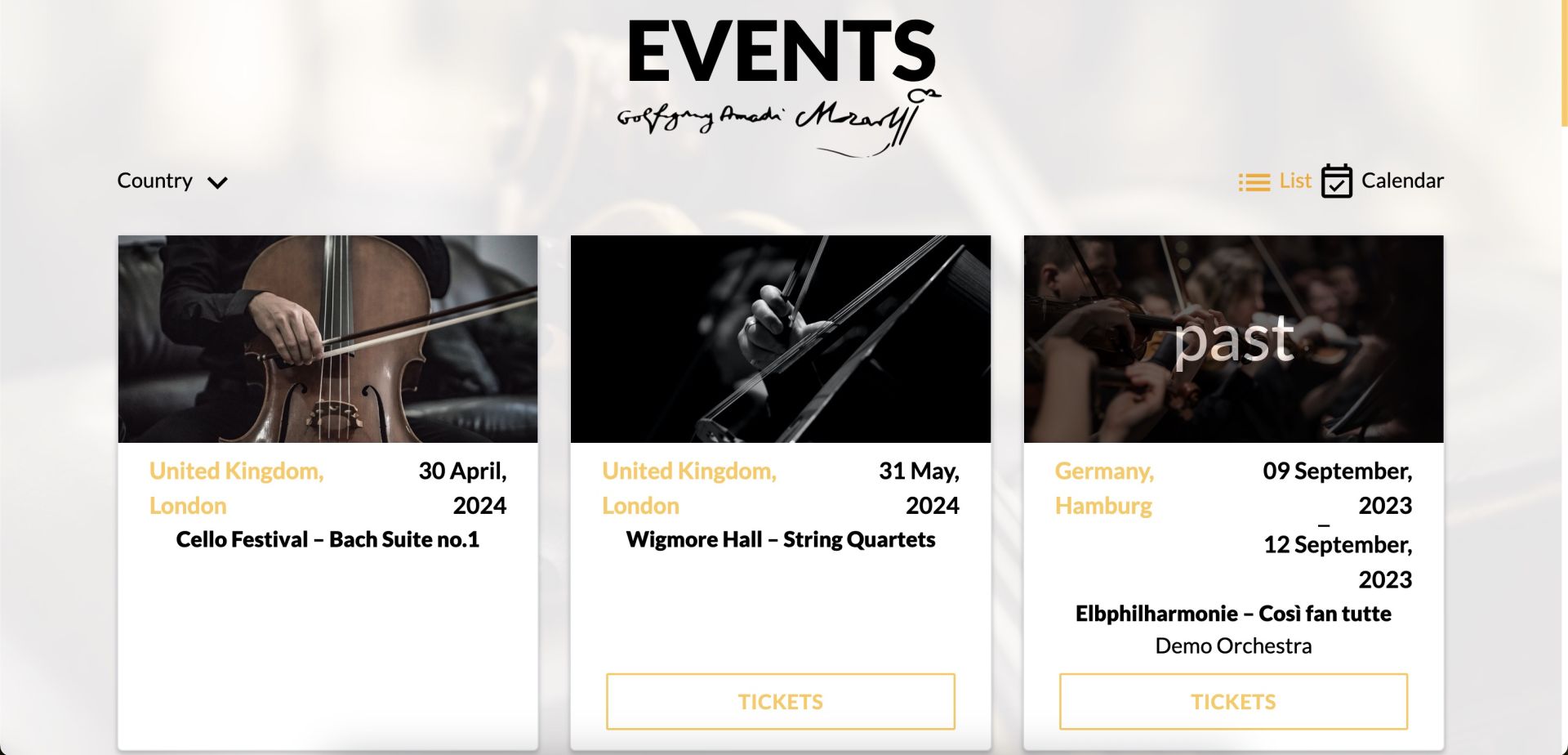
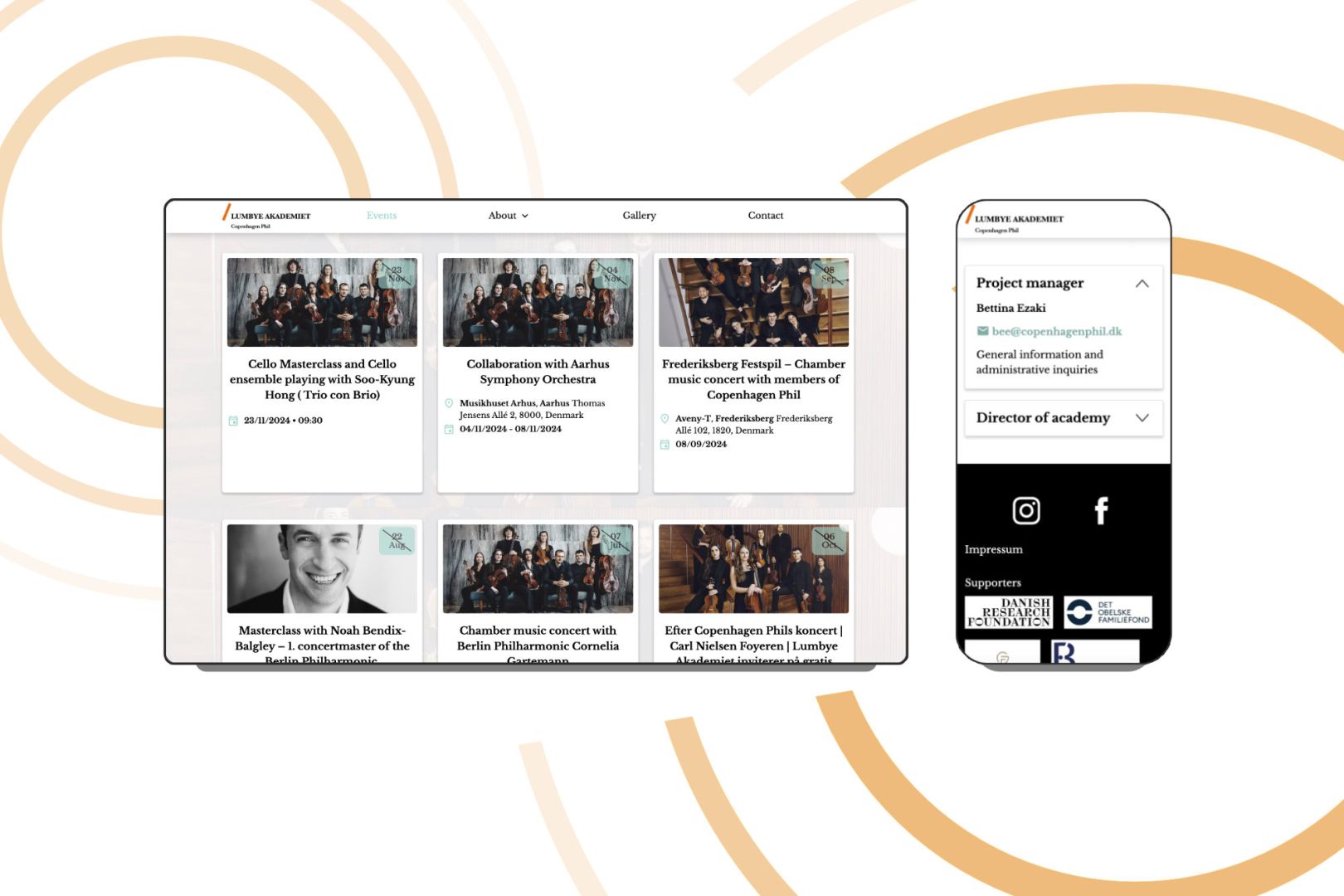
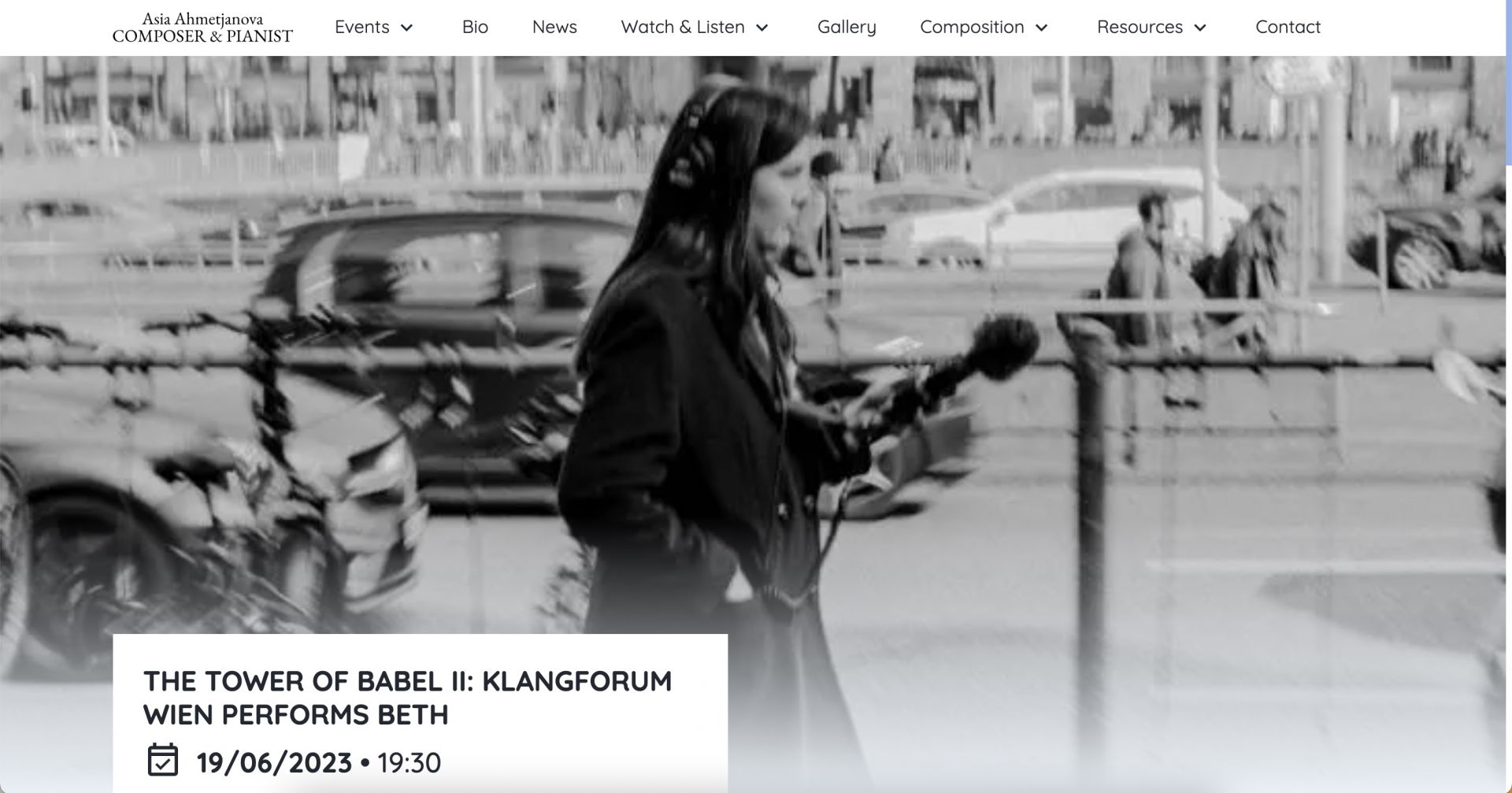
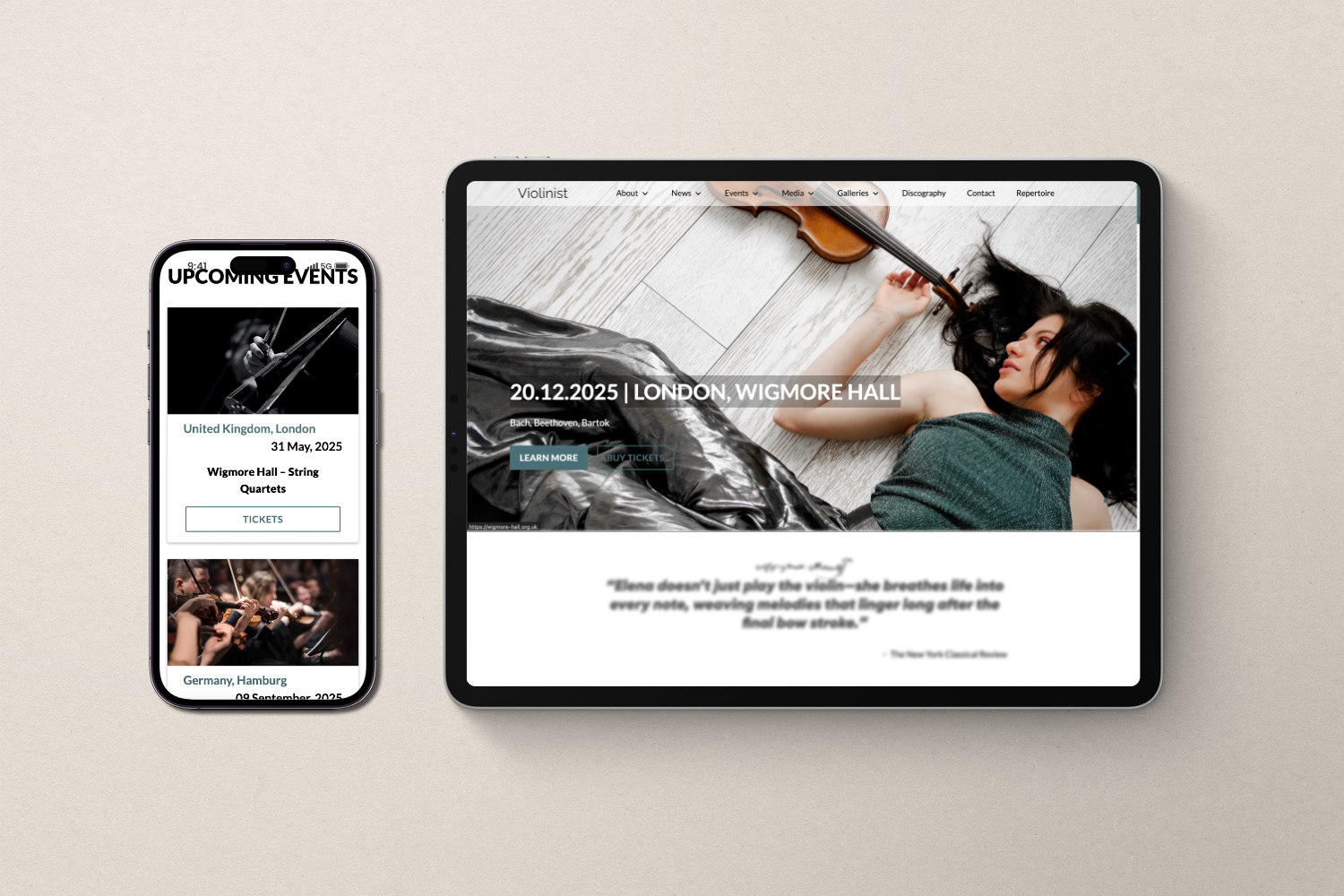
Here is an example of the list of events and a page of a single event we created.
Blog or News
A blog or news section is also an important feature for a classical musician's website. This allows you to share your thoughts, knowledge and insights, and establish yourself as an expert and authority in your field.
This content has a great potential to bring visitors from google search results. To give yourself the best chance of ranking on page 1 of search results, you can use tools like lowfruits.io and marketmuse.com to research the keywords and optimize your articles.
Media
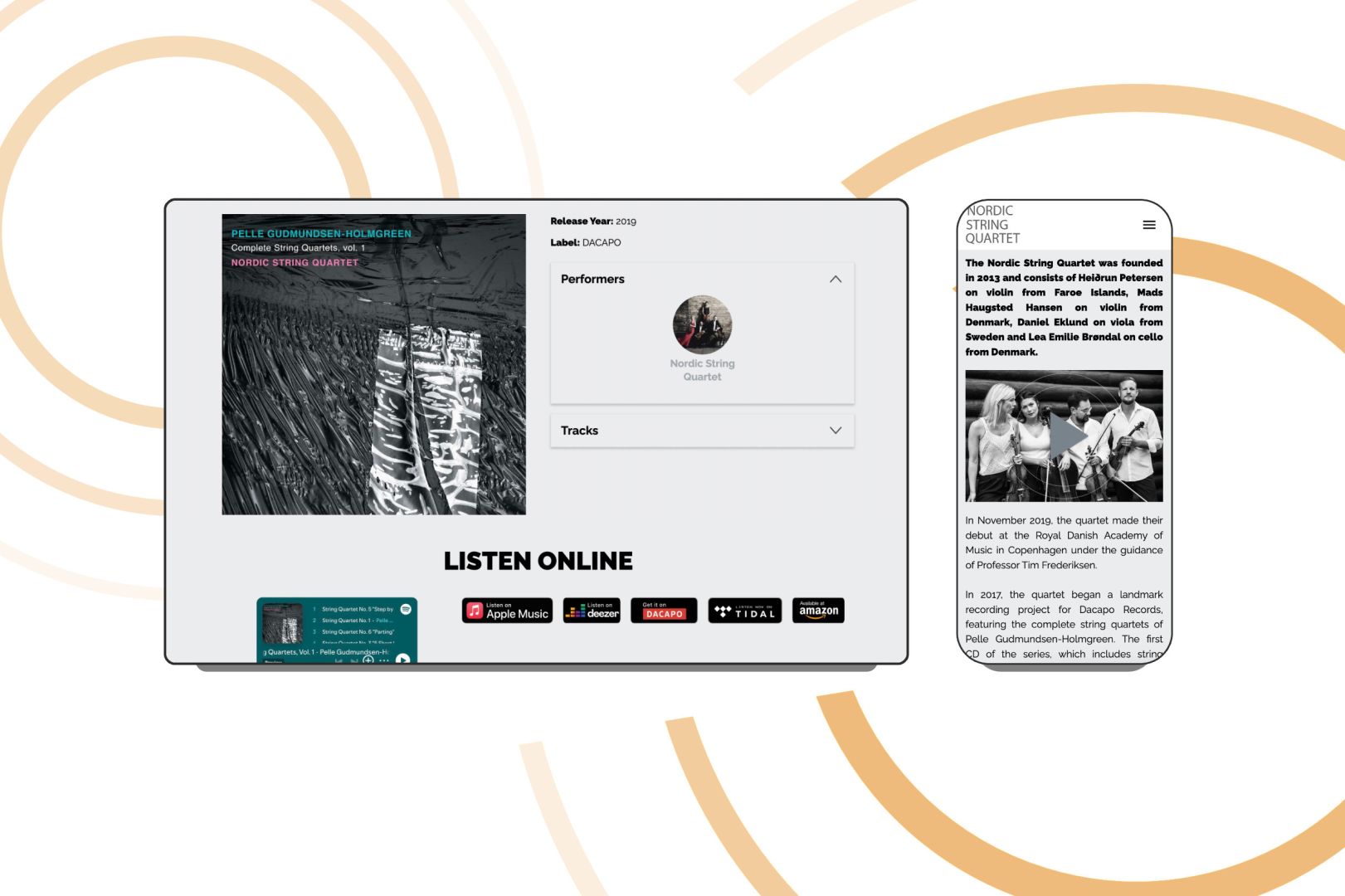
Every music website should also include media pages where you can share your photos, audio and music videos.
It is easy to embed your YouTube videos and audios from streaming platforms.
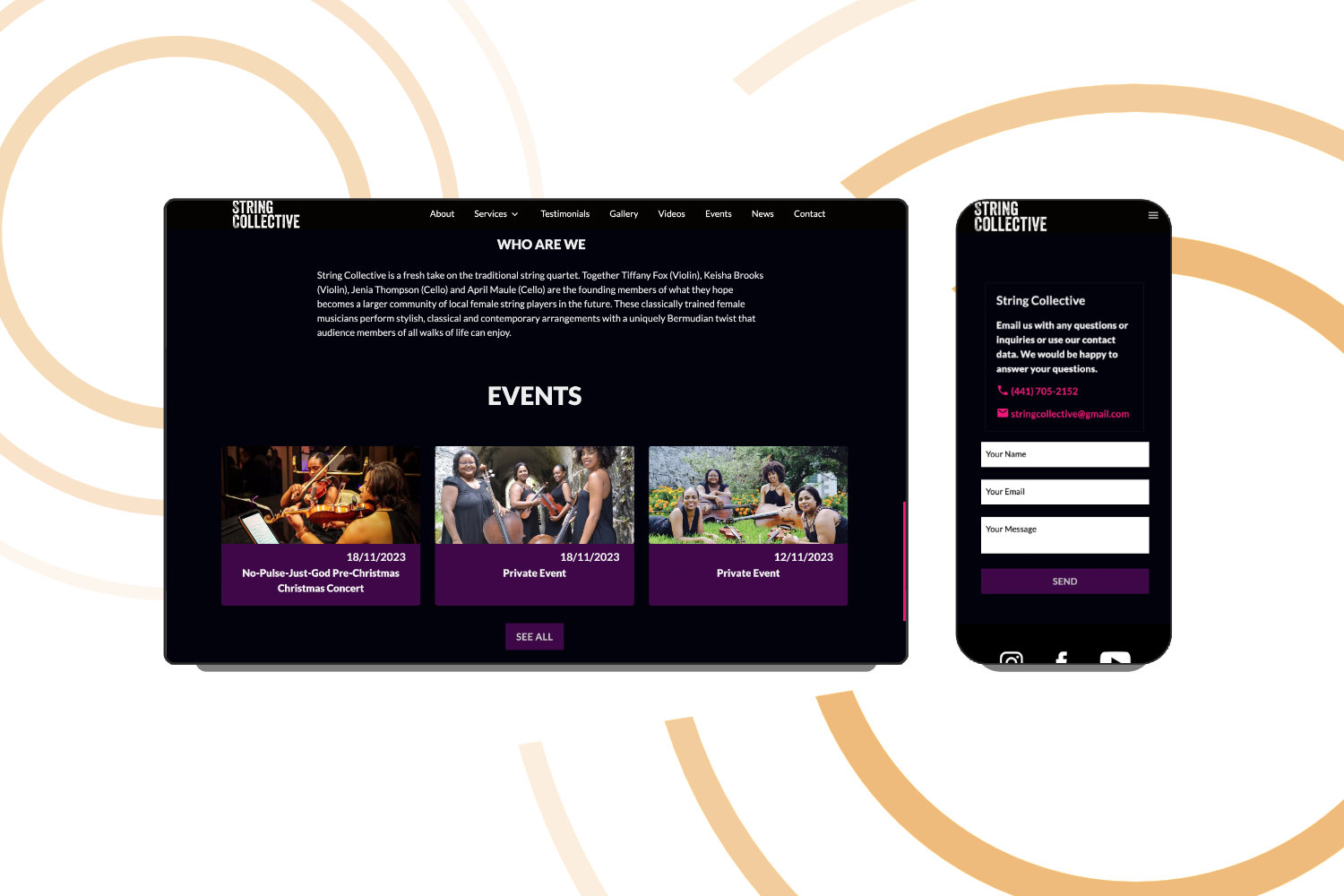
Contact
Your contact page should make it easy for people to get in touch with you. You can include a simple contact form, add messenger buttons, email addresses, phone numbers or even integrate bookings through platforms like Calendly.

SEO
Another important aspect of website design for classical musicians is making sure that your website can be found on google. Search engine optimization (SEO) includes using relevant keywords, meta and alt tags, as well as ensuring that the website is mobile-friendly and loads quickly.
Social Media Integration & Data Collection
Make sure your website has good social media integration and collects the right data from visitors. This means that you should display social media icons on every page of your website and set up data collection tools like Google Analytics, Facebook Pixel, Google Search Console and a newsletter sign-up form.
Conclusion
Whether you use a WordPress theme, website builder, or hire a professional web designer to do it for you, this short guide will help you focus on some crucial points when developing your website.
A website is the best digital marketing tool. With a website, you can control what people see in search results, improve your online presence, social media marketing and branding efforts, connect with classical music fans, managers, promoters and have a headquarters where people can learn everything about you.
What's next
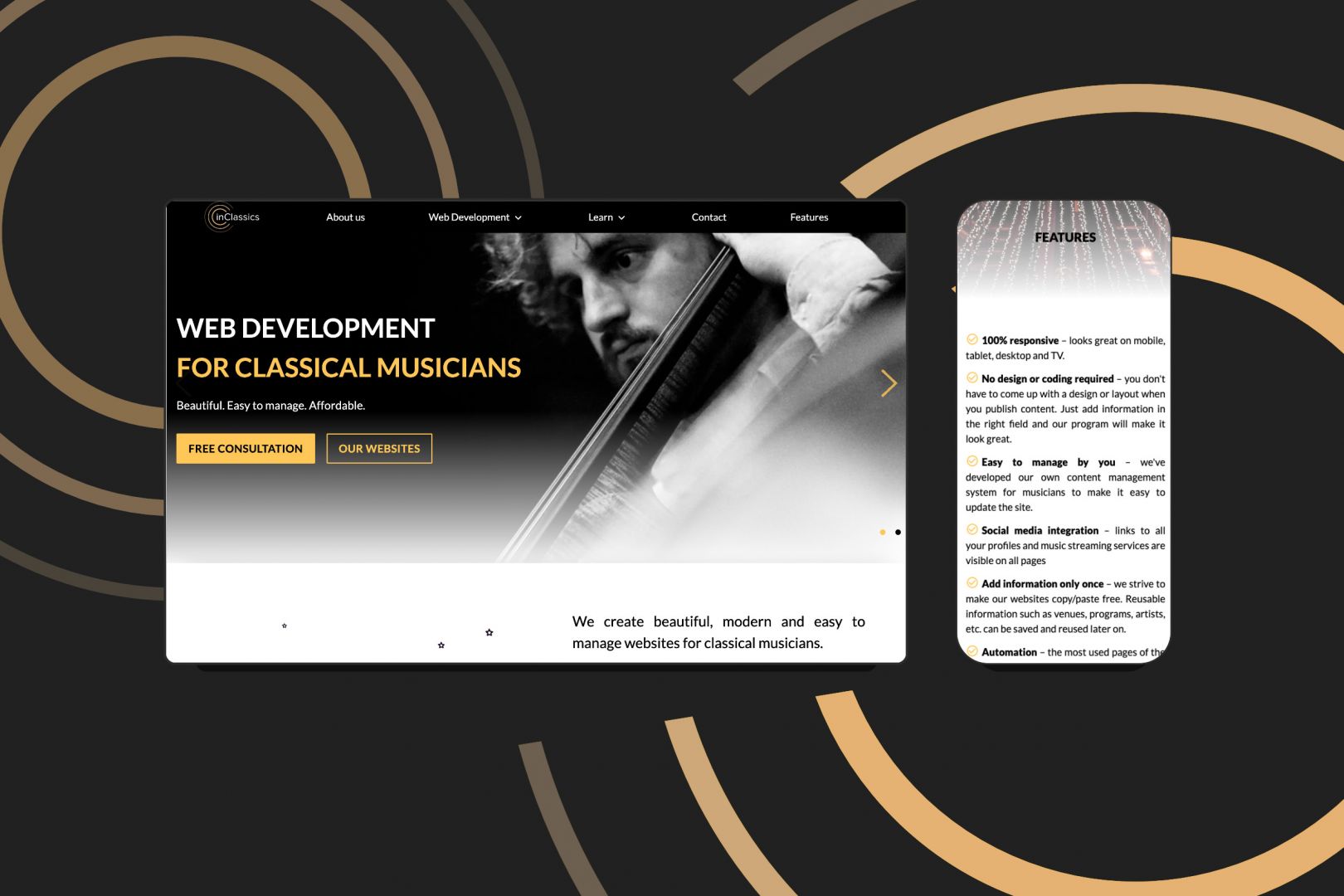
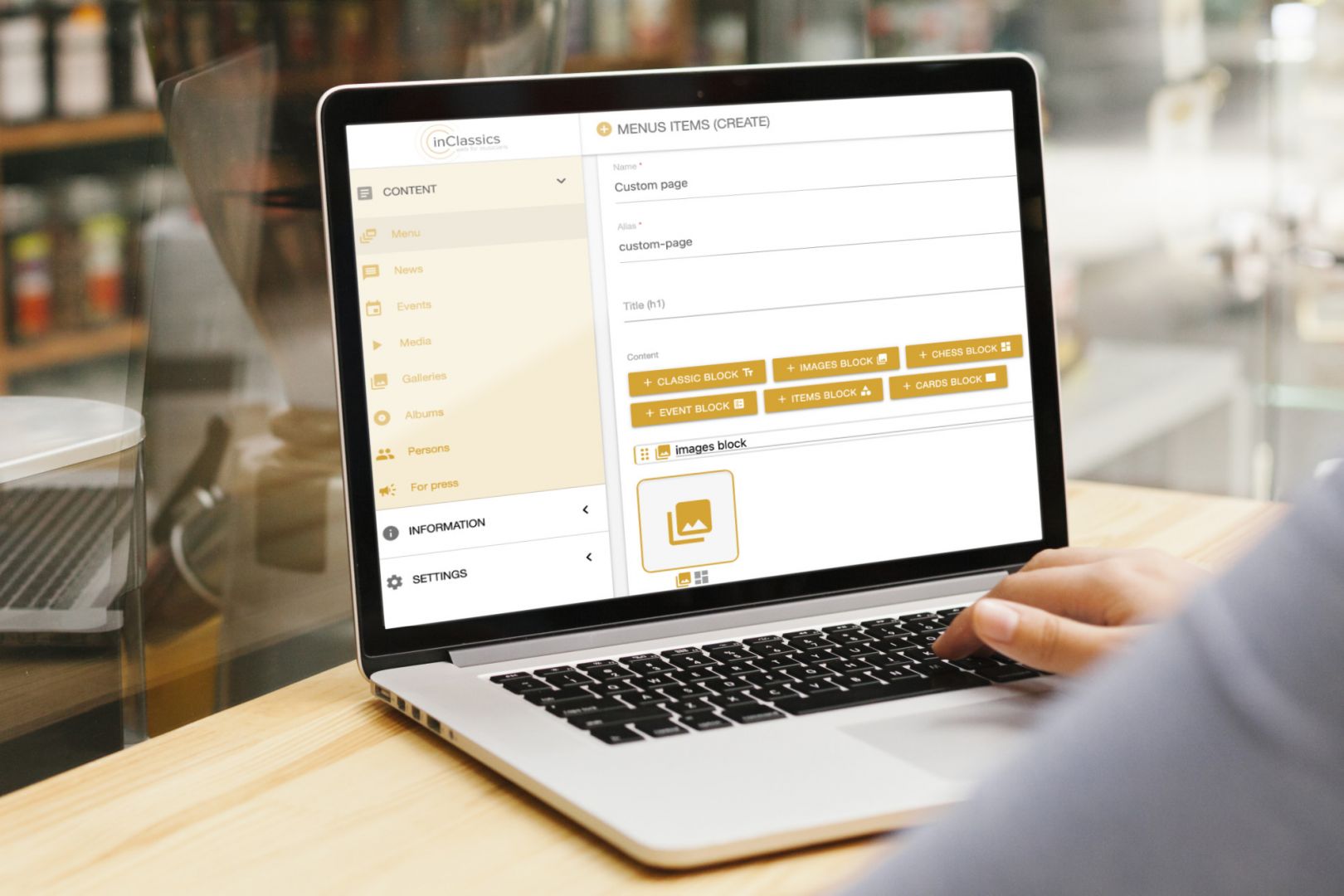
Here at inClassics, we have extensive experience building websites for classical musicians, and our content management system includes many musician-focused features and pages that you can start using right away. On our platform, you can create a website yourself or we can do it for you