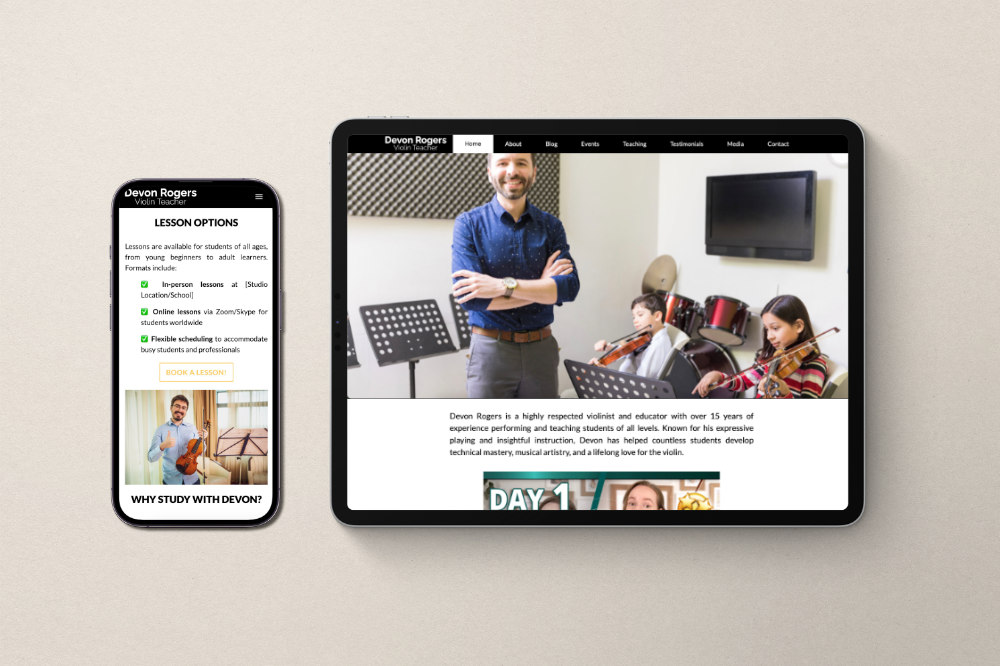
Ultimate Guide to Website Design for Classical Musicians: Best Practices & Tips
Introduction
In today’s digital world, a well-designed website for classical musicians is essential to building a strong online presence. Whether you are a classical musician, composer or an ensemble, your website is your virtual stage where music lovers and industry professionals can explore your musical career, listen to your recordings and find out about your upcoming concerts.
While social media platforms like Facebook and Instagram are useful for engagement, a professional website offers full control over your brand, making it a crucial asset for any musician. But how do you create a compelling website design that effectively showcases your musical talent?
This guide will walk you through the best practices for designing websites for classical musicians, covering everything from website builders to eye-catching imagery, content structure and SEO tips.
Why classical musicians need a website
The importance of an online presence
A website for classical musicians serves as a central platform for music lovers, industry professionals and potential collaborators. Unlike social media, where your content can get lost in an endless feed, a website ensures that visitors can easily find your upcoming performances, sheet music and recordings.
Advantages of a website
✔ Full control over branding – Unlike social media platforms, a website allows for complete creative control.
✔ Professionalism – A professional website demonstrates credibility to arts organizations and audiences.
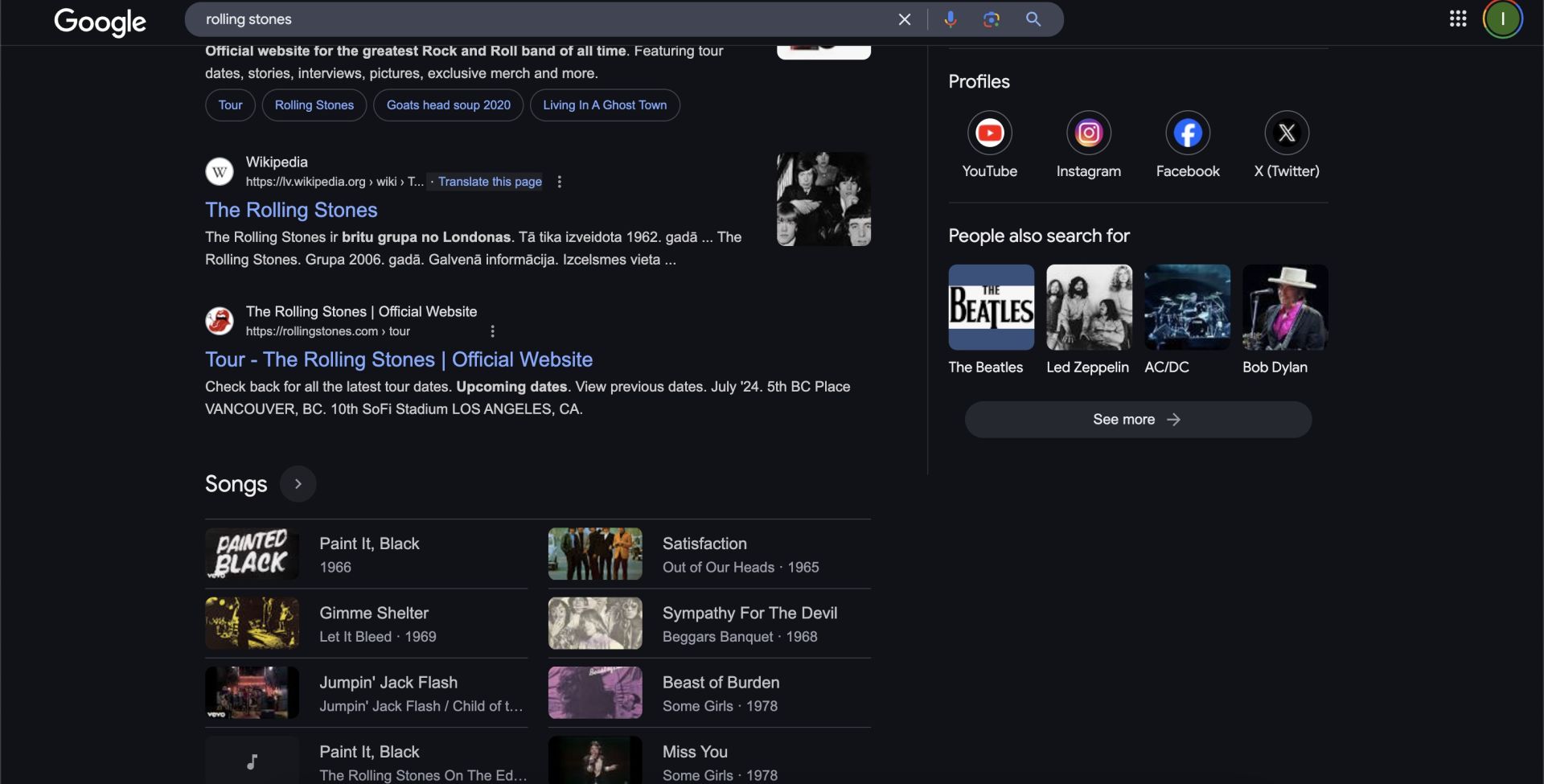
✔ SEO & Findability – A well-optimized website design increases your chances of being found on Google.
✔ Central hub for your music – Your website can include a music player, display upcoming concerts and offer an online store for your latest album.
The best website builders for classical musicians
Choosing the best website builder depends on your needs. Here are some top options:
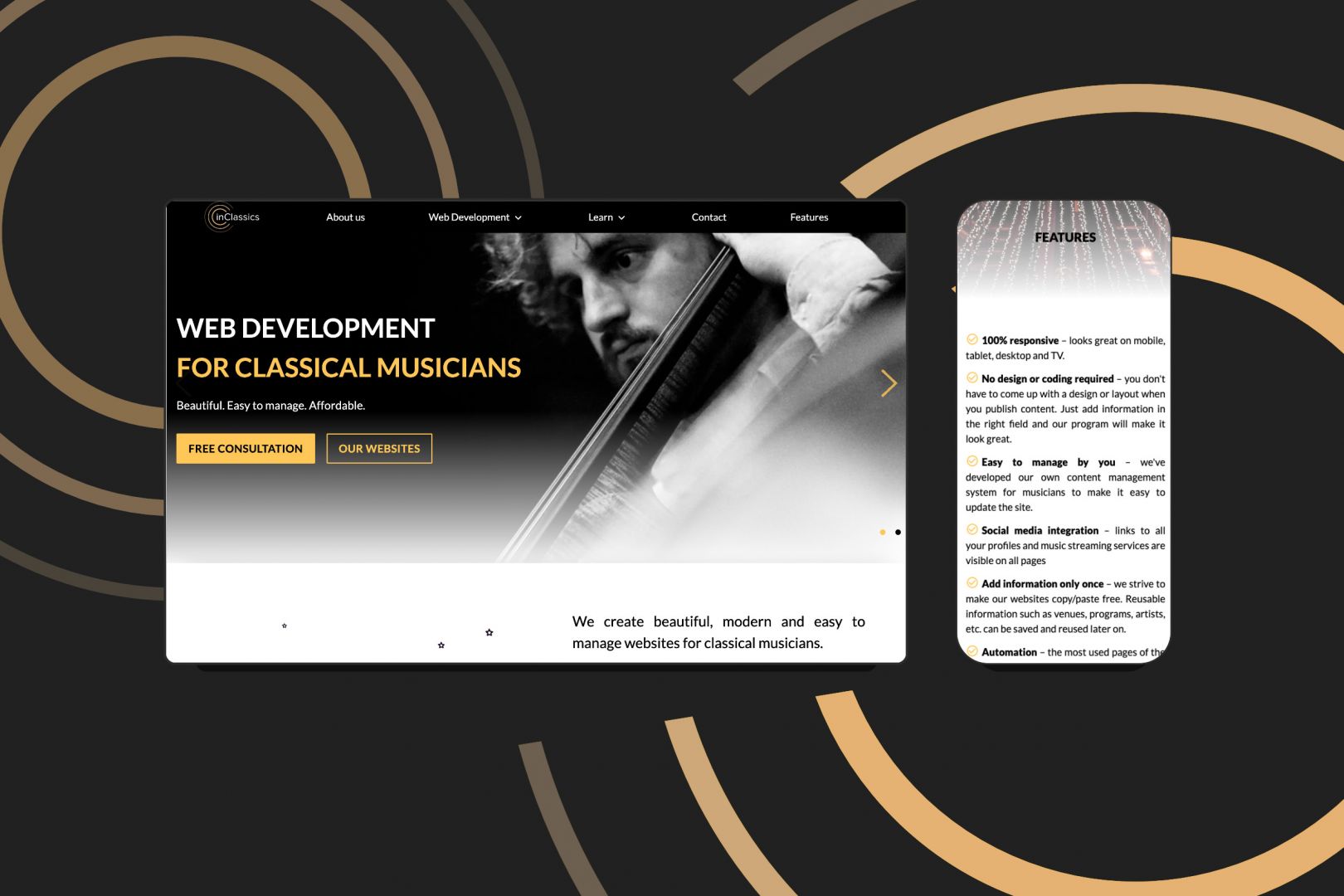
1. inClassics
✅ Customized and themed design – Provides flexible website design solutions to fit any budget.
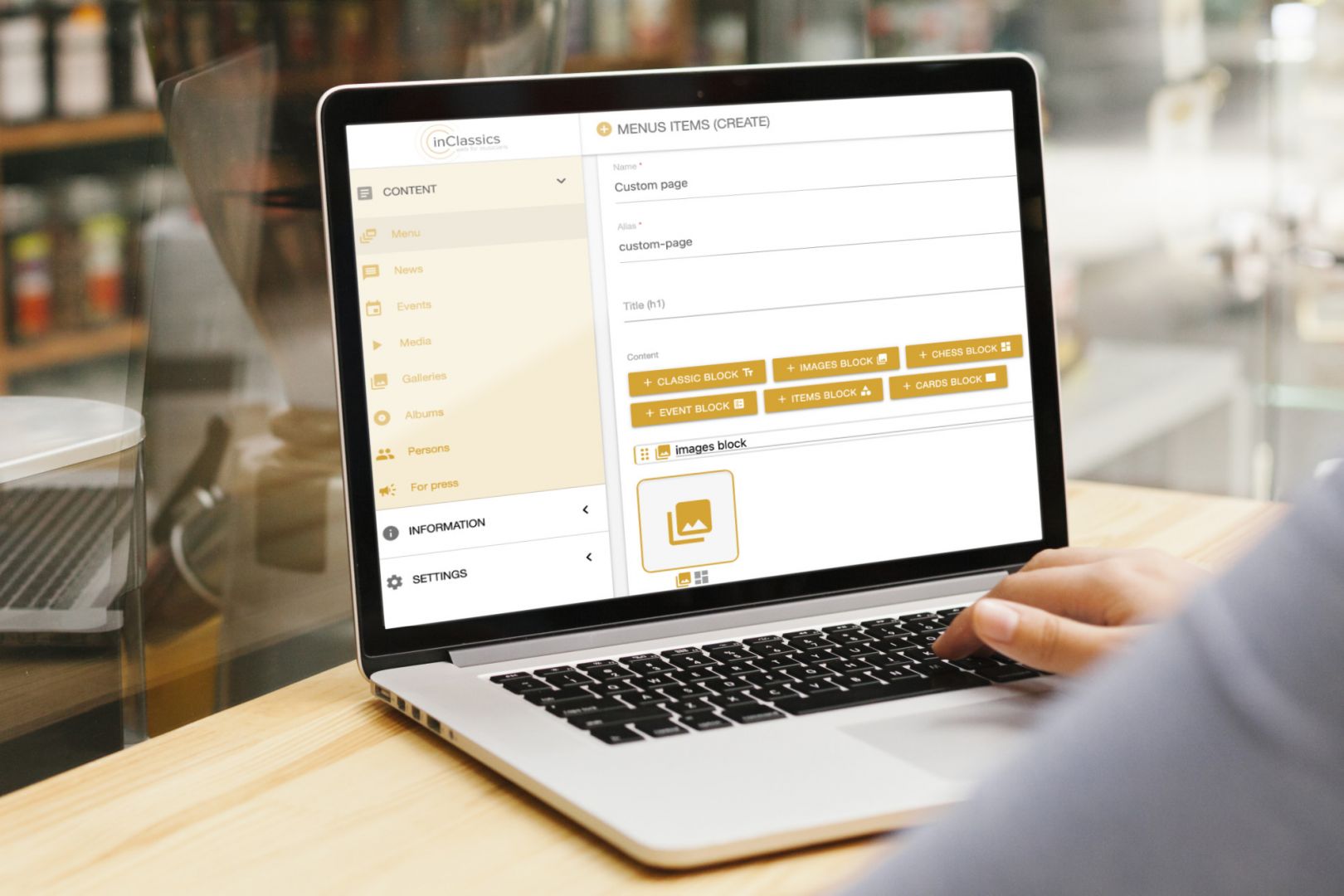
musician-oriented Content Management System (CMS) – Facilitates the management of websites for composers, singers and classical musicians.
✅ Full-service website creation – Takes care of everything from initial design to publishing and ongoing management.
✅ Concert and event management – Easily promote upcoming concerts, masterclasses and performances with an intuitive calendar function.
sEO-optimized design – Helps musicians improve their online presence and attract more visitors through search engine rankings.
✅ Integrated online store – Sell sheet music, digital downloads and merchandise directly from your website.
✅ Mobile-Responsive & Fast Loading – Ensures a smooth user experience on all devices, from desktops to smartphones.
inClassics is an excellent choice for classical musicians looking for a customized musician website with powerful features tailored specifically to their needs, without the hassle of managing complex web development. 🎶✨
2. Wix Music
- Offers great website templates for musicians.
- With integrated music player for streaming your recordings.
- Easy integration with links to social media and Apple Music.
3. WordPress + a music-friendly theme
- Highly customizable with a WordPress theme designed for musicians.
- Excellent for SEO and blogging (perfect if you run a music blog or publish blog posts about your career).
4. Squarespace
- Offers bold graphics and elegant design elements that suit classical musicians.
- Ideal for creating an elegant official website to showcase your upcoming concerts.
5. Bandzoogle
- Specially developed for artists, songwriters and composers.
- Supports online stores for the sale of sheet music, digital downloads and albums.
If you are looking for a customized musician website, you can hire a professional website designer to get a unique and polished end product.
Key features of a website for classical musicians
A successful website design for classical musicians should include the following elements:

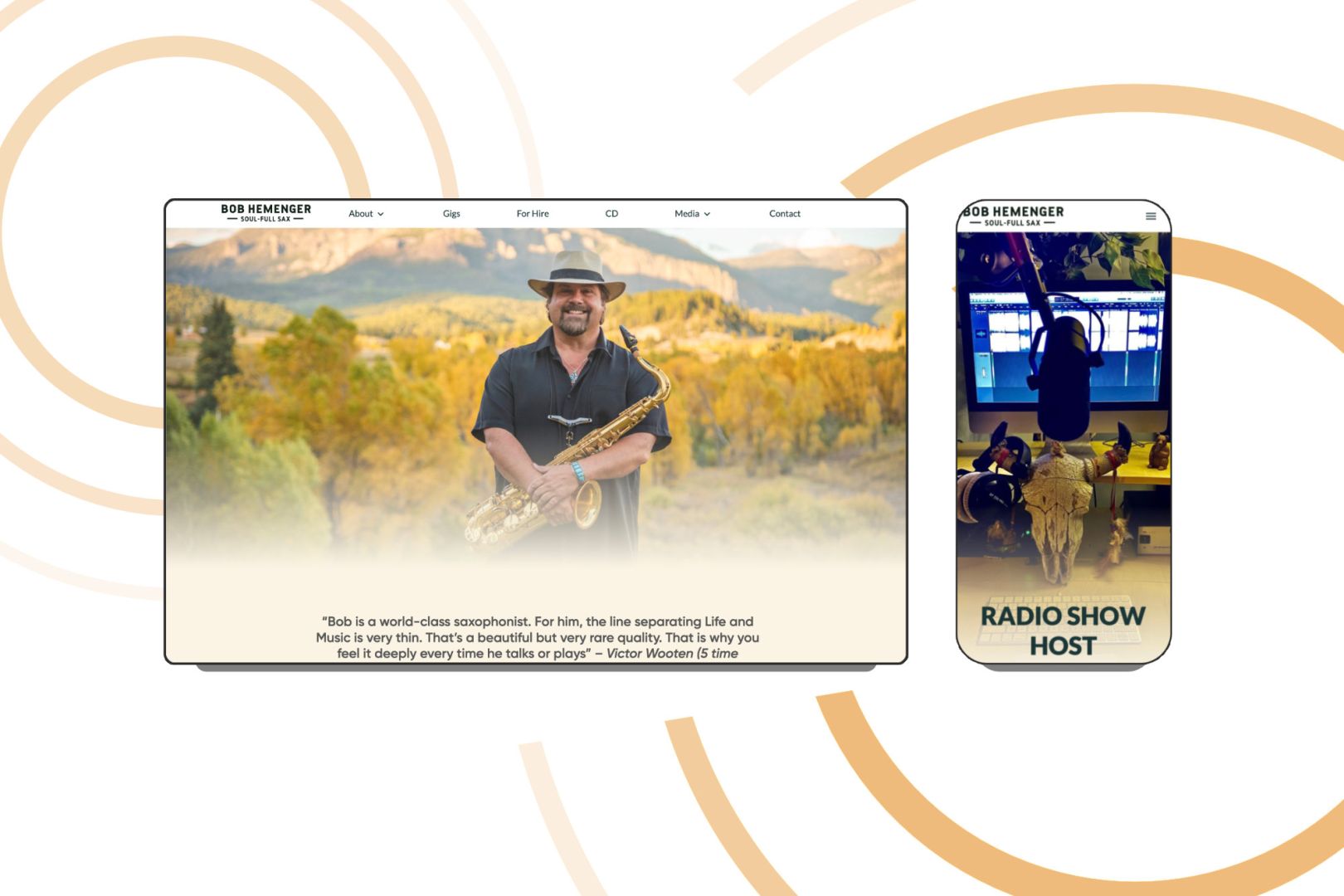
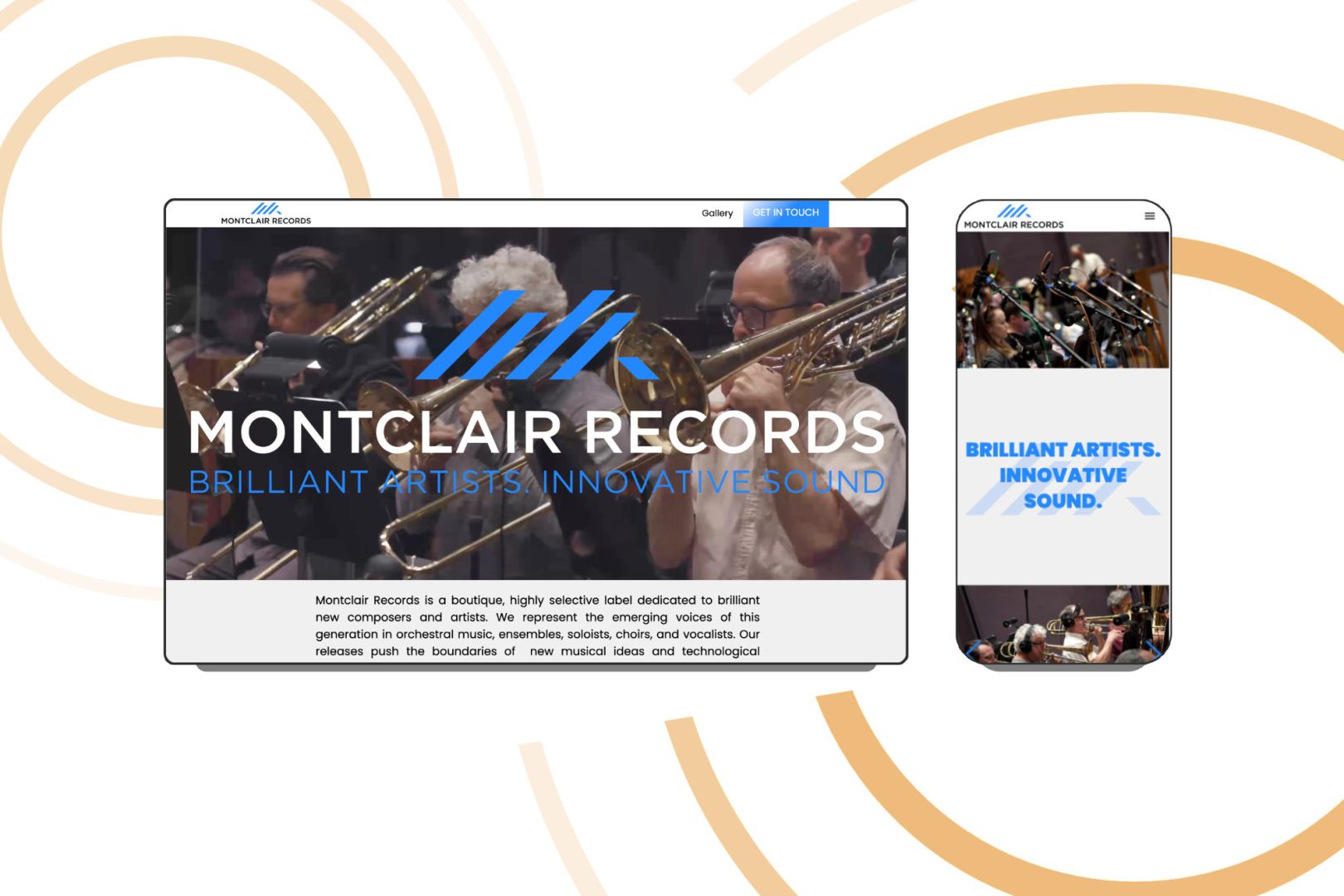
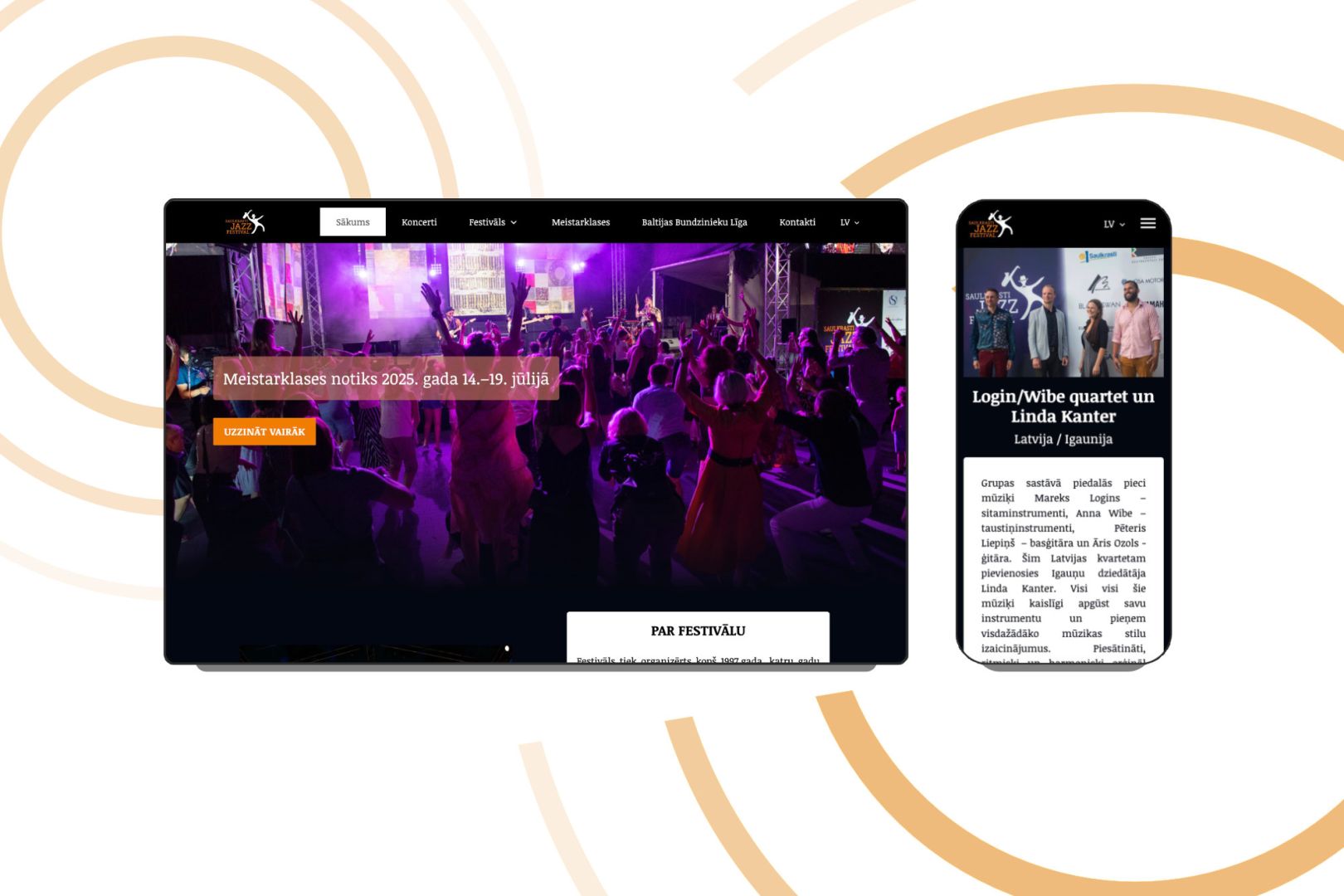
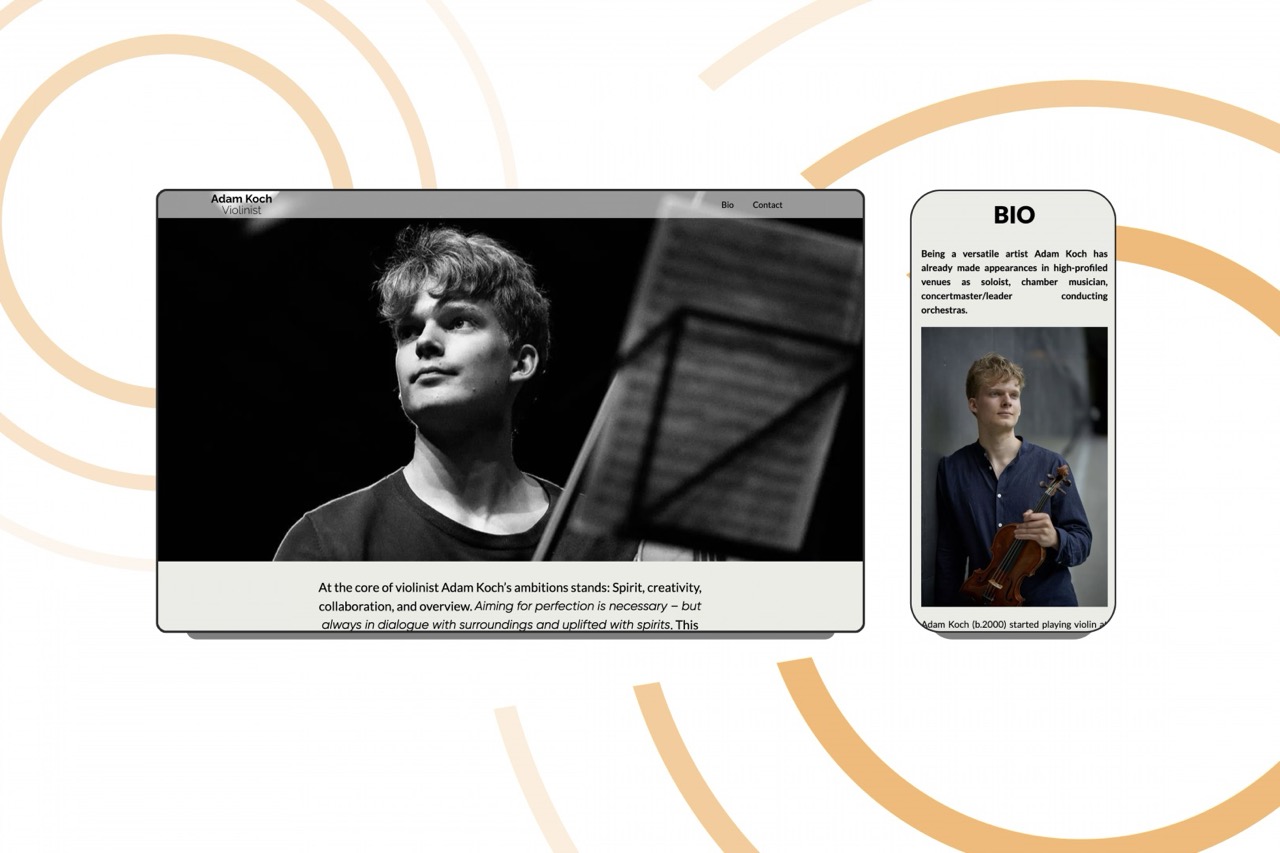
1. An eye-catching homepage with bold images
- Use powerful images that reflect your musical journey.
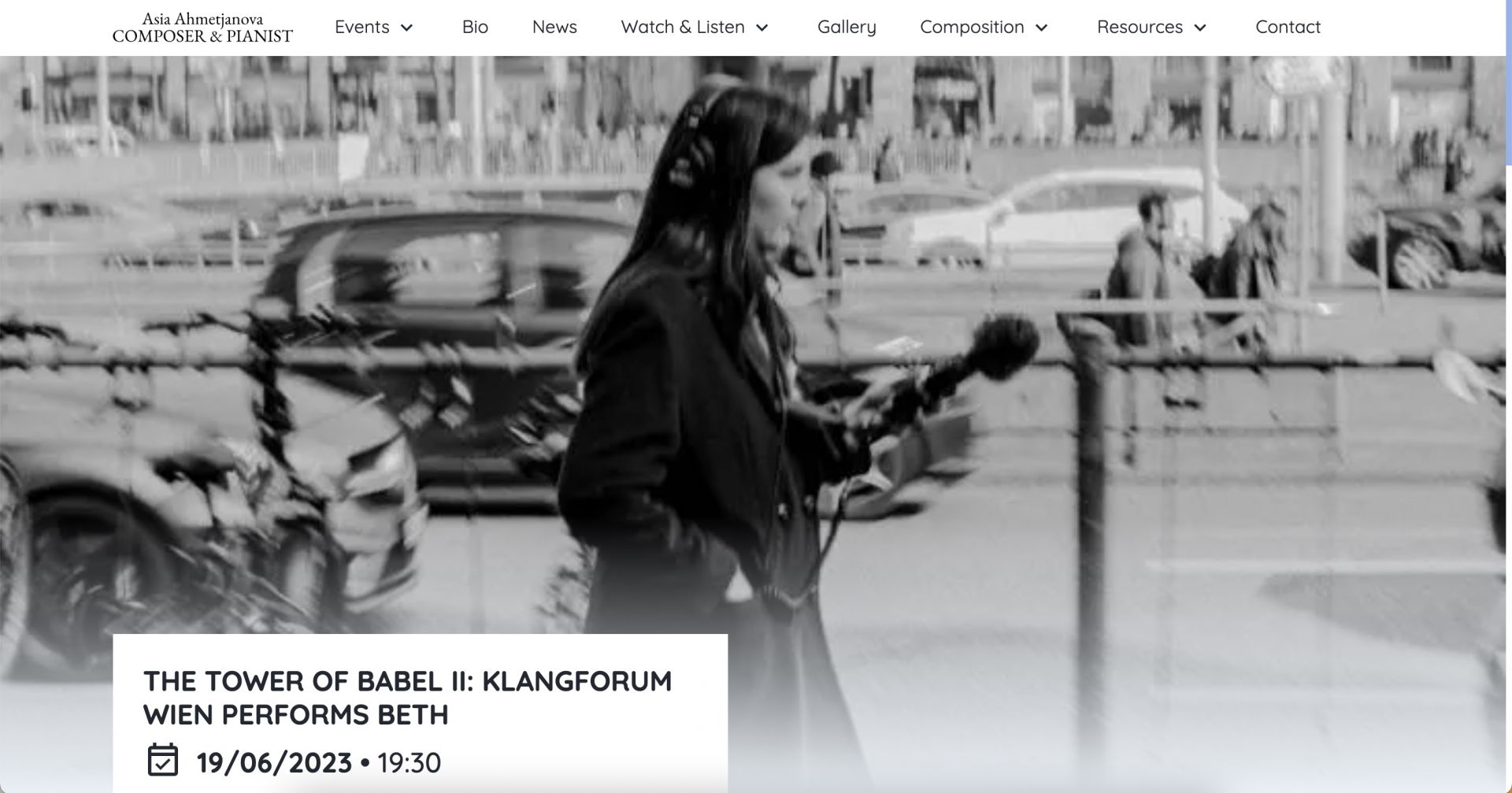
- Provide a high-quality hero image or background video from your live performances.

2. A well-written bio page
- Tell us about your musical career and your successes.
- Mention career highlights, collaborations with arts organizations and awards.
Check out our AI Musician Bio Generator and download Musician Bio Template
3. A music player for streaming recordings
- Allow your visitors to listen to your latest album or recordings.
- Integrate with streaming platforms such as Apple Music or Spotify.
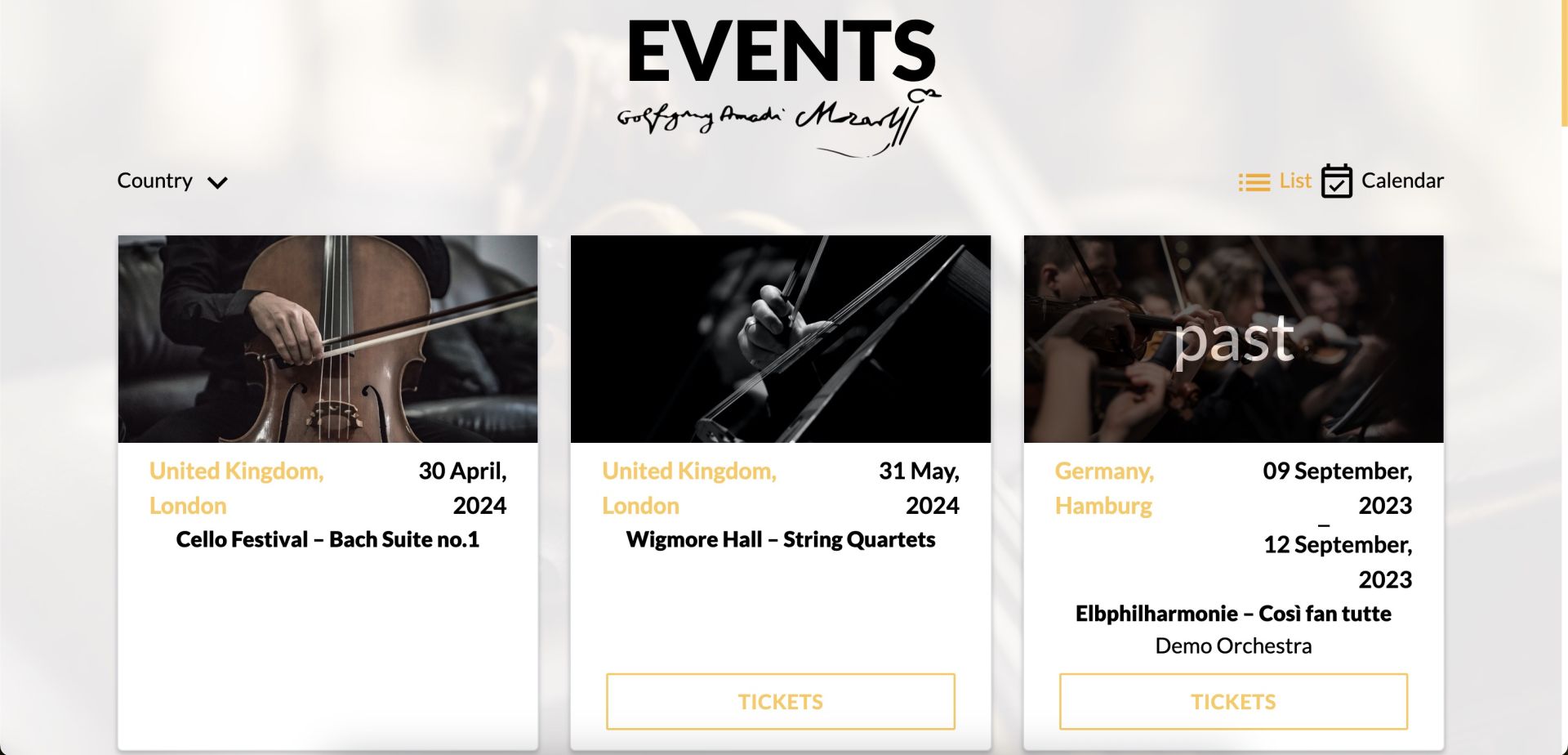
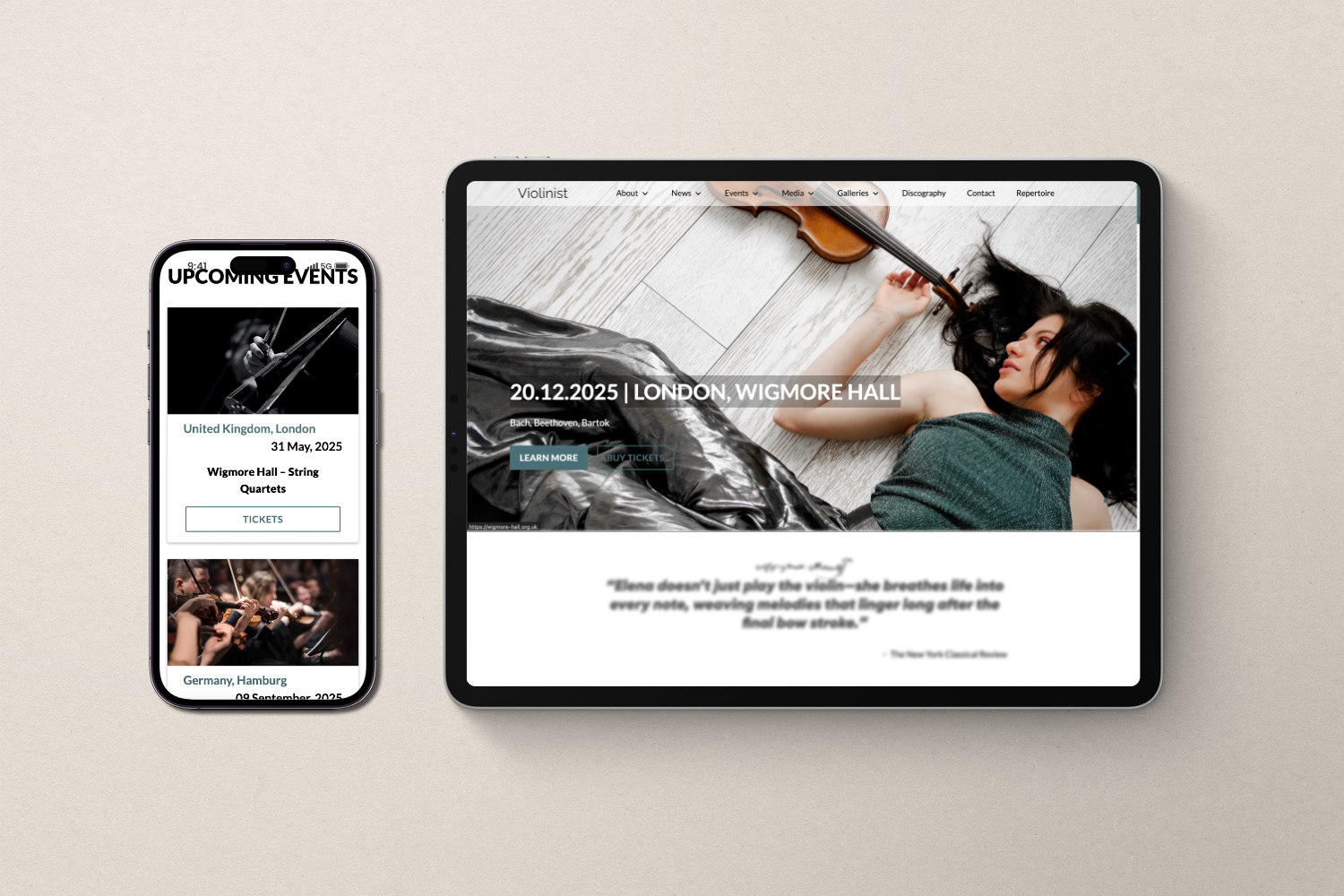
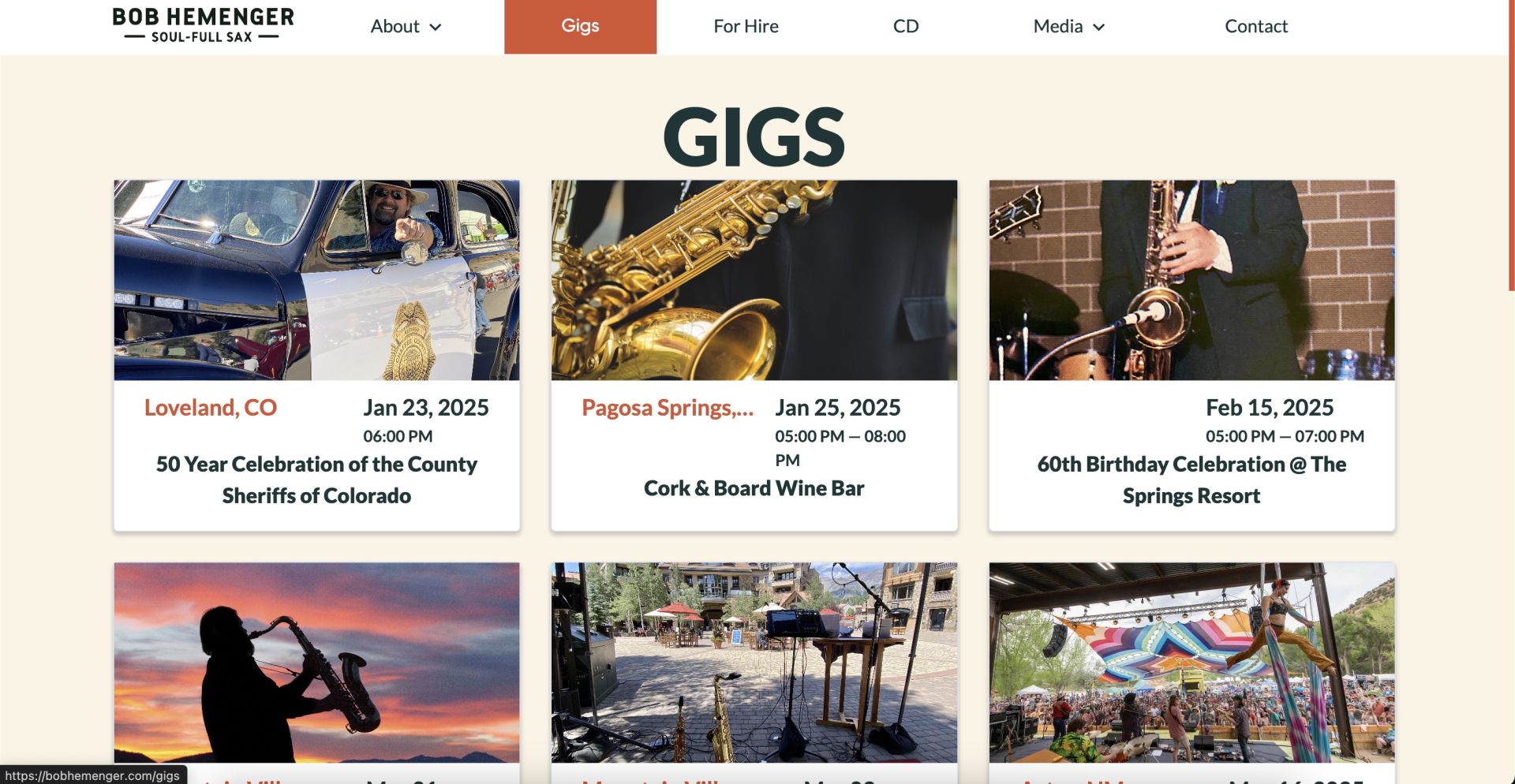
4. An event page for upcoming shows
- Display a calendar of upcoming gigs and concerts.
- Make sure that it is dynamic and self sorting by date for easy management
- Include concert programs and artists for better findability
- Include links to tickets and venue details.
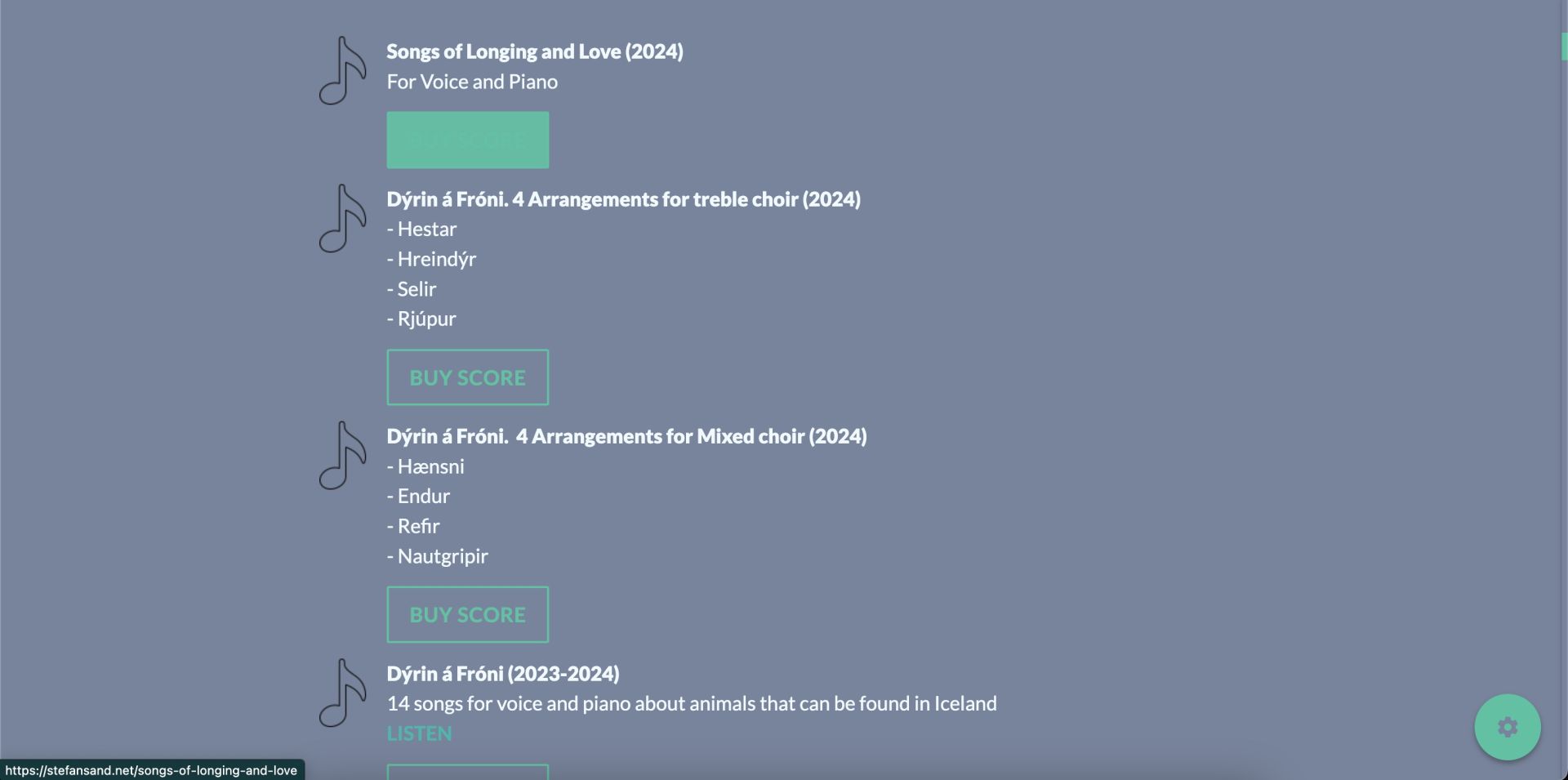
5. An online store
- Sell sheet music, albums and digital downloads directly from your website.
- Offer exclusive merchandise.
6. Contact & links to social media
- Offer a contact form for booking inquiries.
- Add social media links to Facebook, Twitter and Instagram.
Website design tips for classical musicians
To create a visually appealing and user-friendly website, follow these best practices:
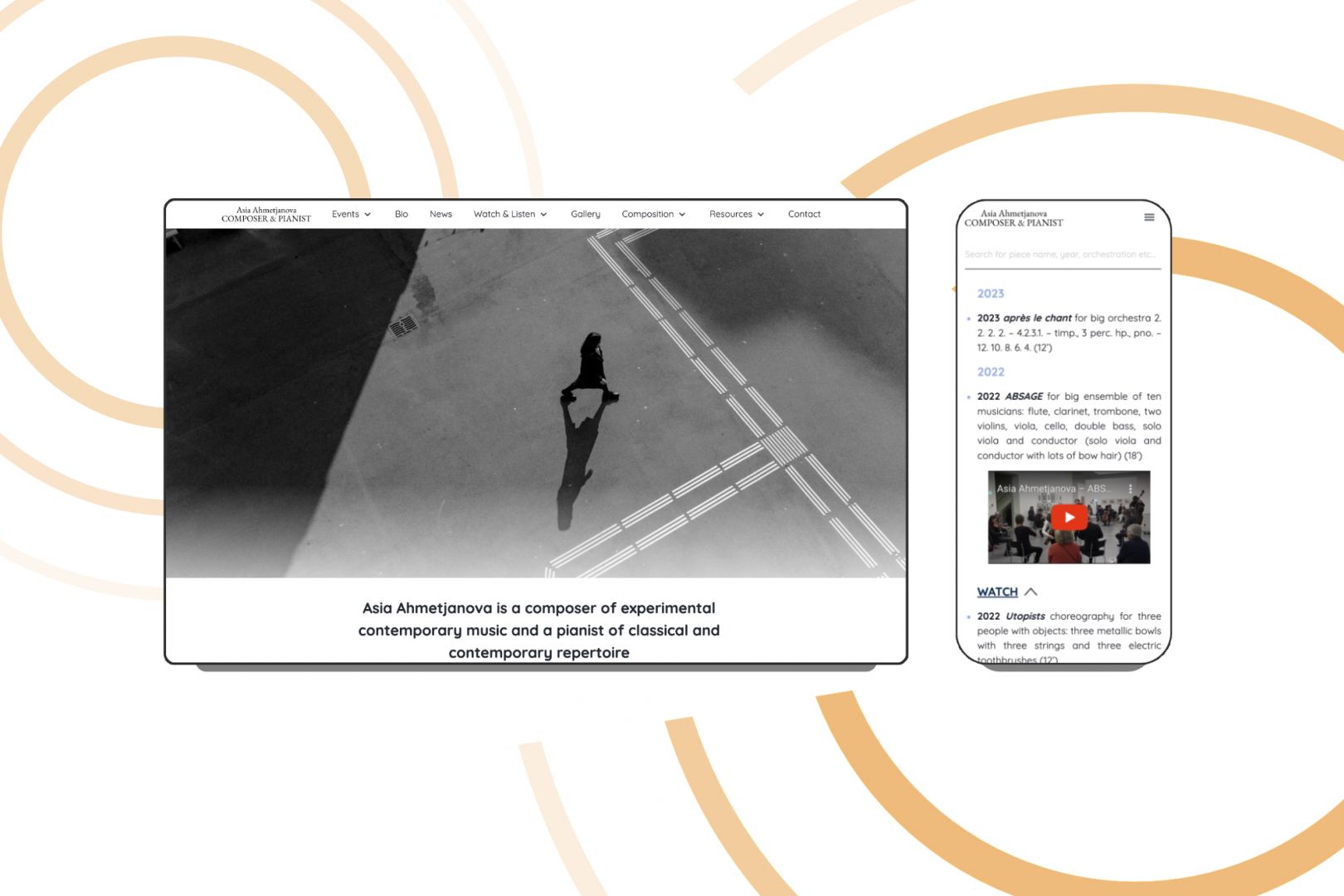
1. Use a clean and elegant layout
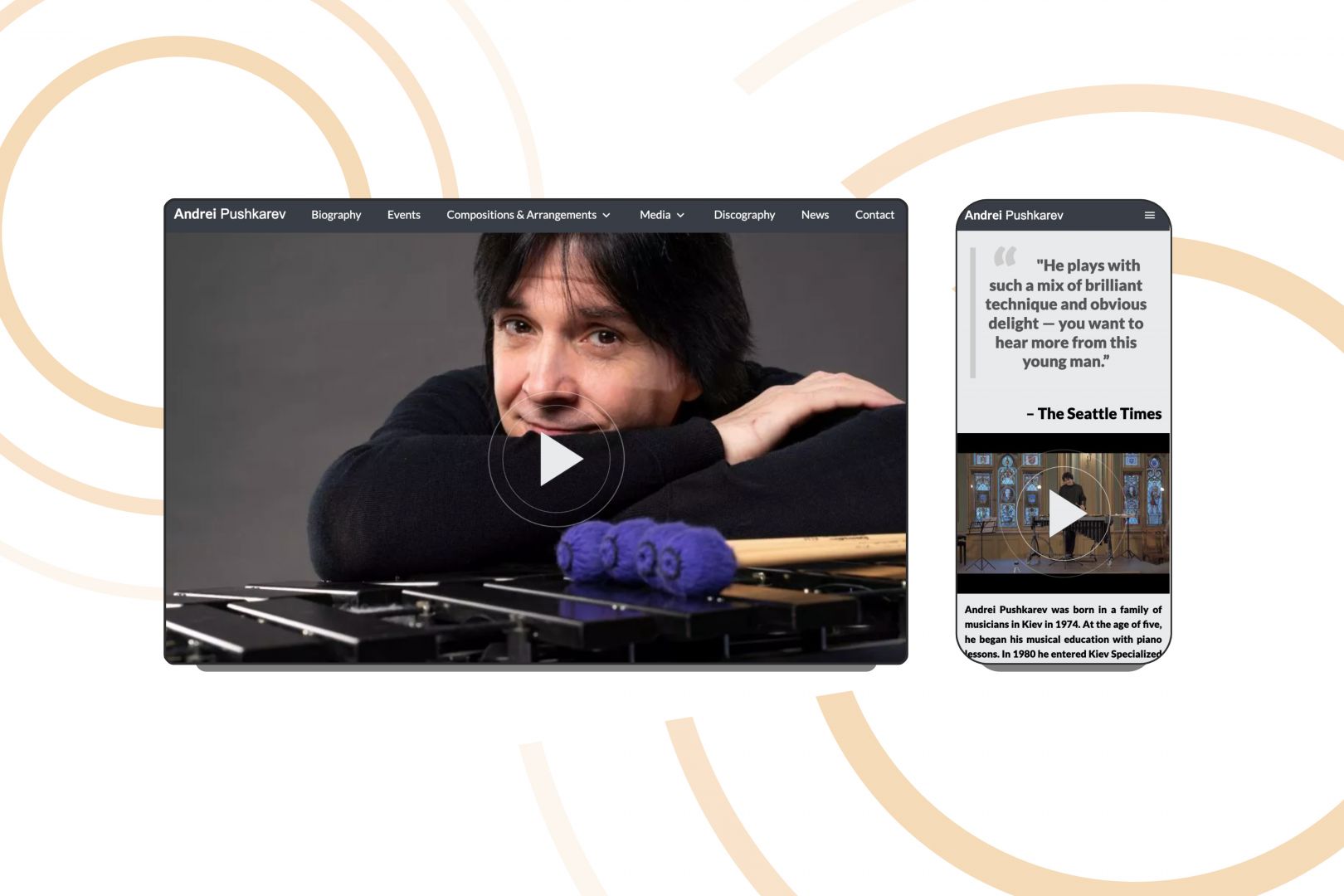
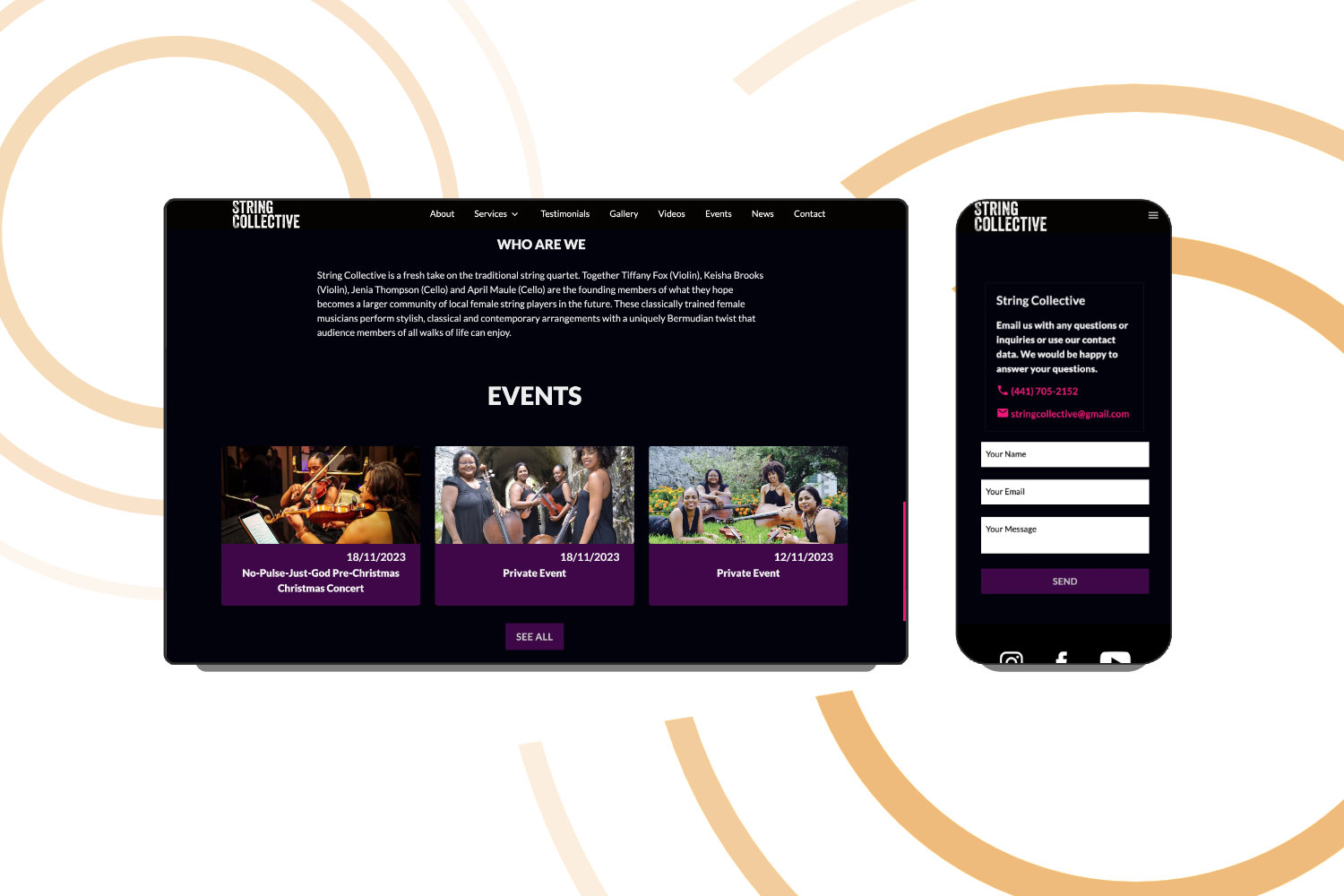
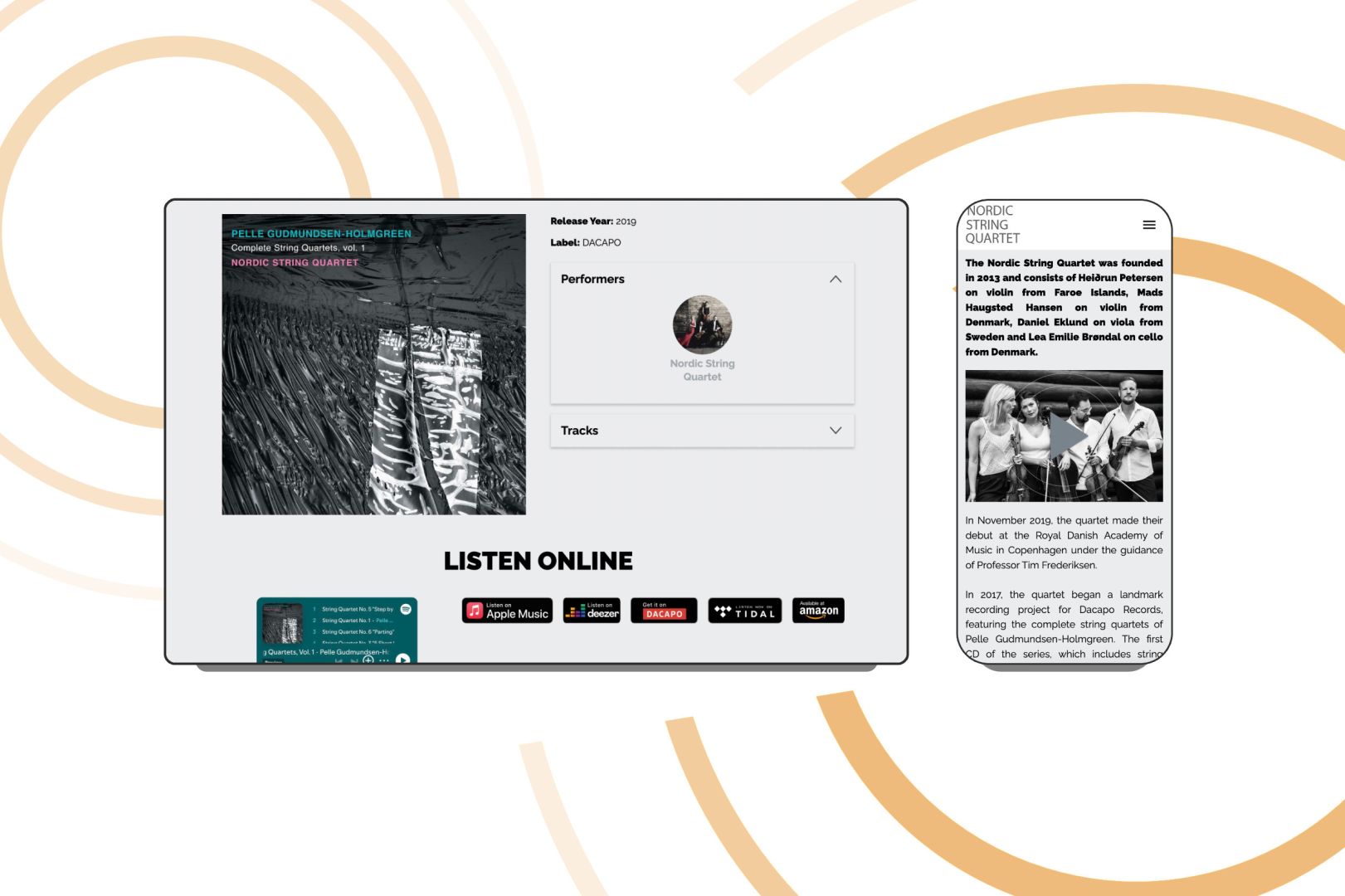
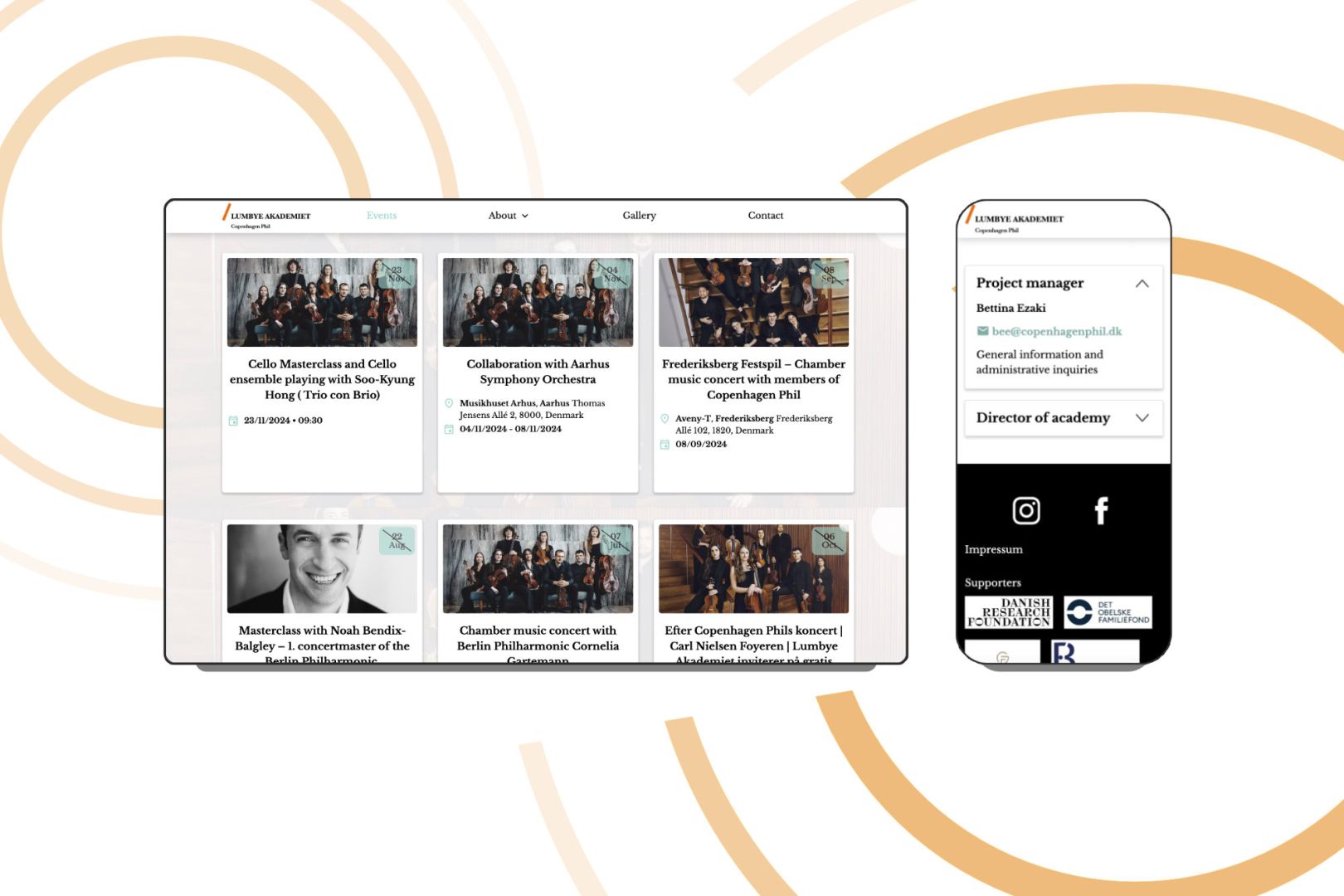
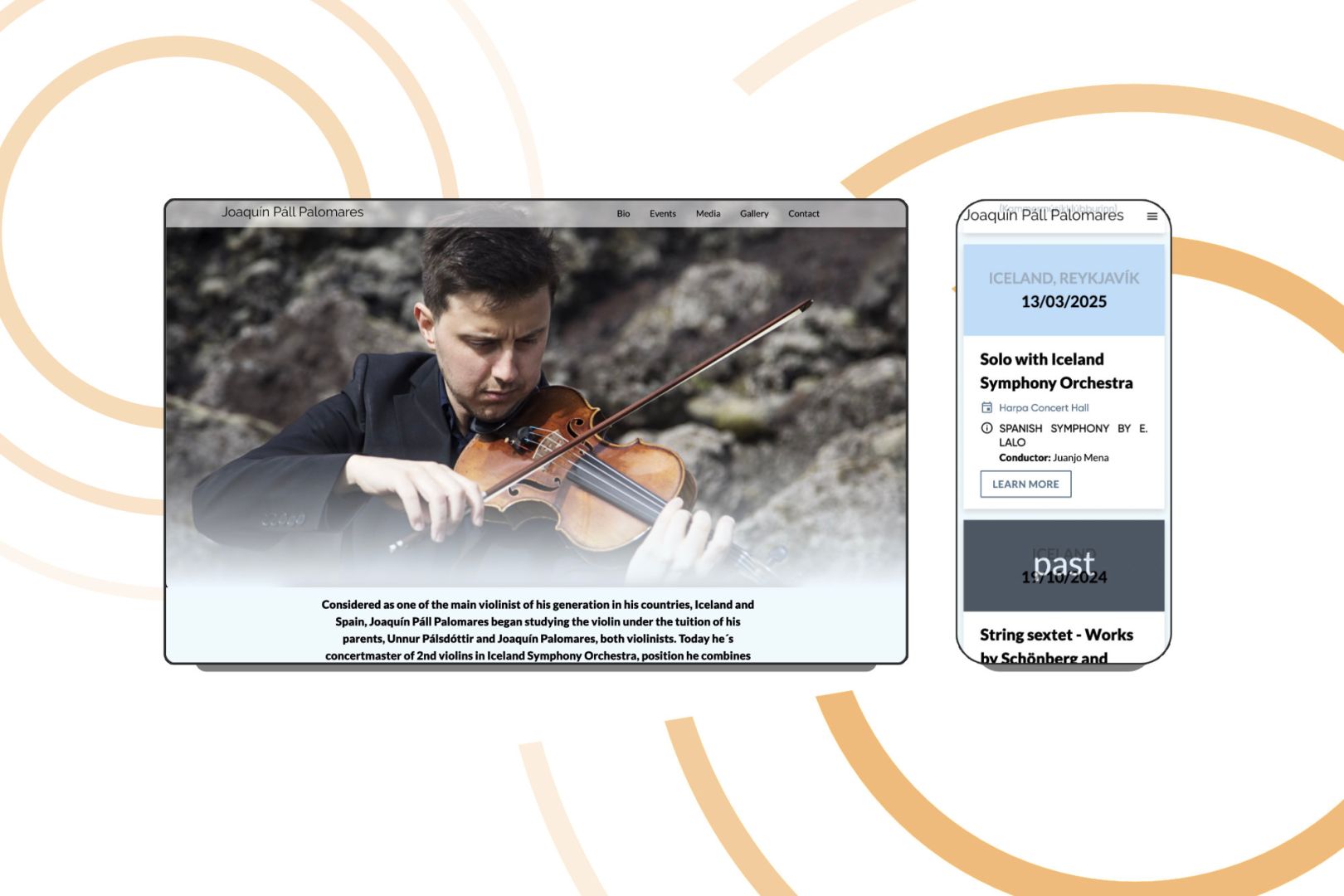
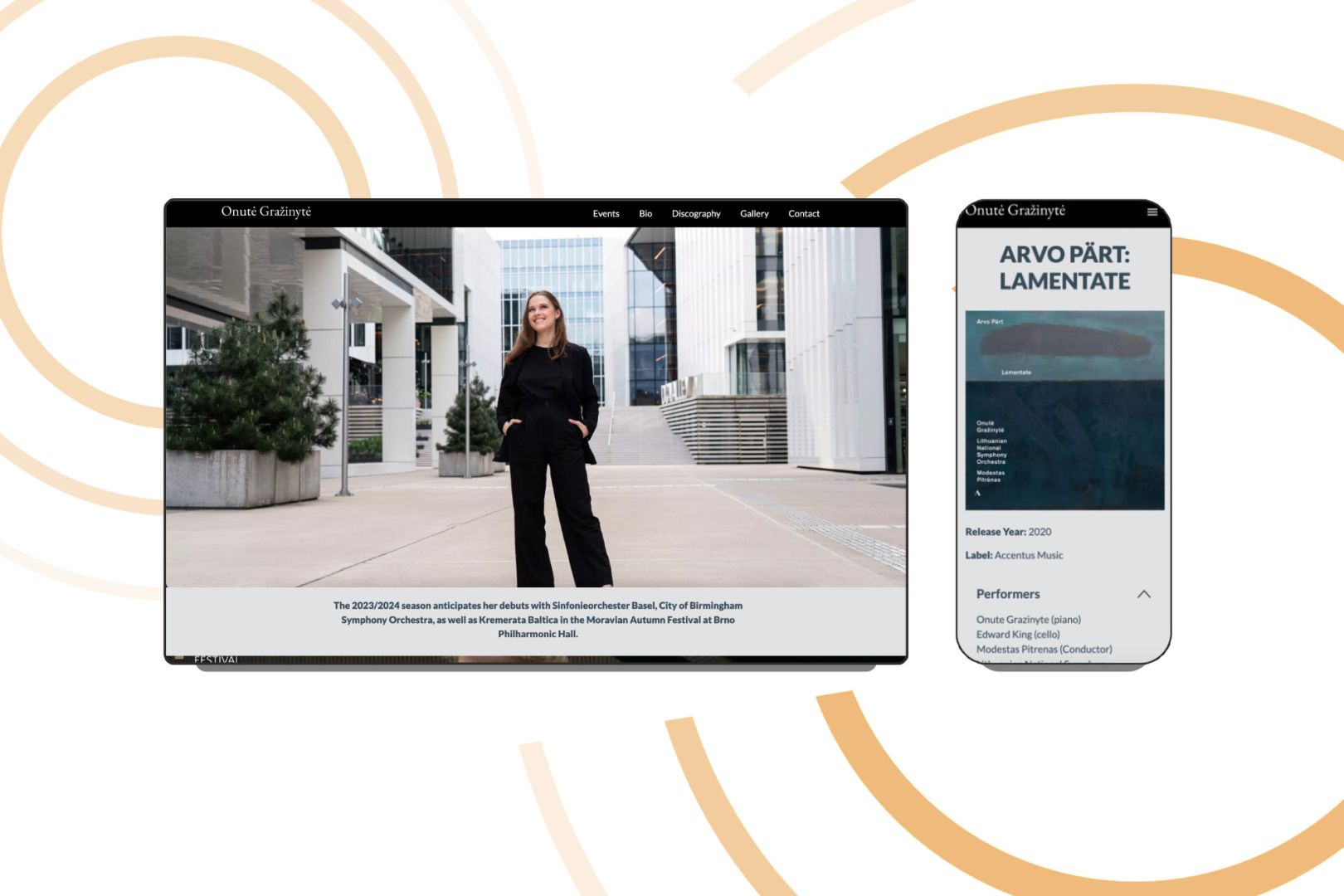
A website design with a minimalist design ensures that visitors can navigate easily. Avoid clutter and focus on a professional website esthetic. Check out our classical musicians website portfolio for inspiration
2. Choose a classic color palette
Soft tones like ivory, gold and navy blue are reminiscent of classical music. Use these colors strategically to enhance the design elements of your website. Checkout color palette libraries like Color Hunt or color palette generator like My Color Space
3. Optimize for mobile devices
With over 50% of internet traffic coming from mobile users, make sure your website is designed to be mobile-friendly.
4. Improve the page load speed
Fast-loading websites improve user-friendliness and search engine rankings. Optimize images and reduce unnecessary animations.
5. Make your website SEO-friendly
- Use keywords such as your name and instrument naturally in your content.
- Publish a music blog with articles about your musical journey to increase traffic.

Promote your website: Social media and more
Even the most beautifully designed classical musician website won’t be effective without proper promotion. To attract music lovers, industry professionals, and audiences, you need to actively drive traffic to your site. Here’s how to do it:
1. Leverage Social Media to Drive Website Traffic
- Share your website link in your social media profiles (Instagram, Facebook, Twitter, TikTok).
- Post engaging content like behind-the-scenes videos, live performances, and sheet music previews.
- Use Instagram Stories, Facebook Events, and Twitter updates to promote upcoming concerts and new recordings.
2. Optimize Your Website for Search Engines (SEO)
- Use relevant keywords like “your name and instrument” in your site’s content.
- Publish a music blog with performance insights, industry tips, and album updates.
- Get backlinks from arts organizations, concert venues, and music publications to improve search rankings (ALWAYS make sure that venues include a link to your website in their programs and ticket sales pages)
3. Build an Email List & Engage with Fans
- Collect emails via a newsletter sign-up form on your website.
- Send regular updates about upcoming shows, new releases, and exclusive content.
- Offer a free sheet music download or behind-the-scenes video to encourage sign-ups.
4. Work together with Arts Organizations
- Always ask orchestras, music festivals, and conservatories to feature your website.
- Get featured in music blogs and publications to boost credibility and traffic.
5. Use Paid Advertising for Extra Visibility 🎯
- Run targeted Facebook and Instagram ads promoting your latest album or live performances.
- Use Google Ads to appear in search results for classical music concerts or musician websites.

How to monetize your classical music website
While social media platforms provide exposure, a website allows classical musicians to generate income independently. Here are the best ways to monetize a classical music website:
1. Sell sheet music and digital downloads
- Offer original compositions, transcriptions and arrangements as digital downloads.
- Use an online store to sell high-quality sheet music in PDF format.
- Platforms like Wix Music and WordPress theme plugins enable seamless transactions.
2. Offer fan subscriptions for exclusive content
- Provide paying subscribers with behind-the-scenes content, unreleased recordings and live performances.
- Platforms such as Patreon or a dedicated subscription model on your official website can generate recurring revenue.
3. Sell music and merch directly through your website
- Offer a music player that allows visitors to buy tracks or albums directly.
- Sell physical merchandise, including t-shirts, posters or limited edition vinyl of your latest album.
4. Organize paid live performances and masterclasses
- Offer virtual live performances or paid concerts via your website.
- Offer one-to-one coaching or online masterclasses for aspiring musicians.
By implementing these monetization strategies, classical musicians can build a self-sustaining online presence while maintaining complete control over their revenue.
Common mistakes to avoid when designing websites ⚠️❌
Even the most talented classical musicians can struggle with website design, unknowingly making mistakes that hurt engagement, user experience, and conversions. Here are the top website design pitfalls to avoid and how to fix them:
1. Slow-Loading Websites Due to Large Image Files 🖼️🚀
A slow website frustrates visitors and lowers search engine rankings, leading to fewer website visitors.
Solution:
✅ Optimize bold visuals and professional photos without sacrificing quality.
✅ Use compressed image formats like WebP or PNG-8 instead of heavy JPEG files.
✅ Leverage lazy loading, so images load only when needed, improving site speed.
2. Poor Mobile Optimization 📱❌
More than 50% of website traffic comes from mobile users, yet many musicians’ websites aren’t optimized for smaller screens.
Solution:
✅ Use a mobile-responsive website template to ensure smooth navigation.
✅ Test your site on multiple devices to ensure it works on all screen sizes.
✅ Keep menus, buttons, and text touch-friendly for easy interaction.
3. Missing or Weak Call-to-Action (CTA) Buttons 🎯🚫
Without clear CTA buttons, visitors may leave your website without streaming your music, buying your sheet music, or signing up for updates.
Solution:
✅ Place strong, clear CTAs like:
🎵 “Listen Now” (for new recordings or latest album)
🛒 “Buy Sheet Music” (to drive online store sales)
📩 “Subscribe for Updates” (for building an email list)
✅ Ensure CTAs stand out visually with contrasting colors and strategic placement.
✅ Guide users towards key actions on every page of your website.
4. Poorly Structured Navigation & Cluttered Design 🔄😵
A cluttered, hard-to-navigate website confuses visitors and makes it difficult for them to find upcoming performances, recordings, or live shows.
Solution:
✅ Use simple, intuitive menus with clear sections: About, Music, Concerts, Blog, Contact.
✅ Avoid excessive animations, fonts, or unnecessary design elements that slow down the site.
✅ Keep layouts clean and visually balanced for an elegant, professional website.
5. Neglecting SEO & Website Optimization 🔍📉
Even a beautifully designed classical musician website is ineffective if people can’t find it on Google.
Solution:
✅ Use SEO-friendly website content with keywords like “classical musician,” “music website,” and “upcoming concerts”.
✅ Publish blog posts to improve search rankings (e.g., “Best Classical Music for Beginners”).
✅ Optimize meta descriptions, page titles, and image alt text for better visibility.
How to keep your website up-to-date and appealing
A website for classical musicians should never remain static. Here’s how to keep it up to date:
1. Regularly add new recordings, concerts and blog posts
- Keep your fans engaged by updating your site regularly:
- New recordings and live performances.
- Upcoming concerts and master classes.
- Informative blog posts about classical music.
2. Keep your online business fresh with new merchandise
- Introduce exclusive merchandise for upcoming shows.
- Offer digital downloads of recent performances.
3. Promote website updates via social media and newsletters
- Distribute website updates via social media platforms to attract new website visitors.
- Send email newsletters with new content, events and announcements.
By regularly updating their website, classical musicians can maintain a vibrant online presence and keep their fans engaged.
Conclusion
A strong online presence is essential for classical musicians in today’s digital world. While social media plays a key role in engaging fans, a website for classical musicians provides a professional site where you can control your brand, showcase your musical talent and connect with audiences worldwide.
By using the best website designers or DIY builders, incorporating eye-catching graphics and optimizing for search engines, you can create an outstanding website that supports your music career.
Start building your website today and take your classical music career to the next level! 🎼🎻