
Why Music Directories & Listings Matter for SEO
If you’re looking to grow your music brand’s online footprint—whether you’re a solo artist, a band, or part of a music-related business—there’s one often-overlooked strategy that can significantly boost your search engine rankings: music directories and listings.
These specialized platforms, from local gig guides to internationally recognized musician databases, can help you reach new fans, promoters, and industry professionals. More importantly, they can elevate your SEO by delivering valuable backlinks, local search visibility, and targeted referral traffic.
Below is a comprehensive look at why music directories matter for SEO and how to leverage them effectively.
The Role of Music Directories in SEO
Higher Visibility in Search Results
By listing your site or artist page in relevant music directories, you gain additional footholds in Google and other search engines. If the directories themselves are well-ranked for music-related keywords, your band or act can benefit from their domain authority, letting you appear in search results more frequently.
Example: A reputable local “artists & venues” directory might rank well for queries like “top singer-songwriters in [City].” A listing on that directory could mean potential fans find you even if they haven’t heard your name yet.
Quality Backlinks
In SEO, links from high-authority websites signal trust and authority to search engines. Music directories—especially recognized industry platforms—can count as valuable backlinks. More inbound links from relevant and authoritative sites often translate to better rankings for your own domain, leading to increased organic traffic and brand visibility.
Local and Genre-Specific Search Boost
For local SEO, directories that focus on a particular city, state, or region can help. They often highlight acts from a specific location, providing an extra layer of local signals that can push your band’s site higher for area-based keywords like “[Your Genre] band in [City].” Similarly, if you specialize in a specific style—e.g., metal, jazz, or EDM—genre-specific directories or listing sites can help you stand out among fans searching specifically for that music style.
What Are Music Directories & Listings?
Types of Directories
1. General Music Directories: Sites like AllMusic, Discogs, or ReverbNation that let you create a profile or album listing.
2. Local Gig Guides & Event Listings: Websites or apps dedicated to local nightlife, city-based entertainment, or festival rosters (like Gig Guide, Eventbrite)
3. Genre-Focused Platforms: Smaller directories aimed at niche audiences (e.g., a progressive rock community) or forums with artist listing sections.
4. Industry-Focused Sites: Some platforms cater specifically to booking agents or professional event managers, offering a place to discover new talent.
Profile Elements in These Directories
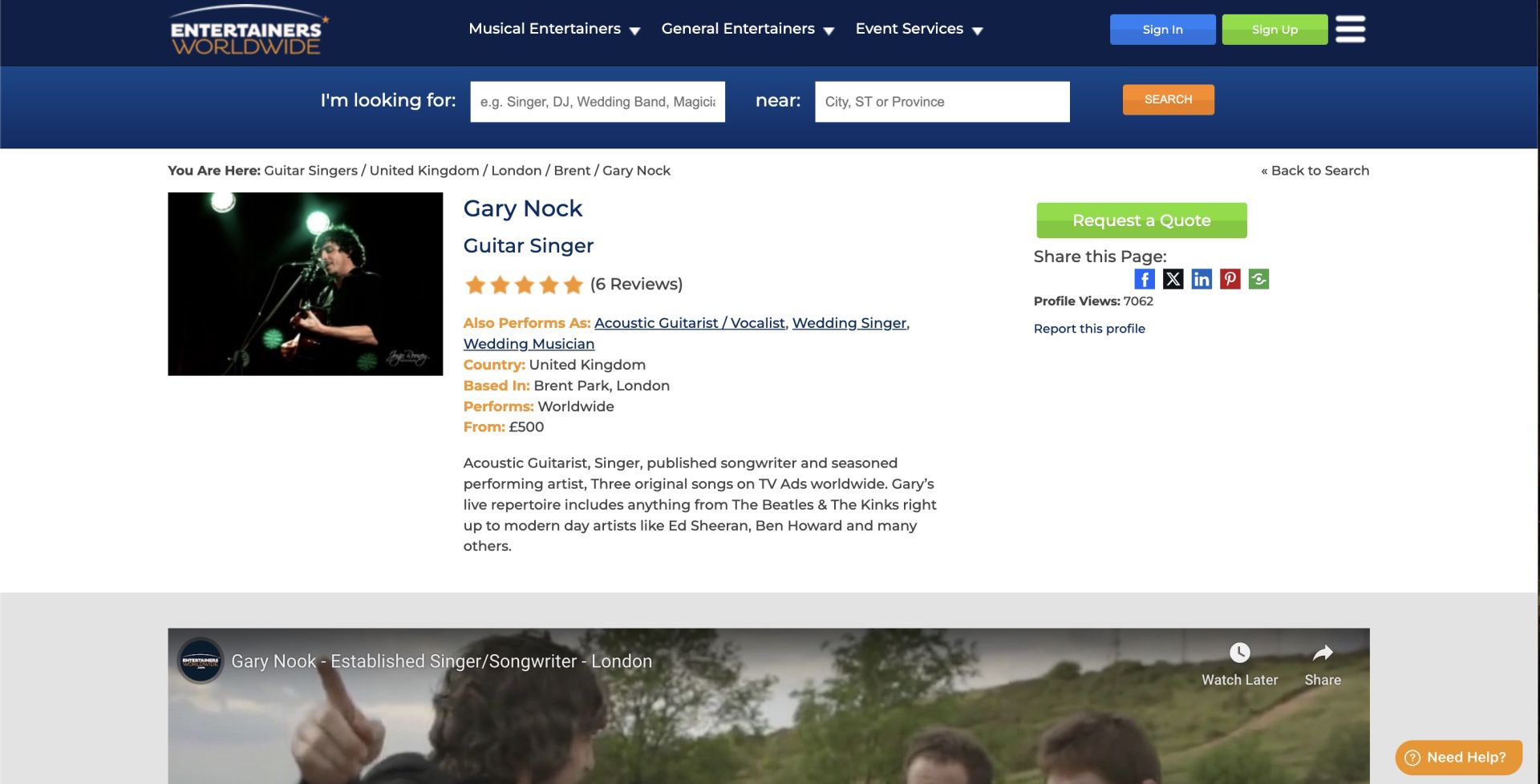
Typically, these directories allow you to include:
- Artist/Band Name
- Genre or multiple sub-genres
- Location and contact details
- Website URL (the crucial backlink)
- Social media links
- Biography or summary
- Track samples or embedded players
Here is the example from https://www.entertainersworldwide.com/ directory

SEO Benefits of Music Directory Listings
Earning Contextual Backlinks
A link from a recognized music directory is usually considered more “natural” by search engines because it’s contextually relevant. For example, if your page is on a platform dedicated to indie rock artists, that link helps Google confirm your site is indeed about music, specifically indie rock. Contextual alignment—music content linking to your music site—strengthens your authority in that niche.
Improved Local Rankings
Local directories often have sections for events or artists in a certain region. Being on them signals to Google that you’re a real, local entity. This can bolster your presence for regionally based keywords, like “wedding musician in [City]” or “local jazz singer.”
Increased Referral Traffic
Not all marketing is about pure “link juice.” Some directories have dedicated user bases who rely on these listings to find new music or book acts. Landing a top position or a featured listing can send a steady stream of real fans or potential buyers to your site.
Choosing the Right Directories
Relevance & Authority
- Relevance: The directory should cater to your genre, location, or at least the music sector in a broad sense. Getting listed on a random business directory might bring minimal SEO benefit.
- Domain Authority: Check the site’s approximate DA via tools like Moz or Ahrefs. A higher authority typically means a more valuable link. However, smaller niche directories can still be beneficial if they have a dedicated user community.
Avoiding Low-Quality Directories
Not every listing site is beneficial. If a directory is spammy, stuffed with random or irrelevant content, or obviously used for link-farming, it might harm your SEO rather than help it. Evaluate the site’s design, user engagement, and typical listings. If it looks questionable, skip it.
Best Practices for Directory Submissions
Fill Out Profiles Completely
Take advantage of all fields that each directory offers:
- Bio: Insert a short but distinct summary, including your genre and a few relevant keywords.
- Band/Artist Photo: A professional image encourages user clicks.
- Links: Ensure your official website or EPK link is present. Some sites may allow social handles or even streaming platform links.
- Upcoming Events: If the site has an event listing function, regularly update your show schedule. That activity can enhance your listing’s visibility.
Consistent NAP (Name, Address, Phone)
If you’re performing locally or trying to rank for local queries, keep your brand’s name, contact info, and location consistent across all directories. This consistency helps search engines confirm you’re legitimate and local to the area you claim to serve.
Leverage Rich Media Where Possible
Some directories allow embedding track samples or videos. It might not directly impact SEO ranking signals, but it can lead to more user engagement on your listing—something that indirectly supports better brand recognition (and possibly more link shares).
Outreach and Promotion
Use Directory Listings in Your PR Strategy
If you appear on a major music directory, share that listing on your socials or website. This synergy can lead to more visits, potentially boosting the value of that listing (as user engagement can be a factor in how directories rank their content internally).
Encourage Mentions and Reviews
Some directories let fans or clients leave reviews or ratings. Encourage satisfied event planners or fans to do so. Positive engagement can highlight your listing in “Top Rated” sections, further improving visibility.
Tracking the Impact
Tools and Metrics
- Google Analytics: Check “Referral” traffic to see which directories send visitors.
- Search Console: Monitor changes in search ranking for your brand or relevant genre-based keywords after adding directory listings.
- Link Monitoring: Keep track of how many new inbound links you gained, ensuring they remain active.
Evaluate Each Directory Over Time
If certain listings generate consistent referrals or search ranking boosts, keep them updated. If a listing yields zero traffic or your link is buried, you might reduce focus or find alternative ways to stand out (like paying for a premium profile if it’s offered and is reputable).
Frequently Asked Questions (FAQs)
Q1: Do all music directories improve my SEO or do some have no effect?
A: Directories that are relevant, reputable, and maintain a decent domain authority can help. Spammy or irrelevant sites might provide little to no benefit—or even be detrimental.
Q2: How many directories should I list my music site on?
A: Quality beats quantity. It’s more beneficial to be on a handful of well-respected, well-trafficked sites than to spam dozens of low-quality ones.
Q3: Can directories replace other link-building tactics?
A: Directories are just one piece of the puzzle. You’ll still want other high-quality backlinks from music blogs, industry sites, or local media. Use directories as a foundational layer, but combine them with additional link-building methods for best results.
Q4: Should I pay for a premium listing?
A: Some directories offer paid tiers that might boost your listing’s visibility. Evaluate the cost vs. potential benefits—like more profile customization, better exposure, or editorial features. Only invest if the site is truly reputable within your niche.
Q5: Can local directories help me even if I tour nationally?
A: Yes. Local directories often carry strong domain authority for city-specific searches. They can be especially useful if you want to rank for phrases like “wedding guitarist in [City],” but might also help your general domain authority overall.
Conclusion
Appearing in music directories and listings can shape your site’s SEO in significant ways, from boosting local visibility to establishing your credibility in your genre. By prioritizing reputable, targeted directories, completing thorough profiles, and consistently updating them, you’ll secure powerful backlinks and open the door to new fans and booking opportunities. Combine directory strategies with other link-building and content marketing efforts for a well-rounded approach to music SEO—leading your brand or band to sustained online success.