
Effective Keyword Research for Musicians: A Complete Guide
Introduction
In today's digital age, the music industry is more competitive than ever.
For musicians striving to stand out, effective Search Engine Optimization (SEO) is essential. By leveraging high-quality seo keywords, artists can enhance their visibility and engage with audiences globally.
This comprehensive guide explores how to find the best keywords specifically tailored for musicians, increasing your chances of being discovered by new fans and growing your brand.
Importance of SEO for Musicians
Why Musicians Need SEO
SEO acts as a digital promoter within the music industry, allowing musicians to gain traction and visibility among their target audience.
By optimizing their online presence, musicians can attract more listeners, capture the attention of industry influencers, and ultimately boost sales, streams, and live show attendance.
The Role of Keywords in Music SEO
Keywords form the backbone of effective SEO. From primary keywords like "indie rock artist" to secondary keywords such as "acoustic covers" or "lo-fi beats," the strategic use of these terms drives organic traffic and improves search rankings. An optimized online presence with well-researched keywords ensures that your music reaches the right ears. Incorporating Latent Semantic Indexing (LSI) keywords, such as "music promotion tips" or "artist SEO strategies," further enhances search relevance and visibility.

Effective Keyword Research for Musicians
Utilizing Tools for Keyword Research
Harnessing the power of keyword research tools can significantly streamline your process. Popular tools such as Google Keyword Planner, Ubersuggest, SEMrush, Ahrefs, Moz, KeywordTool.io, and AnswerThePublic offer diverse insights into relevant music-related keywords.
Utilizing filters to identify specialized terms that relate to specific genres, songs, or demographics enables musicians to create a targeted SEO strategy. For example, SEMrush allows you to see which keywords your competitors rank for, providing valuable data to refine your own approach.
Your goal is to use a keyword research tool to identify the phrases with low keyword difficulty and high search volume. These keywords will allow your content to rank on page one of google search results bringing visitors to your website through relevant content.
How to Do Keyword Research
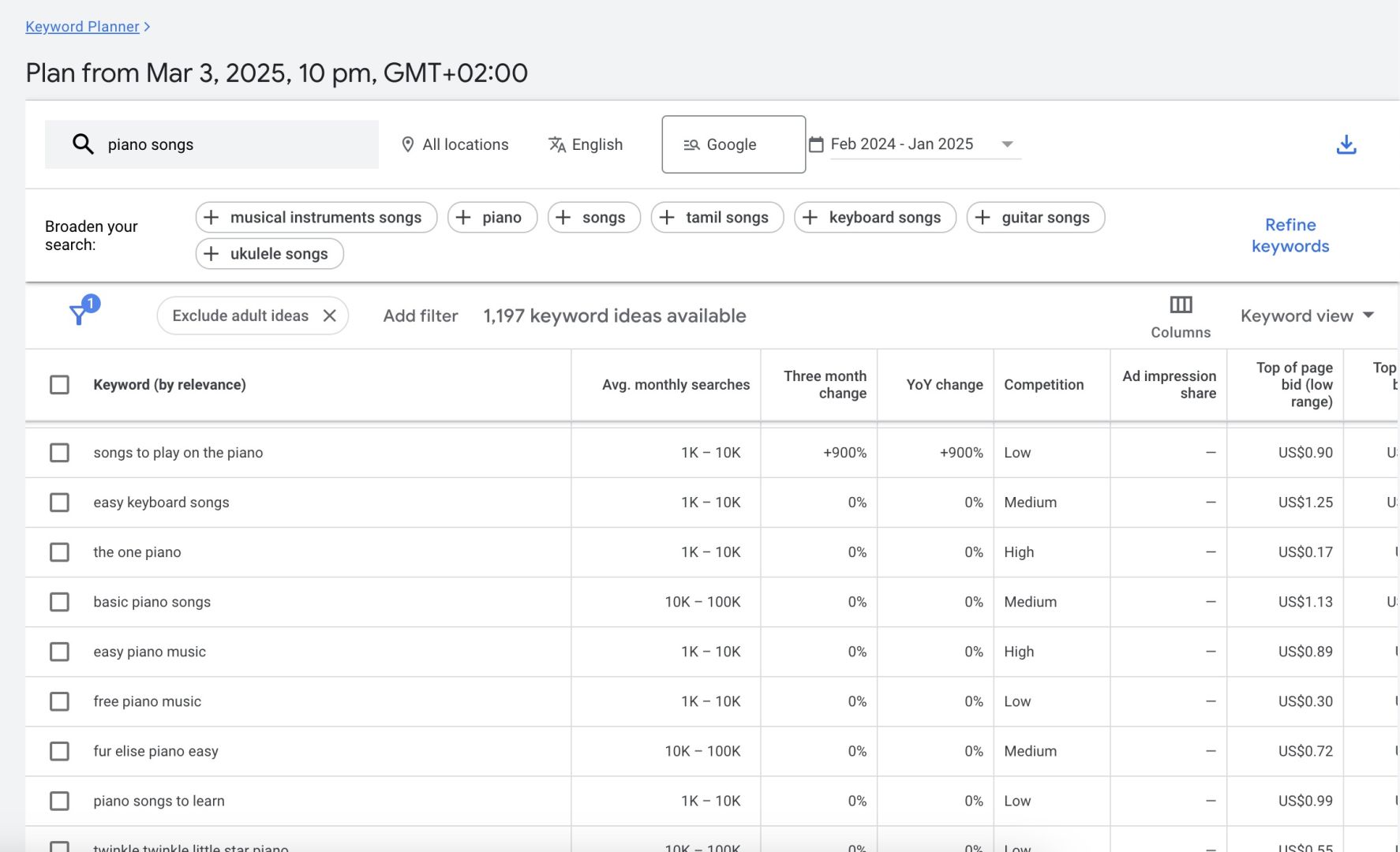
Use Google Keyword Planner (Free)
- Go to Google Ads Keyword Planner and
- Select Discover New Keywords to generate a list of ideas from a short keyword
- Enter terms like “indie music,” “best jazz songs,” or “local rock bands.”
- Look for high-volume, low-competition keywords.
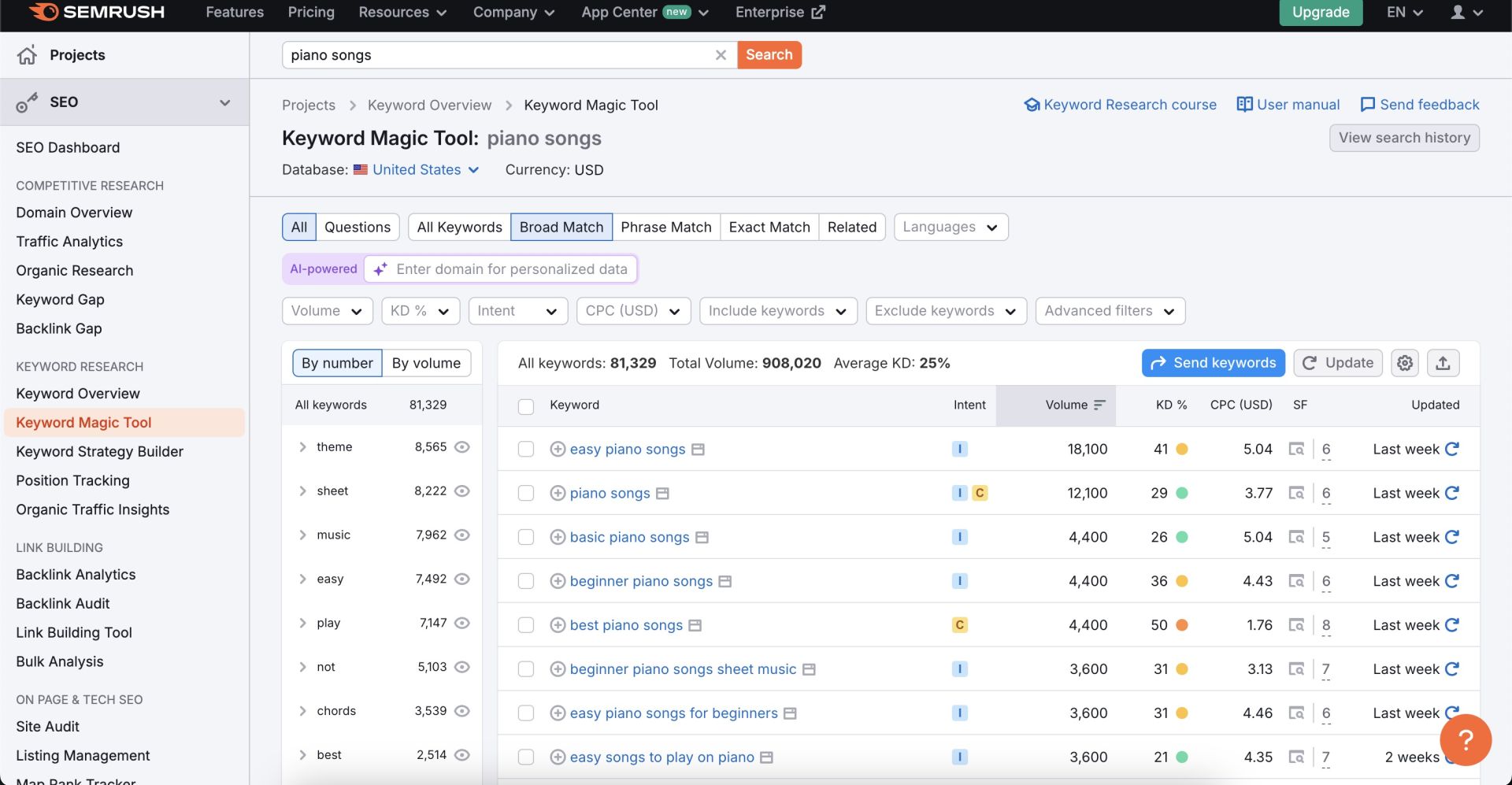
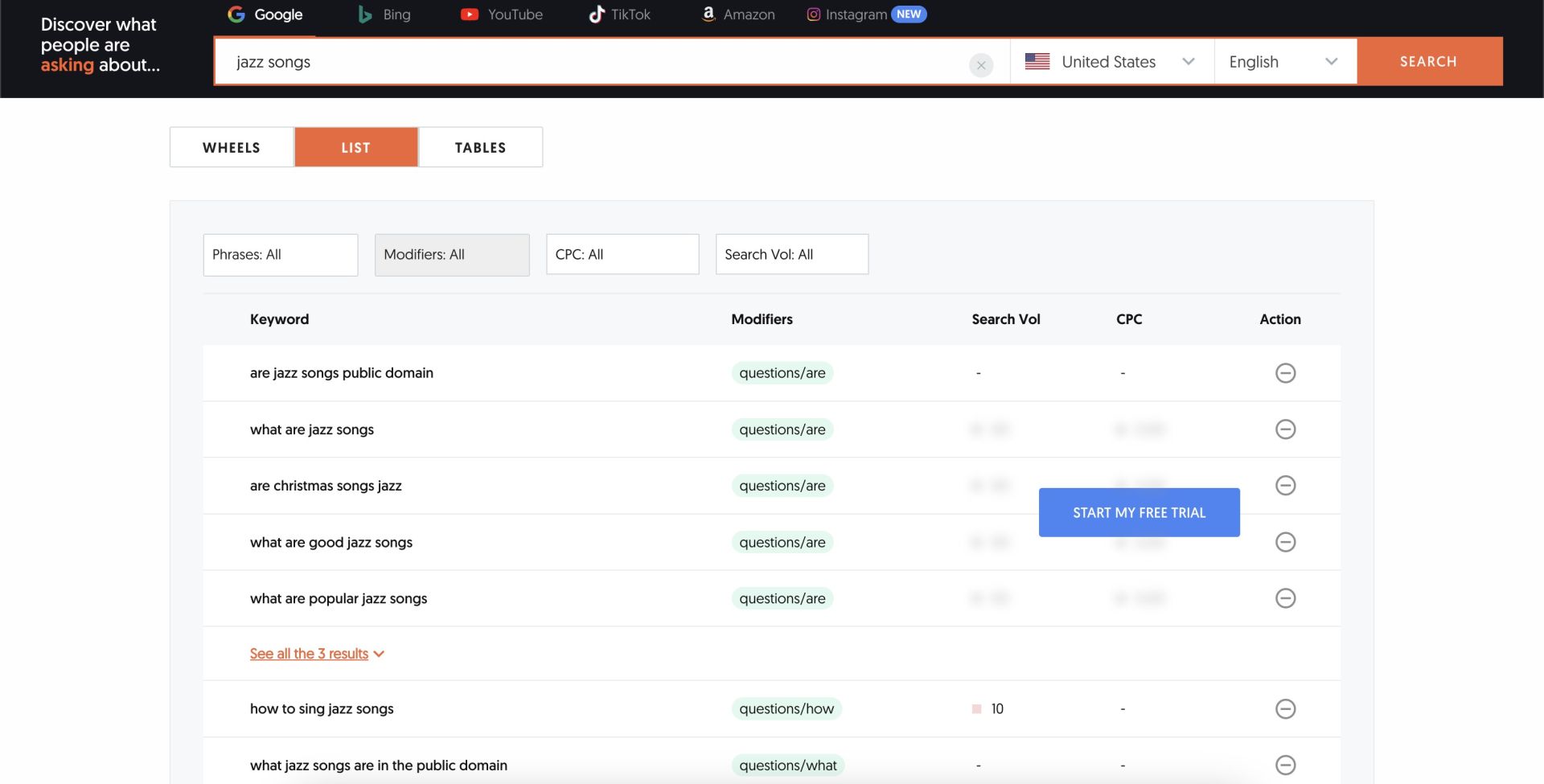
Use AnswerThePublic to Find Questions Fans Are Asking
- Visit AnswerThePublic.
- Type in your genre or instrument (e.g., “how to play jazz guitar”).
- Extract questions and phrases your audience is searching for.
Example — How keyword research influences the traffic on your musician website?
A jazz pianist through the keyword research process finds out that “best jazz piano songs for beginners” gets 5,000 searches a month but has low competition. A pianist creats a detailed blog post to fully explore the subject and now ranks No.1 on google for this query, bringing over 4000 visitors to their website and selling sheet music at scale.
Analyzing Competitors
Understanding your competitors’ target keyword strategies is a critical step in your research. Tools like SEMrush and Ahrefs can identify the specific keywords that top musicians in your genre rank for.
For instance, analyzing an indie artist’s website might reveal successful keyword usage such as "indie pop music in [city]" or "indie band tours this summer".
Understanding what works for successful musicians in your niche helps you create a content strategy that drives traffic.
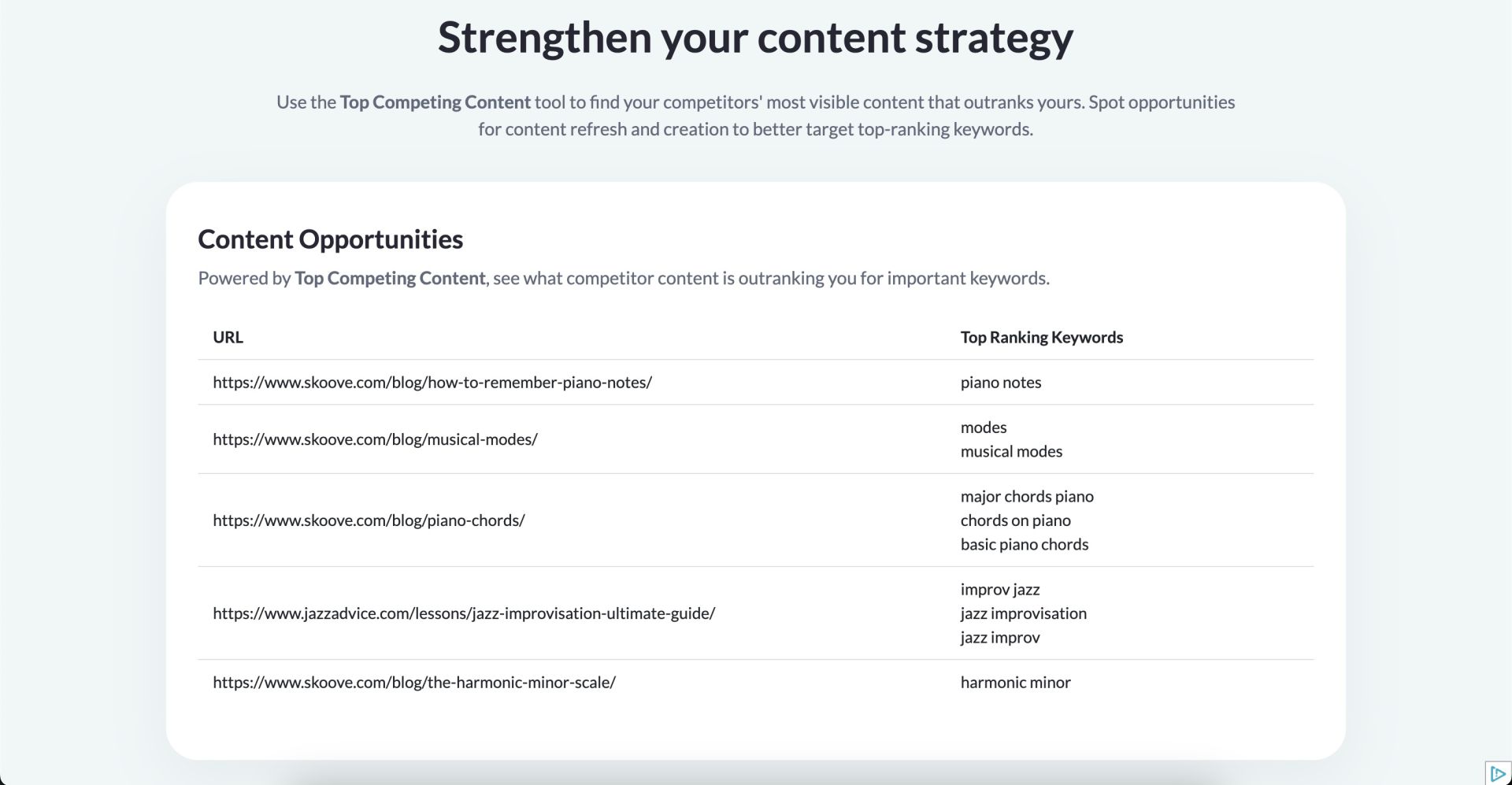
How to Do It
1. Find a competitor’s website (e.g., a musician in your genre).
2. Use Ahrefs or Moz to check their top-ranked keywords.
3. Analyze their content—What blog topics, song descriptions, and tour pages do they use to attract fans?
4. Create content — Create a better content that targets your competitor's keywords and try to outrank them capturing their traffic and diverting it to your website
Brainstorming Keyword Ideas
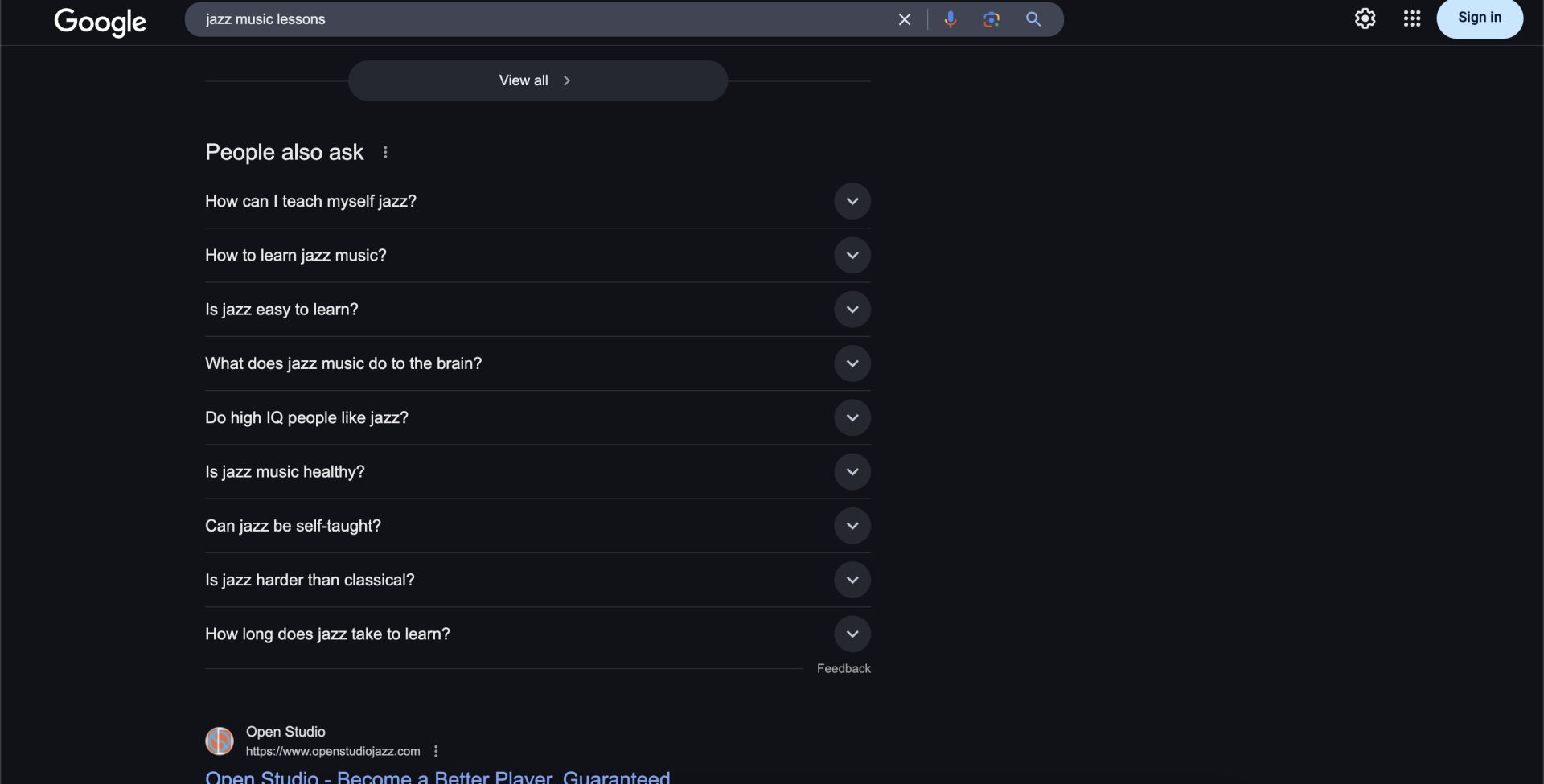
Creativity is key when brainstorming keywords. Techniques such as Google Autocomplete, monitoring related searches, and engaging fans directly can yield a wealth of ideas.
How to Do It
1. Use Google Autocomplete
- Type “best songs for” in Google and see what autocomplete suggests.
Example: “best songs for workout,” “best songs for weddings.”
2. Monitor Related Searches
- Scroll to the bottom of Google search results to see related terms.
Example: Searching for “acoustic covers” might show related searches like “best acoustic cover songs 2024.”
3. Ask Your Fans
- Social Media Polls: Ask your followers what terms they use to describe your music.
- YouTube Comments: Look for recurring words in your audience’s questions.
Long-Tail Keywords for Musicians
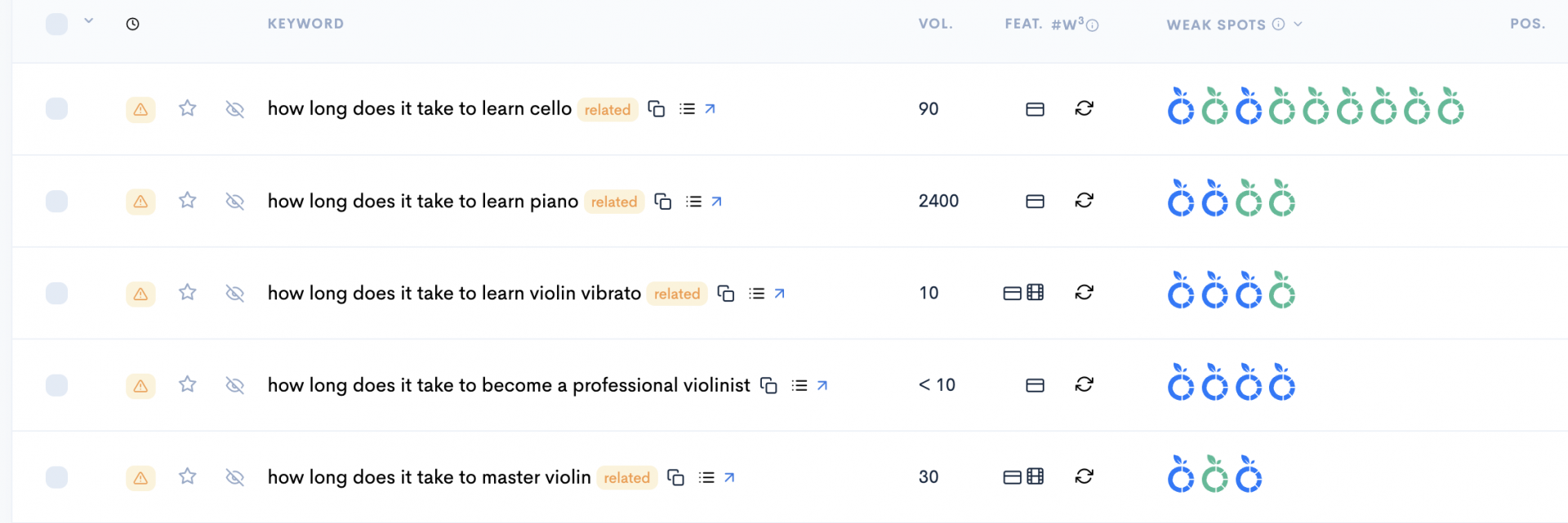
Long-tail keywords, which are specific phrases comprised of three or more words, hold immense value for musicians. They are often less competitive yet drive highly targeted traffic.
For a new website the long tail keywords are practically the only change to rank high on google!
For example, instead of focusing solely on "pop music," you might use "upbeat pop songs for summer road trips." While there might be only 20-50 people searching for this phrase every month, they will all see your webpage targeting this keyword. If you simply target "pop music", you have no change to be on the first page of google.
Generating long-tail keywords can also occur through themes, lyrics, or demographic-focused searches.
How to Do It
1. Start with a Broad Term
- Instead of “jazz music,” try “best jazz saxophone solos of all time” (narrower audience, higher intent).
2. Use Phrases That Match Fan Intent
- People searching “where to find indie concerts in NYC” are likely to buy tickets.
- People searching “how to record an indie song” might be interested in your production services.
3. Structure Keywords in Content
- Blog Post: “10 Indie Rock Songs for a Road Trip in 2025”.
- YouTube Title: “Best Indie Love Songs for Late Nights 🎶 [2025 Playlist]”
- Instagram Hashtags: #IndiePop #ChillMusicVibes #RoadTripPlaylist
Example
A folk artist might target:
🎯 Broad Keyword: “folk music” (high competition)
✅ Long-Tail Keywords:
- “Best folk songs for beginners on guitar”
- “Acoustic folk covers of pop songs”
- “Best modern folk music artists in 2024”
Keyword Categorization
Organizing your keywords into thematic groups enhances strategy effectiveness. Categories can be based on genres (e.g., rock, hip-hop), audiences (e.g., teenagers, parents), or occasions (e.g., weddings, parties).
Understanding the differences between keywords for singles versus albums is also crucial for focused promotional strategies. For instance, keywords like "wedding playlist" or "party music mix" can target specific event-related searches, increasing the likelihood of reaching interested audiences.
Strategies for Optimizing a Music Website
On-Page SEO Best Practices
When optimizing your music website, focus on key elements including titles, meta descriptions, headers, and image alt texts.
Implementing Schema Markup can aid in contextualizing your content for search engines.
Highlighting high-quality content such as artist bios, music blogs, and consistent updates will make your artist website more engaging while improving search rankings.
Creating original content like music videos, behind-the-scenes footage, and engaging blog posts discussing upcoming releases can bolster your SEO efforts.
Off-Page SEO Strategies
Boosting your off-page SEO can increase your online authority. Establishing credible backlinks by guest blogging on music sites or collaborating with influencers enhances exposure. Being active in online music communities or forums also helps build relationships and boosts visibility for your music. Collaborating with reputable music blogs or getting featured on popular music platforms can secure valuable backlinks, further strengthening your SEO profile.
Mobile Optimization
With increasing numbers of users accessing music on mobile devices, a mobile-friendly design is crucial. Ensure your music website loads quickly, is easy to navigate, and displays correctly across various devices. Tools like Google PageSpeed Insights can measure your site’s performance and provide recommendations for improvement. Google prioritizes mobile-friendly websites in search rankings, and a seamless mobile experience directly affects user engagement and retention.
Local SEO for Musicians
For musicians performing locally, Local SEO is vital. Optimize your Google My Business profile by listing local gigs, shows, and events. Here’s a step-by-step guide to setting up your profile:
- Create or Claim Your Listing: Visit Google My Business and create or claim your business listing.
- Complete Your Profile: Add accurate information including your artist name, address, phone number, and website URL.
- Add Photos: Include high-quality images of performances, album covers, and promotional materials.
- Respond to Reviews: Engage with fans by responding to reviews and feedback.
- Update Event Information: Regularly list upcoming gigs, shows, and events with accurate dates and locations.
- Utilize Posts: Share updates, news, and special offers directly on your Google My Business profile.
By capturing geographically targeted searches, you can draw in fans from your locality, enhancing the turnout at performances. Successful local SEO campaigns, such as those by local bands featured in community events or regional music festivals, demonstrate the effectiveness of targeted optimization.
Leveraging Social Media and Backlinks
Social Media Promotion
Engaging effectively on social media amplifies your music’s reach. Utilize genre-specific hashtags like #IndieArtist or #HipHopBeats and encourage fan interaction through posts that resonate with your audience. Share behind-the-scenes content, snippets of new music, or live performance clips, as these can go viral, increasing your online footprint. Platforms like Instagram, Twitter, Facebook, and TikTok offer diverse opportunities to connect with fans and promote your music organically.
Building Quality Backlinks
Strong backlinks contribute to a musician's authority and search rankings. Collaborations, social shares, and music reviews from credible sources can secure these links. Regularly engaging in networking opportunities within the music business, such as participating in interviews or guesting on podcasts, can lay the groundwork for future backlinks. Additionally, getting featured on reputable music blogs or online magazines can significantly enhance your SEO profile.
Monitoring and Adapting SEO Strategies
Continuous SEO Monitoring
Regular monitoring of your SEO performance is crucial for success. Utilize tools like Google Analytics and Google Search Console to assess trackable metrics such as traffic sources, relevant keyword performance, and user behavior. Regular analysis will highlight areas for improvement, allowing you to adjust strategies dynamically. Tracking metrics like bounce rate, session duration, and conversion rates can provide deeper insights into your audience’s engagement.
Adapting to Changing Algorithms
Search algorithms frequently evolve, and musicians must adapt to stay ahead. Recent updates from Google, such as the emphasis on Core Web Vitals and the increased importance of mobile-first indexing, impact how websites are ranked. Keeping up with SEO trends by attending webinars, reading industry blogs, and engaging with SEO communities can help you stay informed. Flexibility in your strategies will enable continued success even as SEO protocols shift, ensuring your music remains discoverable.

FAQs
- What are the best keyword research tools tailored to musicians?
Tools like Google Keyword Planner, Ubersuggest, SEMrush, Ahrefs, Moz, KeywordTool.io, and AnswerThePublic are excellent for discovering relevant music keywords.
- How do I effectively optimize my music website for local searches?
Start by setting up your Google My Business profile, add high-quality photos, respond to reviews, and regularly update event information to capture geographically targeted searches.
- What role does social media play in improving music SEO?
Social media amplifies reach, engages fans, and builds online communities, all of which positively influence SEO by driving traffic and generating backlinks.
- How can I maintain my website’s SEO consistency over time?
Regular updates, keyword adjustments, performance tracking, and staying informed on SEO trends help maintain consistency and adapt to changes.
- Are there specific keywords that work best for different genres of music?
Yes, each genre has its unique terminology; researching and utilizing keywords specific to those genres can enhance targeted outreach and audience engagement.
- How do I assess the keyword strategies of my competitors?
Analyze competitor websites using SEO tools like SEMrush or Ahrefs to identify their target keywords, and review their content and engagement metrics for insights.
- What types of long-tail keywords should musicians focus on?
Musicians should focus on long-tail keywords related to specific songs, themes, demographics, and occasions tailored to their audience, such as "chill lo-fi beats for studying" or "rock songs for summer festivals."
- How often should I update my SEO strategies?
It’s recommended to review and update your SEO strategies at least quarterly to align with the latest trends and algorithm changes.