
AI-Powered SEO for Musicians: Automate Your Rankings
Why AI Matters for Music SEO
Speeding Up Mundane Tasks
Musicians want to focus on writing songs or preparing for gigs, not wrestling with complicated SEO spreadsheets. AI tools can handle routine tasks:
- Keyword Analysis: Instead of painstakingly comparing search volumes for “indie pop in LA” vs. “indie pop band in LA,” AI can offer quick suggestions.
- Content Optimization: Tools can scan your website text and give real-time pointers to improve structure or add missing key terms.
According to one summary, 84% of bloggers and SEO specialists already report AI helps shape their SEO strategies, saving them around 12.5 hours a week. For an artist balancing music production, that’s a lot more practice or songwriting time freed up.
Generating Better Content
AI can offer “smart suggestions” for headings, meta descriptions, or blog outlines, all in line with your music brand. For instance, if you’re a folk singer focusing on environment-themed music, an AI tool can generate blog topic ideas on “Eco-Friendly Touring Tips” or “Acoustic Roots in Nature,” assisting you in matching your brand vibe with relevant search queries.
Mastering Complexity
Even though “live kpop concerts in Hamburg” might seem like a simpler niche than, say, eCommerce, you still have complexities: local gigs, streaming, merchandise pages, gig videos, and discographies. AI-driven SEO tools can handle multi-faceted tasks like analyzing each page’s performance, your site’s internal linking structure, and competitor trending keywords – tasks that might take days if done manually.
Core AI-Driven SEO Features to Look For
Real-Time SEO Scoring
Some platforms offer instant feedback on your website’s content. As you add album descriptions or show schedules, the tool can tell you whether you’re including enough relevant keywords or using them too many times. This immediate critique helps you pivot quickly before publishing.
Fact: Tools that provide real-time SEO scoring can lead to fast improvements in on-page optimization. According to Revolutionizing eCommerce SEO with AI Tools, it contributed to rank #1 on Google within 48 hours for certain keywords.
Automated Rank Tracking
It’s easy to obsess over whether your new album name ranks when fans type it into Google. AI-based rank tracking can automatically check daily or weekly positions for relevant queries (like “indie rock band in Nashville”). You’ll see if you moved from page 3 to page 1 or if you need to tweak your content more.
Intelligent Keyword Research
Many AI SEO tools integrate with robust keyword databases (like Semrush or Ahrefs). Instead of manually sorting a thousand potential terms, the AI can highlight which queries are:
- Low competition (great for smaller artists).
- Related to your genre (“soulful singer-songwriter in [City]”).
- Similar to your brand (e.g., your name or band name plus “tickets” or “discography”).
Semrush alone has over 26.1 billion keywords in its database. AI sifting through that massive volume quickly pinpoints the best ones for your music niche.
Automated Content Creation & Outline
Some AI solutions, like ChatGPT or advanced marketing suites, propose short paragraphs or blog outlines for new releases or band updates. That doesn’t mean you skip creativity; you simply get a starting blueprint, saving you from the blank-page syndrome. Just remember to “humanize” the final text with your unique voice.

Setting Up AI SEO for Your Music Site
Integration with Google Search Console
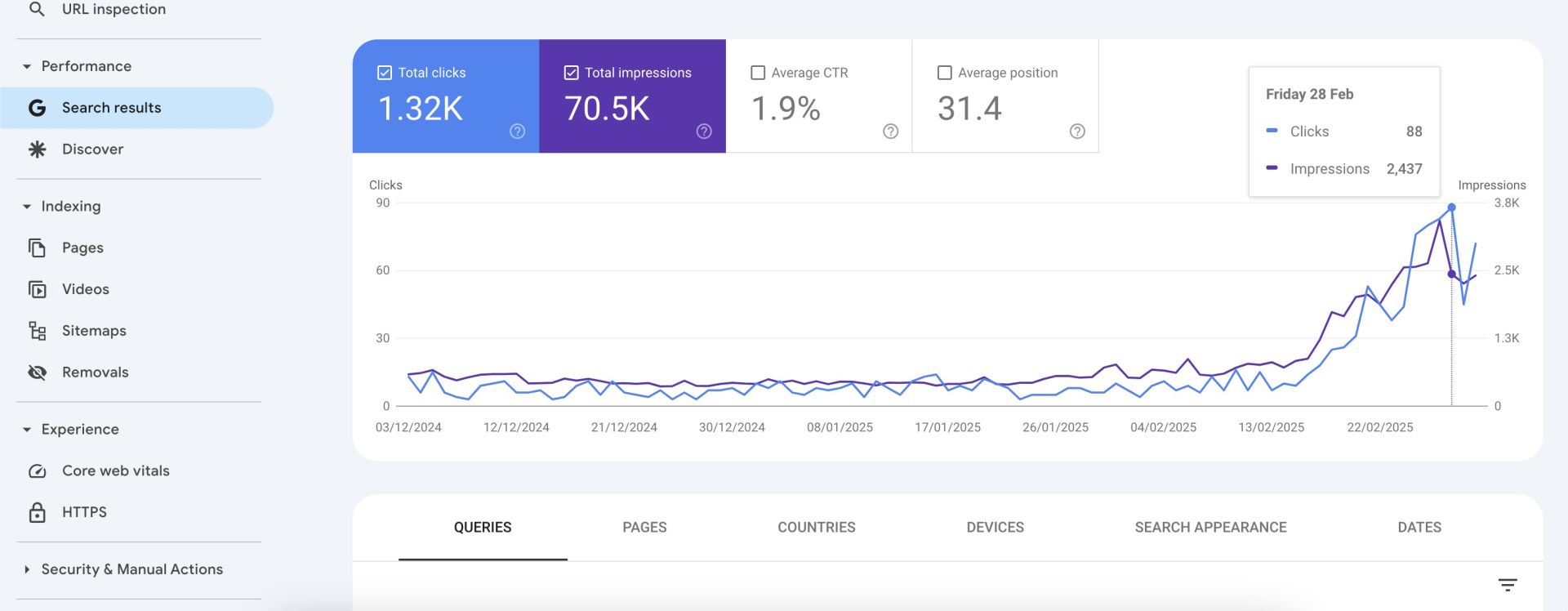
Ensure the AI tool you choose can pull data directly from Google Search Console for insights on your daily impressions, clicks, and indexing issues. Failing to link these two is a common mistake. Also, check if it can retrieve organic data from Google Analytics.
Personal Experience: Once we integrated an AI platform with Search Console, we got immediate notifications when search queries for our musician ai tools spiked – usually after we posted a new tool and description on website. This proves that AI assisted SEO works in 2025!
Technical Checks: Speed, Mobile, and More
AI can run a quick audit to confirm if your pages are mobile-friendly or if your album cover images are too large. Some tools suggest minifying files or implementing caching solutions. Freed from manual checklists, you can let the AI highlight performance or mobile issues.
E-E-A-T and Schema Markup
“Experience, Expertise, Authority, Trust” – these guidelines matter if you want your content to appear credible. AI software can analyze your site for signals that prove you’re a legitimate musician brand (like consistent references to your discography or recognized streaming links). Some tools even guide you through adding schema markup (like MusicGroup or MusicAlbum) to help Google create a knowledge panel about your band.
AI SEO Tactics Musicians Can Apply
Automate On-Page Content Updates
Imagine an AI that detects your “Shows” page is missing relevant local terms for upcoming gigs. The AI suggests adding “Live in Brooklyn’s Greenpoint district” or “Acoustic set in West Village.” This not only helps fans who might search “Brooklyn acoustic nights” but ensures your page stays up to date with no manual scouring of every paragraph.
Monitor Trending Topics
Using AI Trend tools (like “Exploding Topics” or “Google Trends” integrations), you can see if a certain sub-genre or viral challenge is spiking. If you jump on it quickly – maybe a blog post or a short release referencing that vibe – you can capture heightened interest. This strategy is especially potent for more modern genres that rely on quick social adoption.
Link-Building Suggestions
AI might suggest which local music blogs or press sites often mention artists like you but haven’t linked to you yet. Instead of manually rummaging through competitor’s backlinks, the AI identifies the best outreach targets, streamlining your link-building. Some tools even draft outreach email templates you can refine and send to music bloggers or local newspapers.
Pro Tip: Always personalize your pitch. AI can give you a starting point, but your unique story or approach is what clinches the backlink or feature.
Notable Free & Paid AI SEO Tools
Offers automated rank tracking, real-time SEO scoring, and AI-based content creation. Useful if you want a single platform to handle multiple tasks.
Surfer SEO (Free AI Tools)
Specialty: Surfer offers limited free solutions (like a content editor demo) analyzing how well your text covers crucial terms. Musicians can ensure each release page or EPK meets keyword density norms.
Semrush’s AI Content Assistant
Semrush recently introduced AI modules that help generate content briefs or topic suggestions. The free version might be limited, but still beneficial for smaller music websites seeking basic recommendations.
ChatGPT with SEO Plugins
Personal Attitude: I often use ChatGPT for brainstorming metadata or rewriting a blog post intro with a more “hooky” angle. Some expansions integrate SEO plugins that check word count, readability, or keyword presence. Just verify facts thoroughly if ChatGPT references your discography or upcoming gigs incorrectly.
Common Missteps with AI SEO
Fully Relying on AI-Generated Content
Google warns that purely AI-driven text lacking authenticity could be flagged. Instead, treat AI outputs as a rough draft, then inject your personal stories or creative angles.
Overlooking Manual Edits
AI might recommend you target “rock band in London” 15 times in a single page, which is obviously overkill. Always keep user experience top priority – people (and search engines) notice keyword stuffing.
Not Fact-Checking
Sometimes AI fabricates data. If your new single is “Star Trails,” the AI might incorrectly mention it was “nominated for a Grammy.” Double-check each assertion. Don’t let false claims degrade your credibility.
Tracking and Refining AI Efforts
Analytics & Search Console
Keep an Eye on organic visits to your band site or specific album pages. Did the new AI-driven rewording or the addition of new blog posts yield better ranking or traffic?
Audience Feedback
Fans might comment on or share your newly optimized content if it resonates. If they’re ignoring it, maybe the AI direction or keyword approach missed the mark. Adjust to better reflect your musician persona.
Ongoing Learning
AI SEO tools evolve fast. Stay updated on new features – maybe they add advanced local SEO for gigs or better multi-language capabilities. If you remain engaged, you can keep pushing your site’s ranking potential.
Get Expert Support
If you’re feeling overwhelmed by the array of AI tools and how to integrate them effectively for your music brand, consider letting professionals handle it. Our website design services do more than just craft a visually stunning site; we embed AI-driven SEO from the ground up – from structured data for your discography, to content templates that reflect your band’s identity in every post. That way, you can focus on what you love – making music – while the AI paves the path to higher rankings.
Conclusion
AI-powered SEO is no gimmick. It’s a tangible asset to any musician or band wanting streamlined content creation, sharper keyword insights, and improved site performance. By employing the right tools, verifying the AI’s suggestions, and injecting your authenticity, you can transform a ho-hum website into a dynamic hub that climbs search rankings. The best part? You don’t have to be a code wizard or marketing guru to harness these benefits; the technology is becoming more accessible daily.
Next Step: Pick one or two AI SEO tools that intrigue you and integrate them into your next content push or site update. Monitor the results. If you see improved traffic, deeper fan engagement, or new gig inquiries, you’ll know your AI-driven SEO journey is off to a stellar start – effectively automating part of your brand-building so you can get back to the music you love.