
SEO Audit for Musicians: How to Improve Your Website Ranking
I still remember the day I found out my web design website was practically invisible on Google. We had just created our web design platform for musicians, and I felt proud imagining artists searching for web design landing on our perfectly designed homepage. Then reality struck: we didn’t show up on the first page, or the second, or even the tenth. That’s when I realized the importance of SEO and, specifically, conducting a thorough SEO audit — for my own web design business and for other musicians.
Over time, I’ve refined a personal checklist of steps to analyze and fix site issues, ensuring I reach musicians with my web design content, and our clients reach their listeners searching music.
Below is that process—peppered with my own experiences and insights—on how to elevate your musician website’s ranking in search result
Why Musicians Need an SEO Audit
Visibility Means More Listeners and Opportunities
Let’s face it, the Internet is where most fans, event planners, or labels first stumble upon new acts. If you’re nowhere to be found on Google, you’re missing out on potential audience growth and gig offers. An SEO audit reveals the blind spots preventing your website from appearing in relevant searches.
The Competitive Landscape
Maybe you share a name with another band or your city brims with similarly styled musicians. SEO differentiation helps you stand out, ensuring that when someone searches for “folk-pop singer in [City],” your site is top-of-mind (or top-of-search).

Setting Up for the Audit
Tools to Gather
1. Google Search Console: Offers data on how your site appears in searches, any indexing issues, and potential errors.
2. Google Analytics: Tracks visitor behavior, top-performing pages, and bounce rates—handy for diagnosing user experience problems.
3. SEO Crawling Tool: Tools like Screaming Frog or Sitebulb crawl your site for technical issues such as broken links or poorly optimized pages.
4. Keyword Tracker: A system (like Ahrefs or SEMush) to see which keywords you currently rank for and to measure improvements.
Benchmarking Current Performance
Before making improvements, note your baseline:
- Which keywords do you rank for, if any?
- Average position in search for your band name plus relevant queries (“[Your Genre] band in [City]”).
- Organic traffic from search engines in the past month.
Taking a snapshot ensures you know if your changes yield actual gains in the coming weeks.
Technical Audit Steps
Check Indexing Status
Google Search Console can reveal whether all your pages are being indexed. If your homepage or key content is missing from the index, fans can’t find you.
- Sitemap: Submit an up-to-date XML sitemap so Google sees your pages.
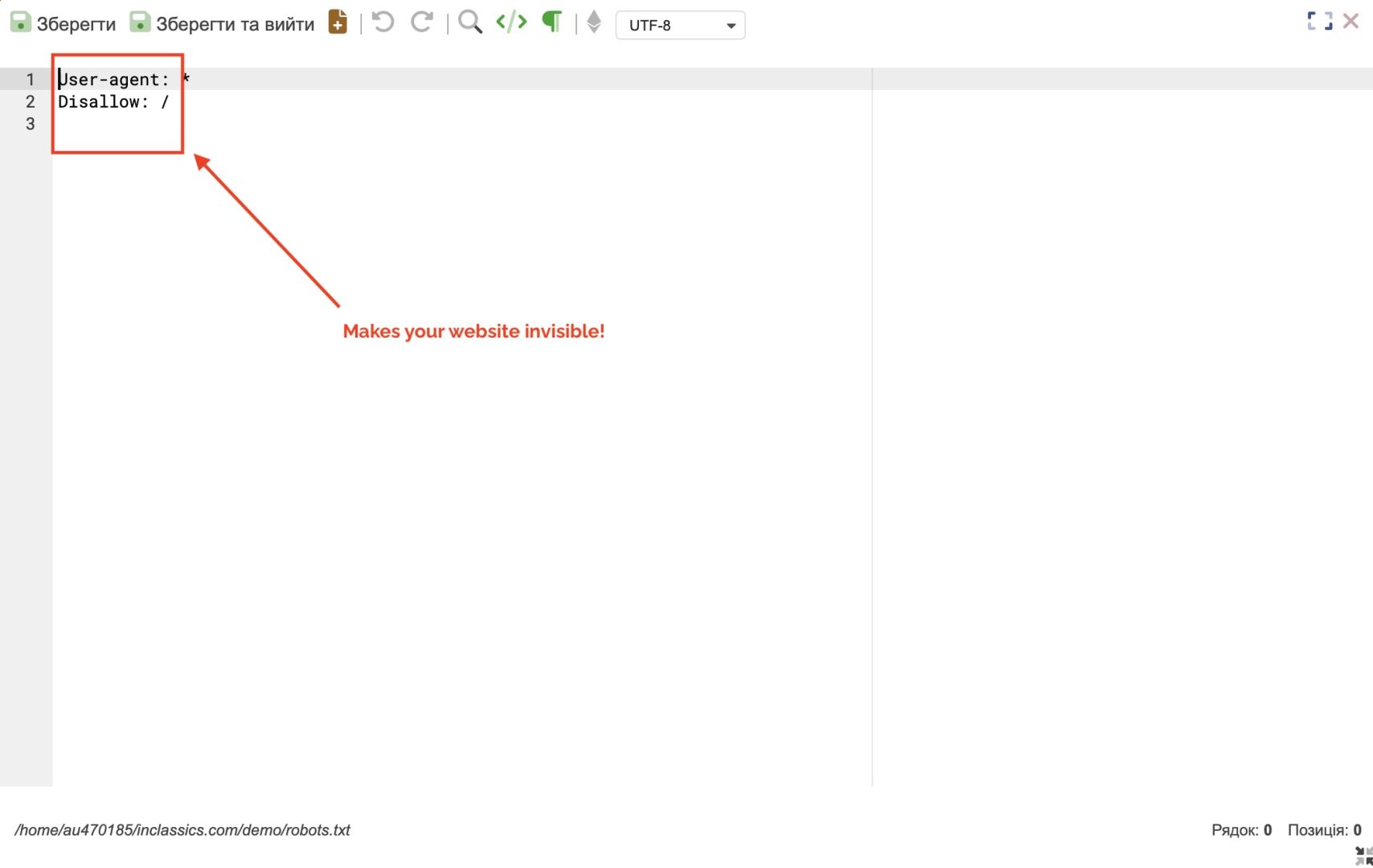
- Robots.txt: Make sure you’re not accidentally blocking critical sections of your site from crawling.
Once an artist who was struggling to rank on google came to us to remake their website. When we checked their website we found out that their entire website was disallowed in robots.txt—so the google crawlers were not allowed to check their website and rank it! Deleting just 1 word from their robots.txt file solved the problem with indexing and made their website discoverable without needing to redesign a website and spend a lot of money on that.
Inspect Site Speed
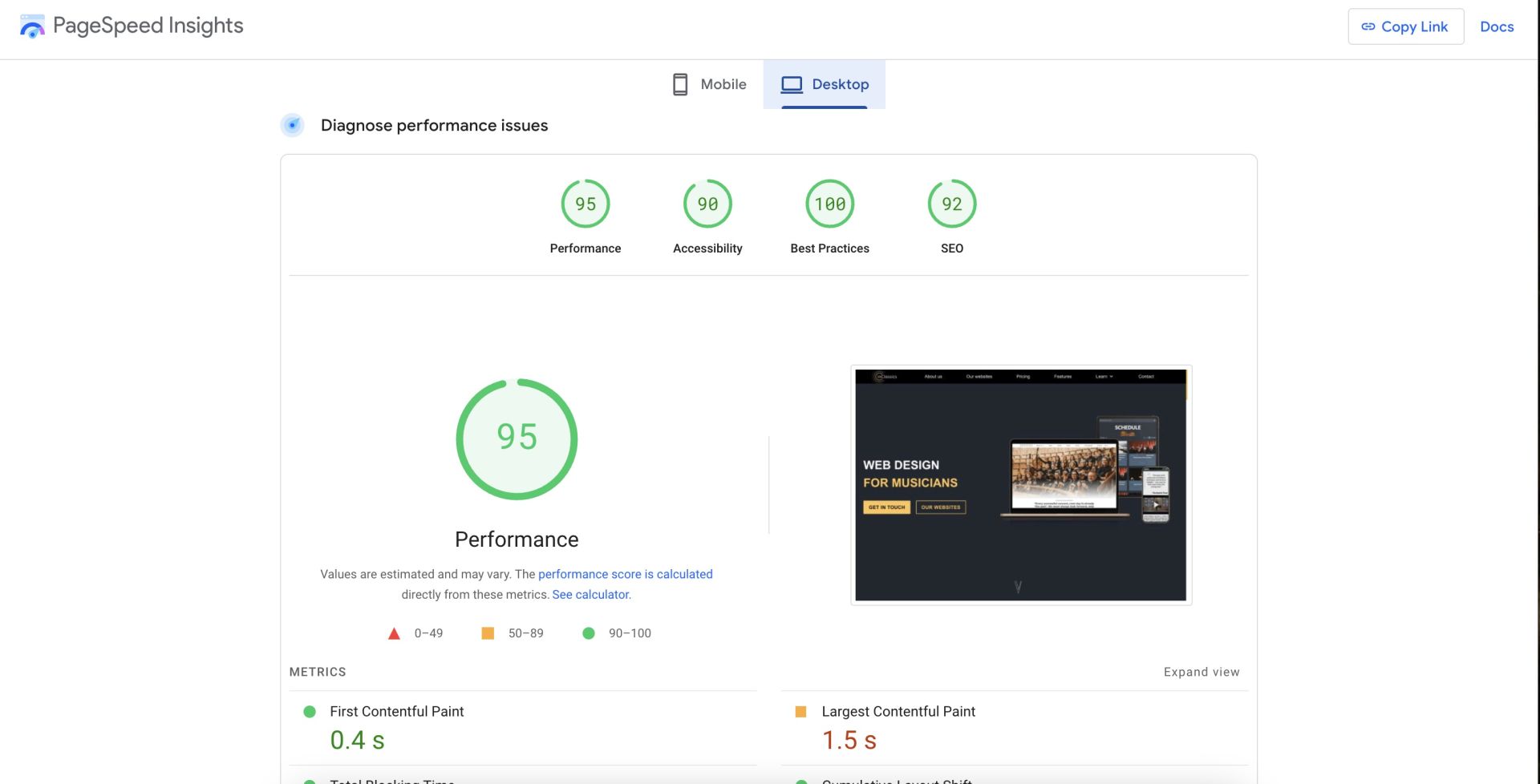
Slow pages = frustrated fans. Tools like PageSpeed Insights or GTmetrix highlight how fast your site loads and suggest improvements (like compressing images or minifying scripts).
- Optimize Images: Try using modern formats (WebP) or compression to keep load times quick.
- Enable Caching: Store resources so returning users (and repeated crawls) load pages faster.

Mobile Responsiveness
These days, fans often find new music while scrolling social feeds on their phones. Google also uses a mobile-first index, meaning it looks at your mobile layout before anything else.
- Responsive Layout: Ensure text, images, and menus adapt to various screen sizes.
- Mobile Navigation: If your site has event details or ticket links, keep them easy to tap on a smartphone.
Fix Broken Links & HTTP Issues
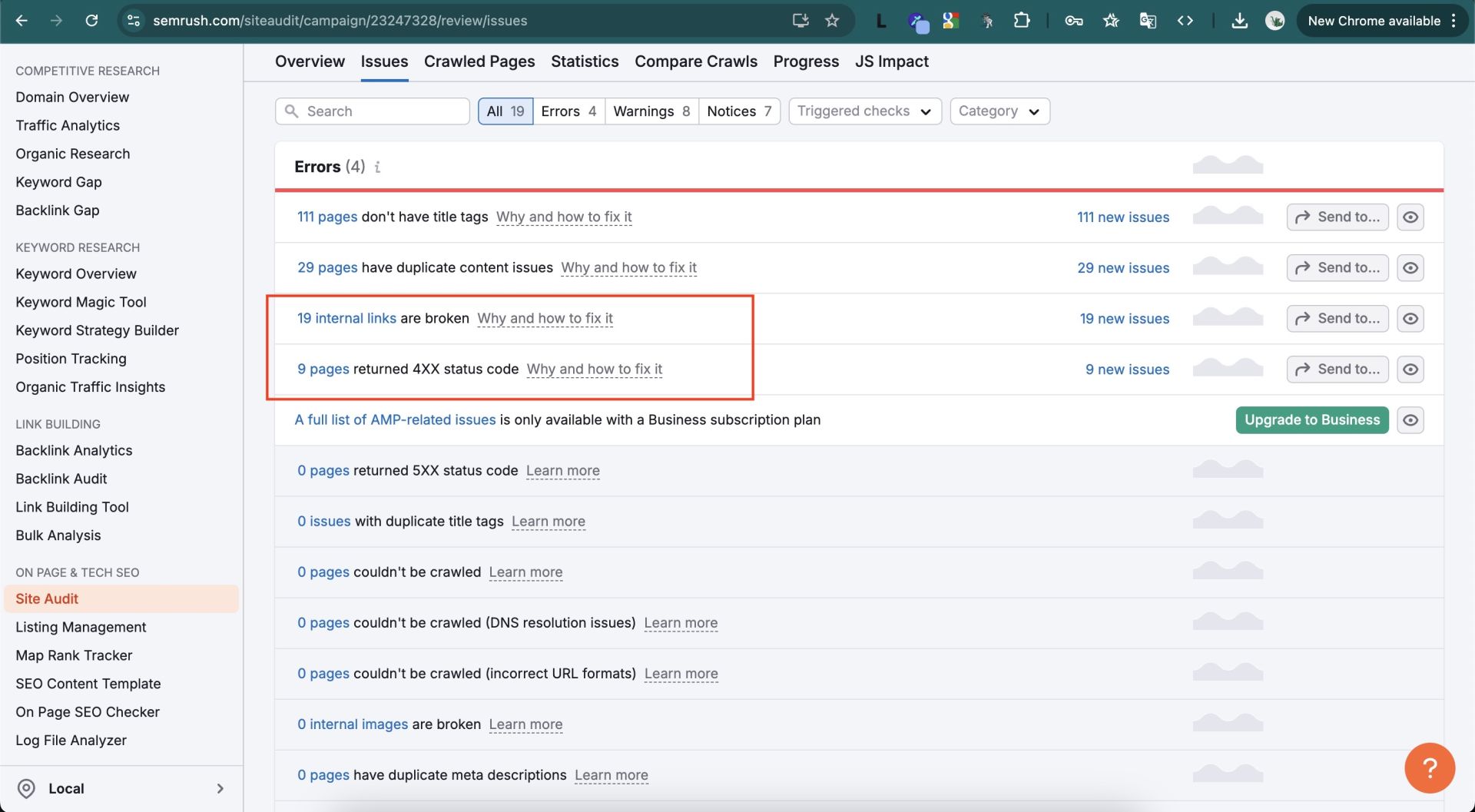
Broken links or 404 errors degrade user experience and hamper search crawling. Tools like Screaming Frog identify these quickly, letting you fix or redirect them.
- 404 to 301: If you removed an older track or page, redirect that old URL to something relevant (like the homepage or new release).
- SSL (HTTPS): Be sure your domain uses a secure certificate. Google factors site security into rankings.
On-Page SEO Review
Keyword Research for Musicians
Who’s searching for your type of music, and with which terms? Brainstorm:
- Branded Keywords: Your band/artist name, album titles, signature songs.
- Genre + Location: E.g., “indie folk duo in Seattle.”
- Event or Niche: “Wedding singer in [region],” “live jazz performer.”
We do keyword research for every article we publish on this website, that's how you got to this blog and that is how we bring people to the websites we create for musicians
Title Tags & Meta Descriptions
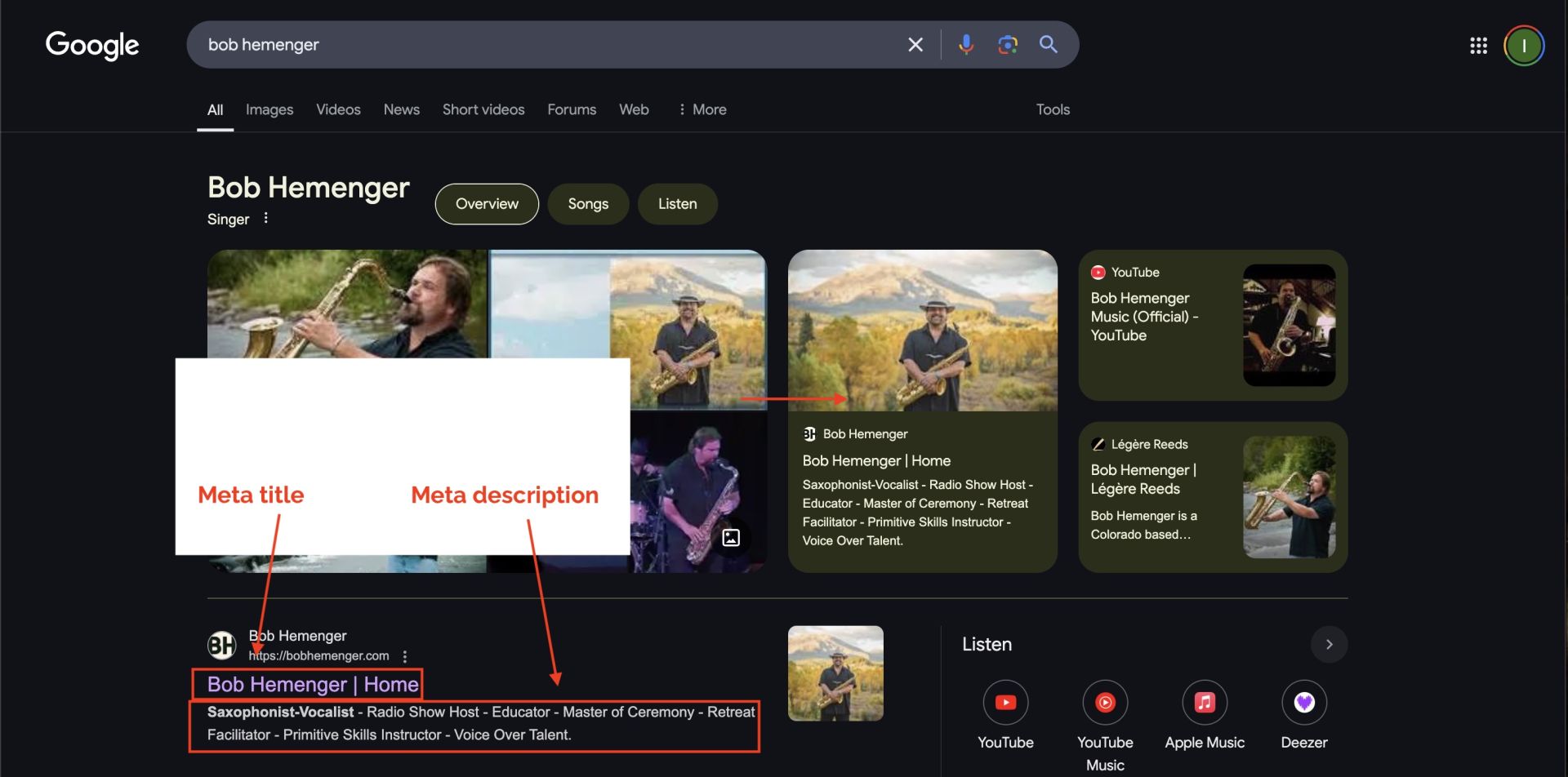
Each page should have a clear, unique title:
- Home Page: [Artist Name] | [Genre] from [Location]
- Album Page: [Album Title] by [Artist Name] – Listen Now
- Event Page: [Artist Name] Gig Dates | Upcoming Shows
Include main keywords in meta descriptions (under 160 characters) to encourage click-through.
Content Quality
Sprinkle in references to your style, influences, or notable accomplishments. If you run a blog with show recaps, behind-the-scenes stories, or gear talk, keep it well-structured for easier reading.
Use our Blog Post Writer to create your SEO optimized content
Pro Tip: Use subheadings (H2/H3) that mention your genre, track name, or local gig details. The extra clarity helps search engines parse your content’s context.
Off-Page Factors: Social Media & Backlinks
Social Signals
While not direct ranking boosters, an active social presence can get fans, music bloggers, or local press to reference your site. That ultimately yields quality backlinks from external pages.
Link Building Tactics
- Music Directories: Add yourself to local or niche directories (like ReverbNation).
- Guest Blogging: Write about your music experiences on relevant music blogs, linking back to your site.
- Press Coverage: Gently pitch local news or arts magazines about your upcoming release or gig to earn editorial backlinks.
Measuring Success & Iterating
Track Your Rank & Traffic
Check Google Search Console after each change for any ranking improvements. Monitor your brand name plus any chosen keywords. If you see a climb in position, that’s a good sign the audit steps helped.
Update Content Regularly
Google loves fresh info. Each new show, single, or collaboration is a chance to add or refresh site content. A consistent update habit keeps your domain relevant.
Evaluate Another Audit
SEO isn’t a one-and-done. Maybe do a lighter version of this audit every quarter or half-year. Check for new broken links, keyword usage, or site speed drags. Tweak where needed.

SEO Audit Checklist Summary
1. Technical Setup
- Check indexing, sitemaps, robots.txt
- Verify site speed, mobile responsiveness, and SSL
2. On-Page Optimization
- Keywords in page titles, meta descriptions, headings
- Good internal links, no 404 errors or slow loading scripts
3. Content Strategy
- Blog or news page with relevant, updated content
- Alt text for images; embed videos responsibly
4. Off-Page & Link Building
- Submit to music directories, local listings, or review sites
- Outreach for backlinks from music bloggers, local press
- Guest post or collaborate with other artists
5. Local SEO
- Google Business Profile (if local gigging or teaching)
- NAP consistency
6. Monitor & Adjust
- Use Google Analytics & Search Console
- Refresh older content
- Semi-annual mini audits to keep site in top shape
Frequently Asked Questions (FAQs)
Q1: How often should a musician do an SEO audit?
A: At least once or twice a year, or after major site revamps. This ensures you catch any newly introduced errors and keep up with shifting trends in the music scene and Google algorithms.
Q2: What’s the biggest SEO mistake for band sites?
A: Typically ignoring basic on-page elements—like missing meta tags, uncompressed images, or no mobile responsiveness. Another biggie is ignoring local references if you want local fans or gigs.
Q3: Can I skip certain steps if I’m short on time?
A: If pressed, focus on the big wins: fix major technical issues (404s, slow speed), craft strong title tags, and ensure mobile-friendliness. Then refine more details later.
Q4: Do I really need a blog for my music site?
A: While not mandatory, a blog can regularly push new content, demonstrate activity, and house more SEO-friendly text. It’s a plus for those wanting consistent search traffic growth.
Q5: What if my site is small with just a homepage and a bio page?
A: That’s okay! Optimize those pages thoroughly. Make sure your homepage properly features your name, genre, location, and some descriptive text. Possibly add a dedicated “Events” or “Discography” page if you expand later.
Conclusion
A thorough SEO audit can be a game-changer for any musician aiming to appear in relevant search results. From ensuring your website’s structure and speed are top-notch, to refining on-page content, to nurturing social and backlink strategies—these steps will collectively elevate your brand’s online presence. Once you get comfortable with the SEO routine, your site should steadily climb the ranks, letting more fans and industry insiders discover your music.
Next Step: Fire up a site crawler or log into Google Search Console. Pinpoint those issues—and fix them—so your fans will find you first, not a random forum or aggregator site. Your best audience awaits, and with a well-executed SEO audit, they’re just one search away from pressing “Play.”