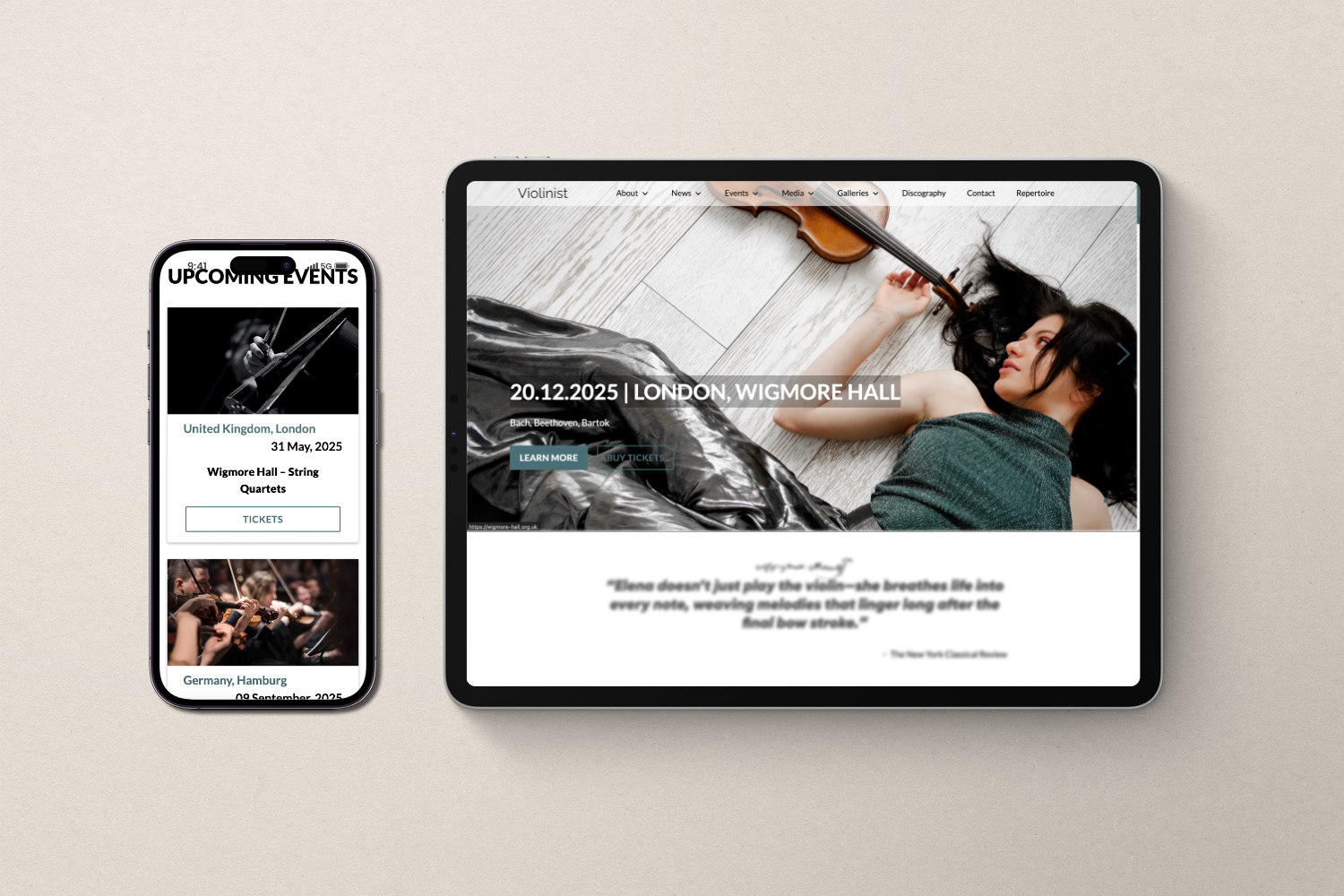
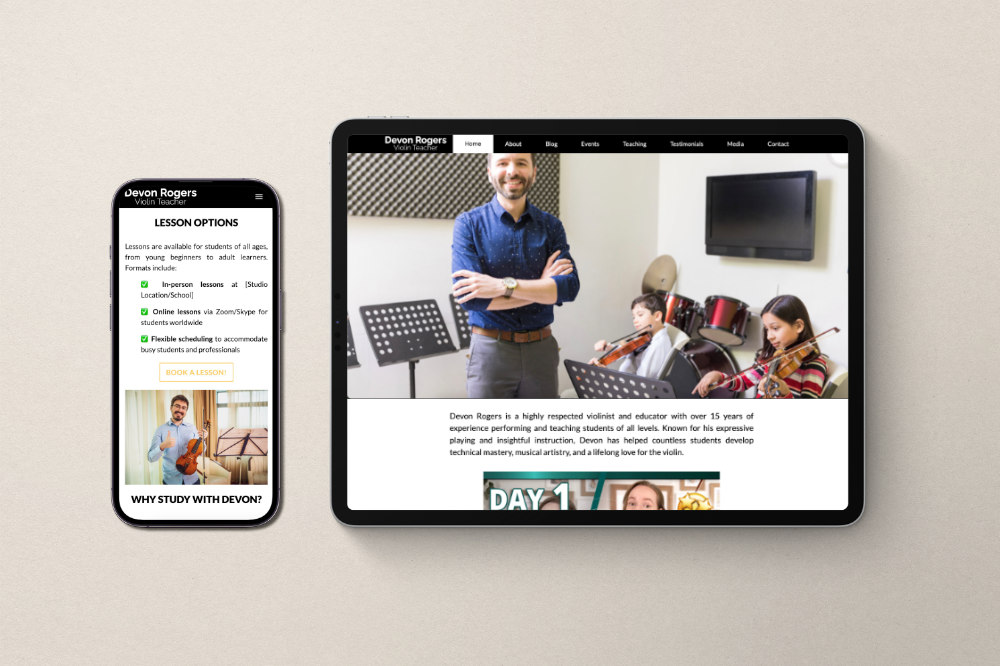
In depth: Do musicians need a website in 2025?
Table of Content
The short answer is: Yes, absolutely.
The Internet is not going away anytime soon. It's an important part of our lives. People are spending more time online than ever before, and online searching is more popular than ever.
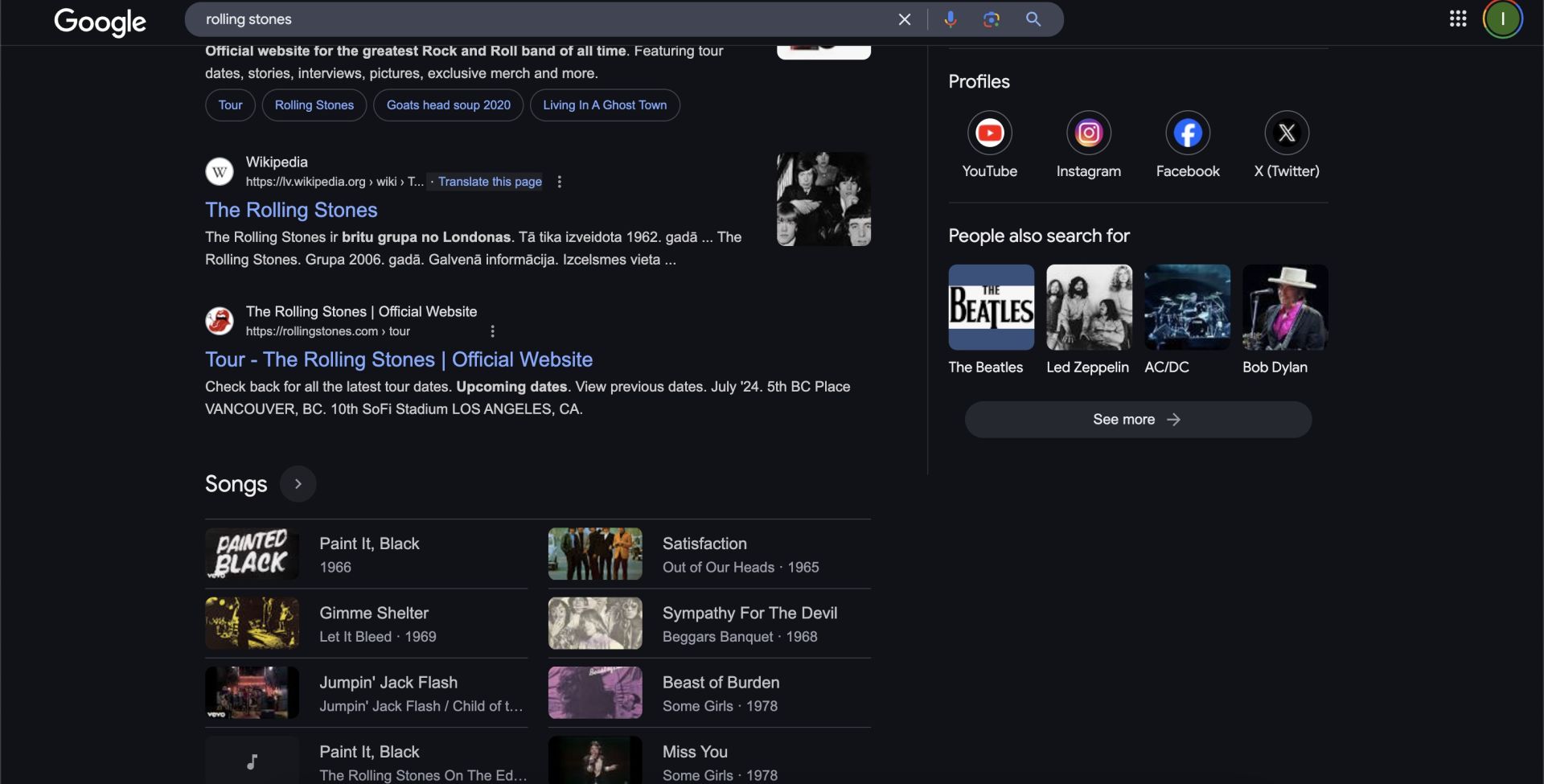
Ask yourself a question, "Does anyone have a reason to Google my name?". If the answer is yes, you need an artist website.
It's important to own the search results for your name. The results on page one are often where your potential fans will see your name first.
Whether you are just starting your music career or already enjoying international success, you need a professional website.
Having your own website can help you get more performance opportunities, new sources of funding for your ideas, and build closer relationships with your audience.

Why do musicians need a website?
There are many reasons why music artists need a website.
- You own your search results. You own your name. You own your design.
Offering your website is the only way to control what people see when they google your name. This is the best way to create a great first impression and turn curious website visitors into long lasting fans.
- It's a place where your audience can learn all about you and your music.
Gather all your information in one place. Put your news, dates, pictures and music on your website. Add links to all your social media profiles and music streaming services.
Pro Tip. Do not forget to set up a dedicated section for press and promoters so it's easy to talk and write about you.
- This is the best digital marketing tool at your disposal.
"Marketing" is not a dirty word. Music business is extremely tough and competitive. You must use every possible tool to stand out. Today it's more important than ever to have a solid digital marketing strategy.
With a website, you can grow your mailing list, collect user data, and build an engaged fan base. This will help you to effectively develop your brand and reputation, promote yourself, your music, and upcoming events, and stay top of mind with audiences and professionals alike.
- It allows you to sell your music, tickets and products.
Many musicians are moving to selling directly to their fans. This means that you can sell music downloads, CDs, tickets and merchandise directly on your website, commission-free.
- It allows you to build a loyal fan base and connect with your fans and music industry professionals.
A website allows you to share your music, your ideas, and your stories with anyone who is interested. By staying in touch with your fans and sharing exclusive content with them, you can maintain their loyalty, sell more tickets and music, and find financial support for your ideas.
Who needs a website and at what stage of a music career?
Anyone who shows up with their name in search results will benefit from a website. You need to start your website as soon as you decide to get serious about your music.
Whether you are a student, teacher, soloist, chamber or orchestral musician, solo singer or choral artist, you should have a website today!
You never know who is looking for you. Having an online presence can be the difference between someone discovering your music or losing them forever.
At different stages of your career, you can focus on different aspects of your website.
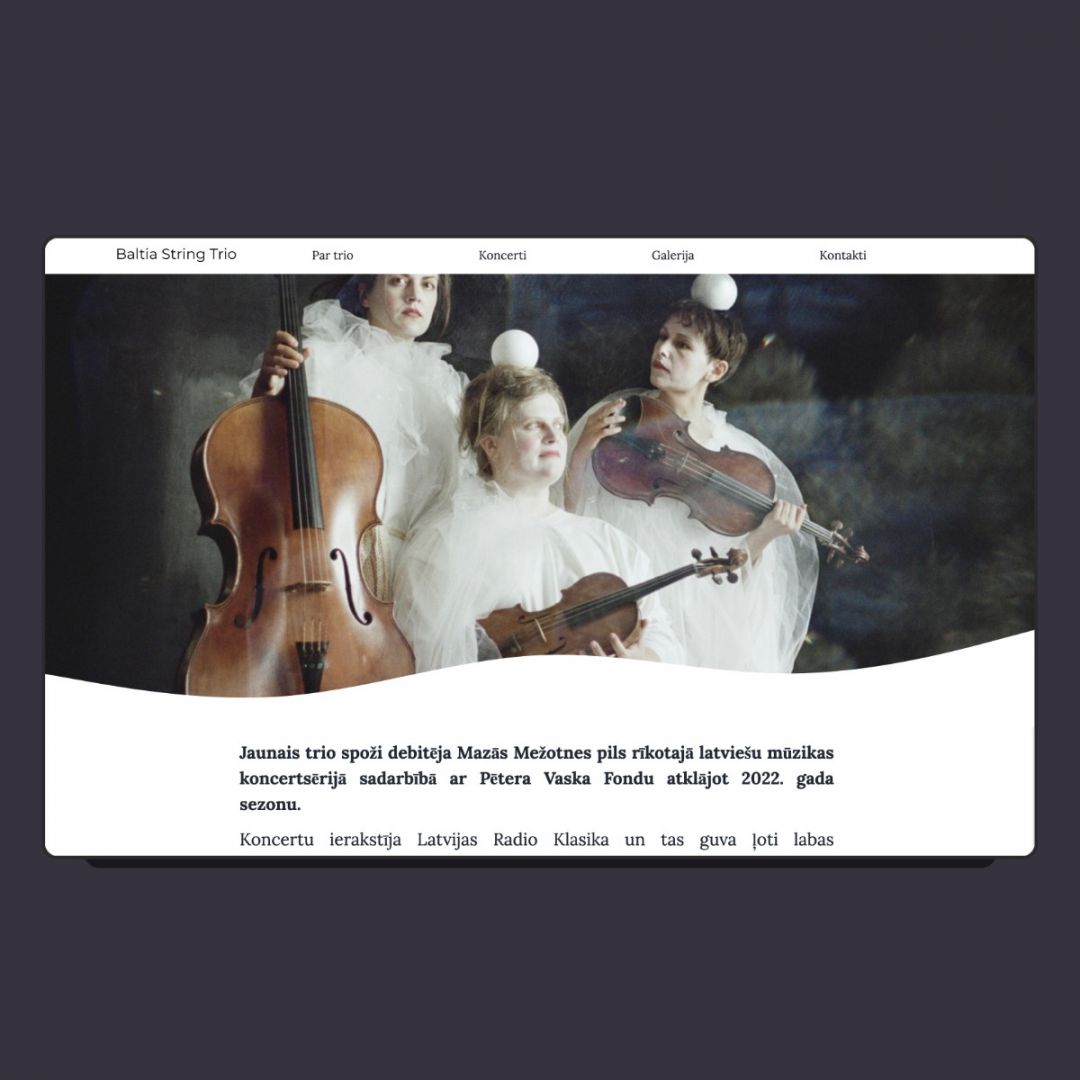
At the beginning of your career
If you are just starting out, you probably do not have a lot of content to share with your audience yet. However, that should not stop you.
To start a website, all you need is your story and a few images.
In its simplest form, a website consists of blocks of text and images. If you have a few nice photos and a resume, you have enough content to create your first website.
The simplest website, a "portfolio" (or "business card") type website, consists of a few elements:
- Home page
- About page
- Contact page
- Social media integration
- Data collection tools and donation, support button
If you already have additional content, you can also create some of the "media" pages.
Do not wait for appearances at major venues or recordings with major labels. Share your upcoming events, audios and videos as soon as you have something to share!
- Watch and listen
- Upcoming events
- Gallery
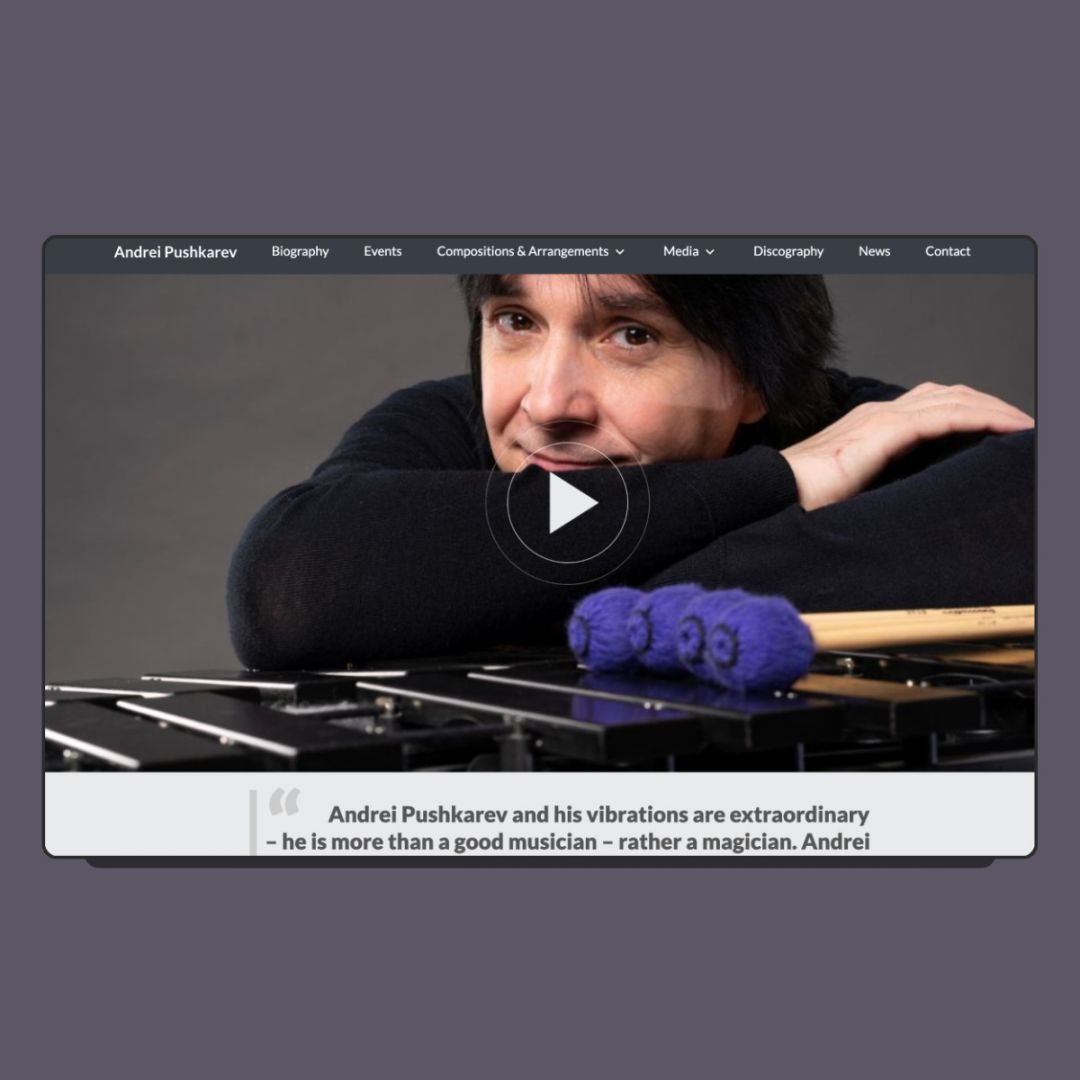
Developing career
As you start doing more concerts in more established venues, you may think that telling your story is no longer your job. You might think that's the job of an agent, concert promoter, music marketing team, PR team, etc.
However, it's more important than ever to control your story and build a strong relationship with your audience.
In addition to the pages and elements described above, you may want to add a few more pages to your website:
- News page
- Blog
- Composition orders, repertoire, arrangements
- Discography
- For press
When creating content on your website, do not think of it as an opportunity for self-promotion. Think about your audience, their interests and preferences.
Do not be afraid or embarrassed to share your thoughts, your stories, your opinions. Your website is a great opportunity to build a strong bond with your audience. As you continue to nurture these relationships, many of your listeners will become "super fans". They will support everything you do by coming to live concerts, buying your music, and donating to your ideas.

Established career
At this point in your career, you may already have a large following. The main goal of your website may be to keep your listeners up to date on news and events, organize information, sell products, generate leads and attract new listeners.
Your website is also the best way to showcase your story and achievements and record all the great things you have done.
Some ideas for the pages and elements you want to have at this time:
- History
- Selected projects and programs
- Artists, ensembles, composers, collaborations
- Team members, supporters, donors
- Festival
This is not a definitive list of pages your site might need, but it's a good start.
How can you make money with a website?
You can start selling music downloads, CDs, tickets and merchandise on your website at any stage of your career. The success of your online store depends on many factors - your career as an artist, your personality, the quality of your online content, the products you sell, and the marketing strategies you use.
If you decide to sell something through your website, you need to treat your website like a business.
The more people visit your website, the greater the chance of getting them interested in your product and eventually making a sale.
Driving traffic from all your social media platforms to your website should be your top priority in all your online efforts. You should produce and share valuable content with your visitors to keep them coming back to your website on a regular basis.
With valuable content, you can collect emails for your email marketing campaigns and user data for targeted social media advertising.
You can sell anything on a website - music downloads, tickets, sheet music, personal and online courses. Running an e-commerce website can be time-consuming and intensive at first. But the more you learn about it, the easier and faster it becomes.
Your website can become a valuable source of income, funding ideas and projects that you care about.
Website vs. social media account
There is no doubt that you should have an active presence on social media platforms. You should actively build a following around your social media accounts. Social media helps you develop your brand, be more visible, reach more people, build relationships and learn more about your target audience.
However, every modern social media platform has its drawbacks:
Reaching a wide audience is expensive. fans
If you publish a post on Facebook today, only about 5.2% of your page's followers will see it (104 people out of 2000 followers). On Instagram, the situation is a bit better: 16% of followers will see your post (320 people out of 2000).
If you are not willing to invest money in social media ads and boosted posts, it will take you a long time to build a strong and engaged following and see return on investment.
You are constantly competing with other content for attention
Most people interact with your content as they scroll through their newsfeed. The message you share might get lost in the flood of information.
Whenever possible, try to share a short snippet of information on your social media to pique curiosity and provide a link to your website to learn more. When someone comes to your website, you have their full attention. This is all about you, and there are no distractions from other accounts and ads.
You can not structure and organize your content effectively
Every social media platform has its own way of structuring content. When users visit your page, they will only see the latest posts, and it is unlikely that they will scroll far away from your latest update. You can organize your site using only the tabs and structures provided by the platform.
On your site, you can set up a separate page for each type of content - discography, music downloads, galleries, blog and news posts, upcoming events, etc. You can organize your most valuable and interesting content so that it is always easy for your audience to find.
A well-organized and structured website is a kind of personal archive. Here you can find all the information you need about yourself and your activities at any point in your career.
You don't own your followers and their data
It takes a lot of time and effort to build a strong and loyal audience on social media. However, you do not own the data, the platform does. Users might find a new platform they prefer and simply leave yours. Also, any social platform might make changes in their algorithm so that fewer people see a post you publish unless you have paid for it.
On your website, the data is yours. Website visitors leave digital footprints that you can later use for targeted advertising. With every subscriber to your newsletter, you have a direct line to them. Whenever you send an email, each subscriber receives it.
This data is yours, and no change in algorithms or policies can change that. The longer your website is online, the more data you collect. You can learn more about your audience, their likes, dislikes, and behaviors, and make informed, data-driven decisions.
You do not know when a new interesting thing will come along
We live in the age of social media. However, you never know when a new platform will pop up and steal your followers or even destroy a platform you rely on today.
Websites have been around as long as the internet itself, and they will continue to be around. Sure, every few years web design and digital marketing trends change. But one thing is certain: websites are here to stay.
How much does a website cost?
Now that we know that a website is essential, let us see how much it would cost to have and maintain one.
Can I get a website for free?
The short answer is no. There are many free options, but starting with a free website is most likely a waste of time and, in the long run, money.
The cost of your website will depend on the platform you choose.
Wordpress
Wordpress is a CMS (Content Management System) that allows you to create a page using website templates and plugins.
The cost ranges from 50 EUR/year for a very simple website to 300 EUR/year for a website that has an ecommerce feature.
While a simple website is possible, you will most likely need to install some plugins to get the functionality you need. Expect to spend between 100-150 EUR/year for your music website.
Wix
Wix is a drag-and-drop website builder that allows even the most technically inexperienced users to create their own websites.
A basic website costs between 192 EUR/year and 260 EUR/year. If you want the functionality of an online store, it costs between 320 EUR/year and 380 EUR/year.
Squarespace
Squarespace is a website builder that uses templates and drag-and-drop functionality to create and edit websites. It requires no technical knowledge to create a functional website.
Squarespace costs between 192 and 276 EUR/year for a basic website or 324 to 588 EUR/year for a website with online store functionality.
Custom built website
Having a professional website created by a developer or agency is the best solution if you are serious about your music career. You will have to pay upfront for your website, but you will save money in the long run because you will not have to pay for platform fees, additional features and sales commissions.
You only have to pay for the domain name and web hosting, which costs between 30-50 EUR/year. Website development by a professional web designer costs between 500 and 2000 EUR once.
How to create a musician website?
There are many different options and platforms that can be used to create websites.
For musicians, there are mainly 3 ways to create a good and affordable website:
- Create a website with a WordPress template.
- Create a website with drag-and-drop website builders such as Squarespace or Wix.
- Hire a professional web designer to build a custom website
While it's certainly possible to create a website yourself using a template or site builder, it's usually only worth it for "business card" or "portfolio" type websites. Even when using the best website builder, it is usually cumbersome and confusing to update upcoming events, discography, music downloads. The result is often a website whose content is rarely updated.
If you want a usable website that serves your goals and is easy to use, you should always hire a developer to create it for you.
How to create a music website with WordPress?
Creating a website with WordPress requires some technical knowledge.
You'll need to buy a domain name and hosting, choose a template and edit it to meet your requirements. You may also need to add various plugins that will give your website additional functionality.
This process is time-consuming and requires certain knowledge, but there are many courses and tutorials on the Internet that will answer most of your questions.
Creating a WordPress website always involves upfront costs. But even if you have to buy a template and a few plugins, it's still a cheaper option in the long run than website builders like Wix and Squarespace. This is what makes it the best website builder for musicians if you decide to make a website on your own.
Check out our guide to learn how to create a musician website with WordPress.
How to create Wix music website?
There are two ways to create a website with Wix Page Builder.
If you want to create your website quickly and upload only some photos and texts, you can use Wix's ADI (Artificial Design Intelligence).
ADI will guide you through a series of questions and ask you to choose the site layout, fonts and colors, edit your images and text content, etc.
To have more control over the design and functionality of your website, you need to learn how to use the Wix editor.
You'll start with one of the website templates you have selected, and then you'll have to edit it manually using a drag-and-drop website builder.
How to create a music website on Squarespace?
To create a website using the Squarespace website builder, you need to select a template and then go through the process of adding pages, choosing layouts, colors, fonts, adding content, website information and configuring settings.
There is a lot of information on the Internet about how to create websites with Squarespace. You can definitely do it yourself, although it requires time, patience and some skill.
A simple template will provide you with only the basic features. To make your website more useful for users and easier for you to update, you need to install (often paid) extensions on your website.
How to create a custom artist website?
To create a custom website, you need to hire a freelancer or a web design agency.
When you order a fully custom design, the designer will create a draft of your website, discuss it with you, take notes and revise it until you are completely satisfied. Then the developer will turn a graphic design into a fully functional website.
This is the best way to create a website, but in most cases it is not necessary and too expensive for musicians.
Your website can also be developed based on a template that can be fully customized and tailored to your needs. This is often a much faster and cheaper option.
It's always a good idea to look for an agency or freelancer that specializes in music websites. They know how to organize your content and have a number of pre-built solutions for most requirements. This will significantly reduce the development time and thus the development costs.
The price of your website will depend on the design, functionality and the type of pages you need. With us you can get a custom website starting from 500 EUR.
Is it worth creating a website yourself?
It is possible to create a good looking website yourself. There are many instructions on the Internet that you can follow to create your page on various platforms.
However, the functionality of your pages will be rather basic. I can only recommend creating this type of website as a brochure or electronic press kit.
Deveoping a custom website with a profesional web designer will cost you more upfront but will save you time and money in the long run.
For example, you might like to use Wix as a musician website builder.
A starting price on this platform is 16 EUR/month for a simple website. You will most likely have your website for as long as you do music. Every 5 years you will spend 960 EUR just paying your monthly fees.
You can get a custom website from us for 500 EUR one-time fee. Then you pay 100 EUR/year for support and maintenance of your website. So in 5 years you spend 1000 EUR for a customized, fully functional website and a web development team that is always there when you have a question.
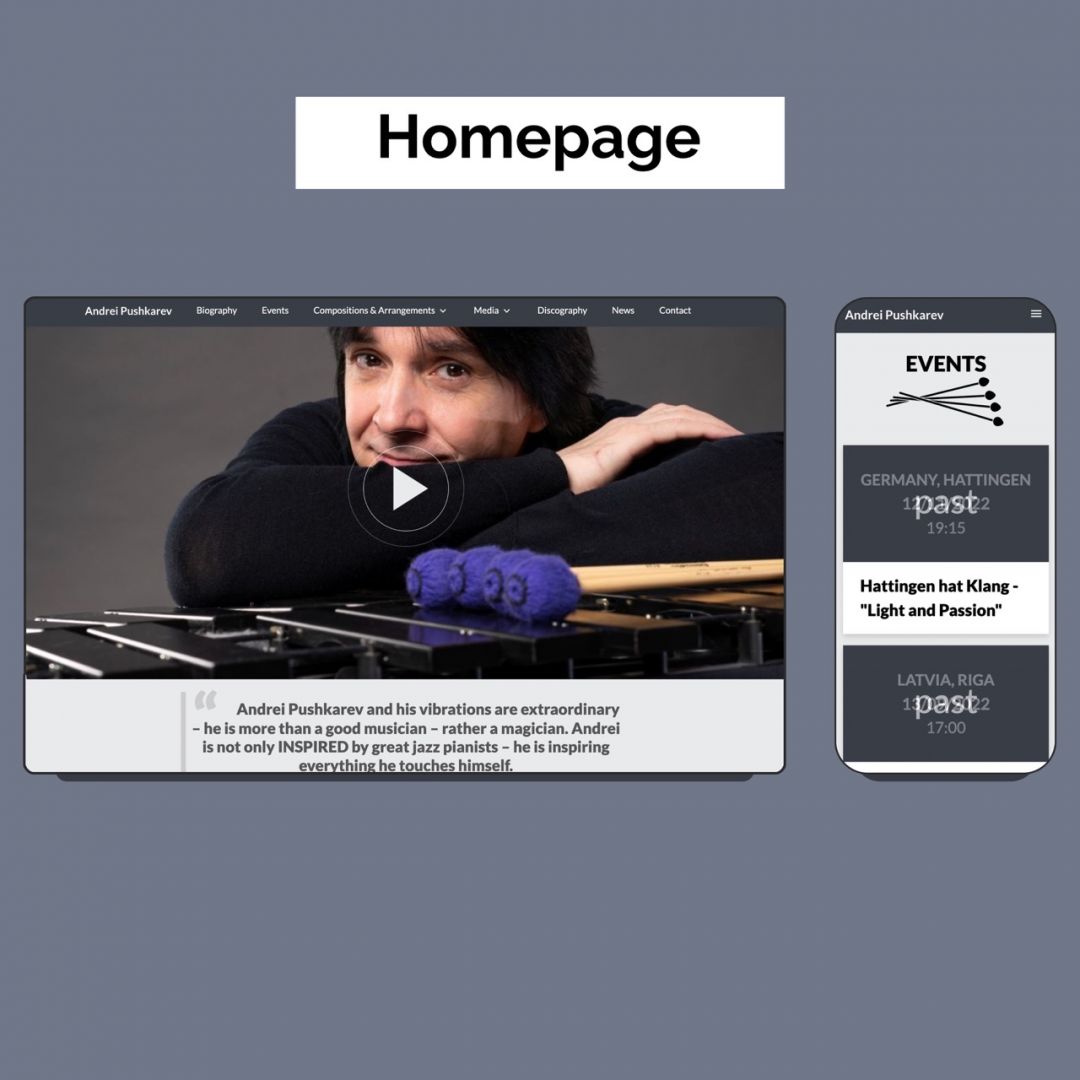
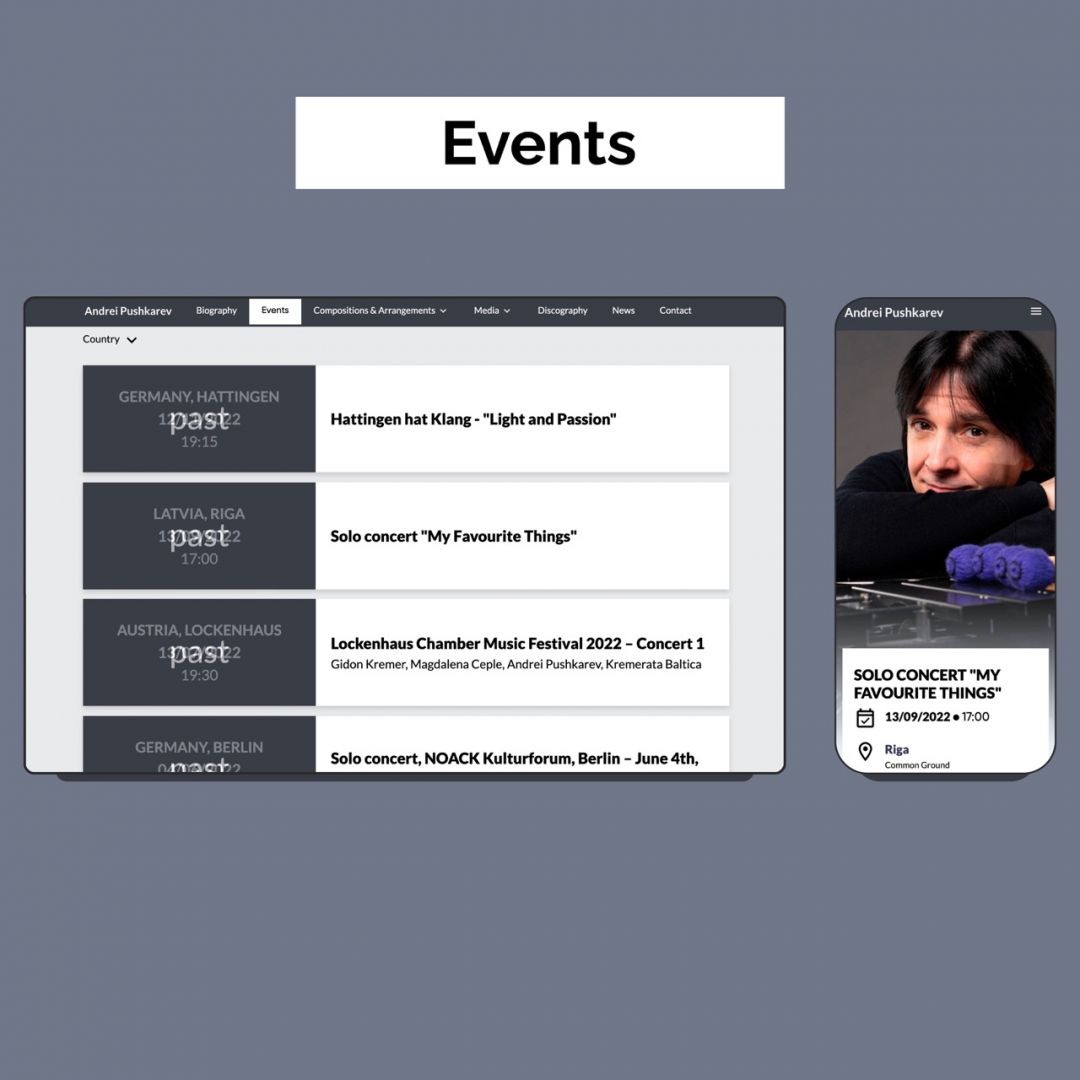
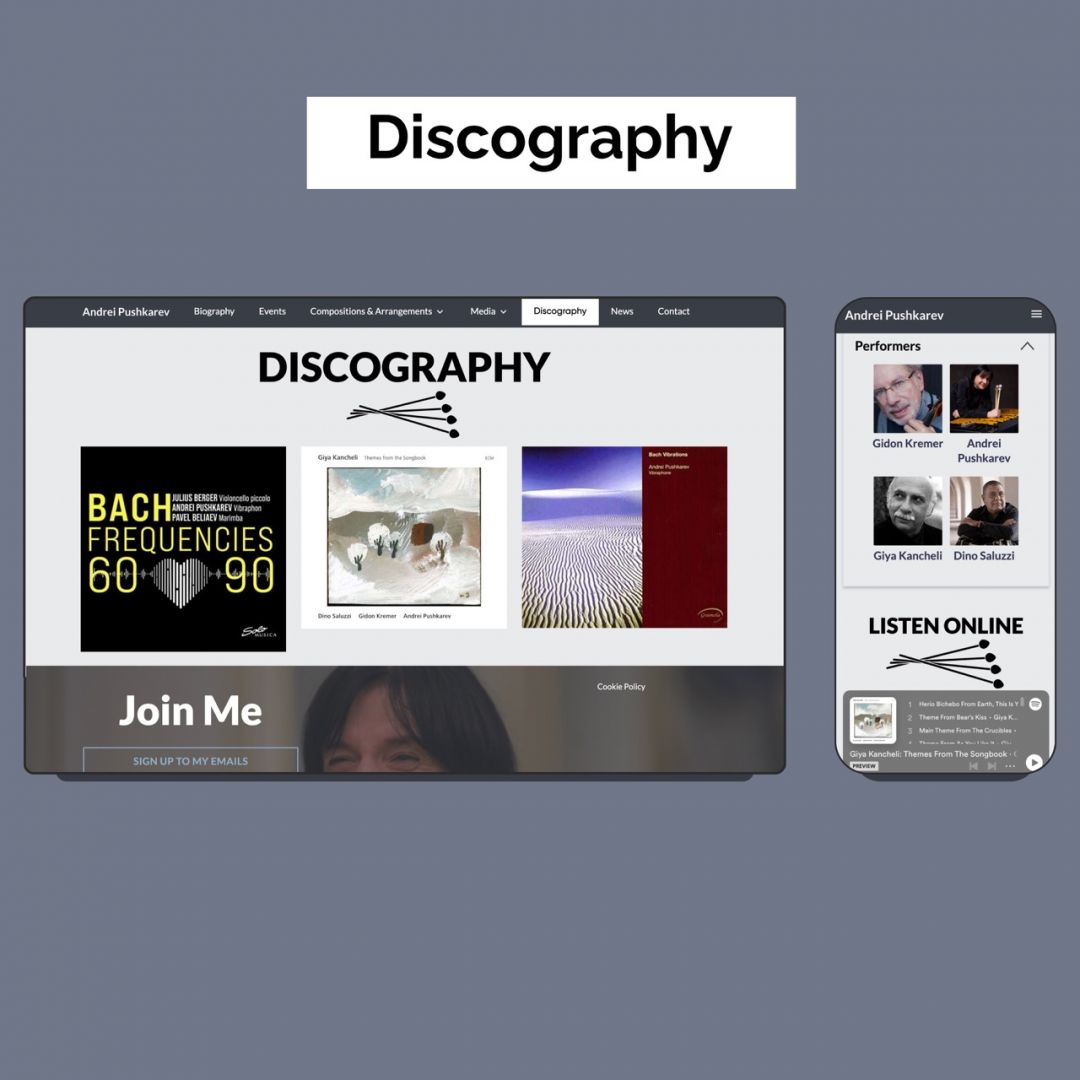
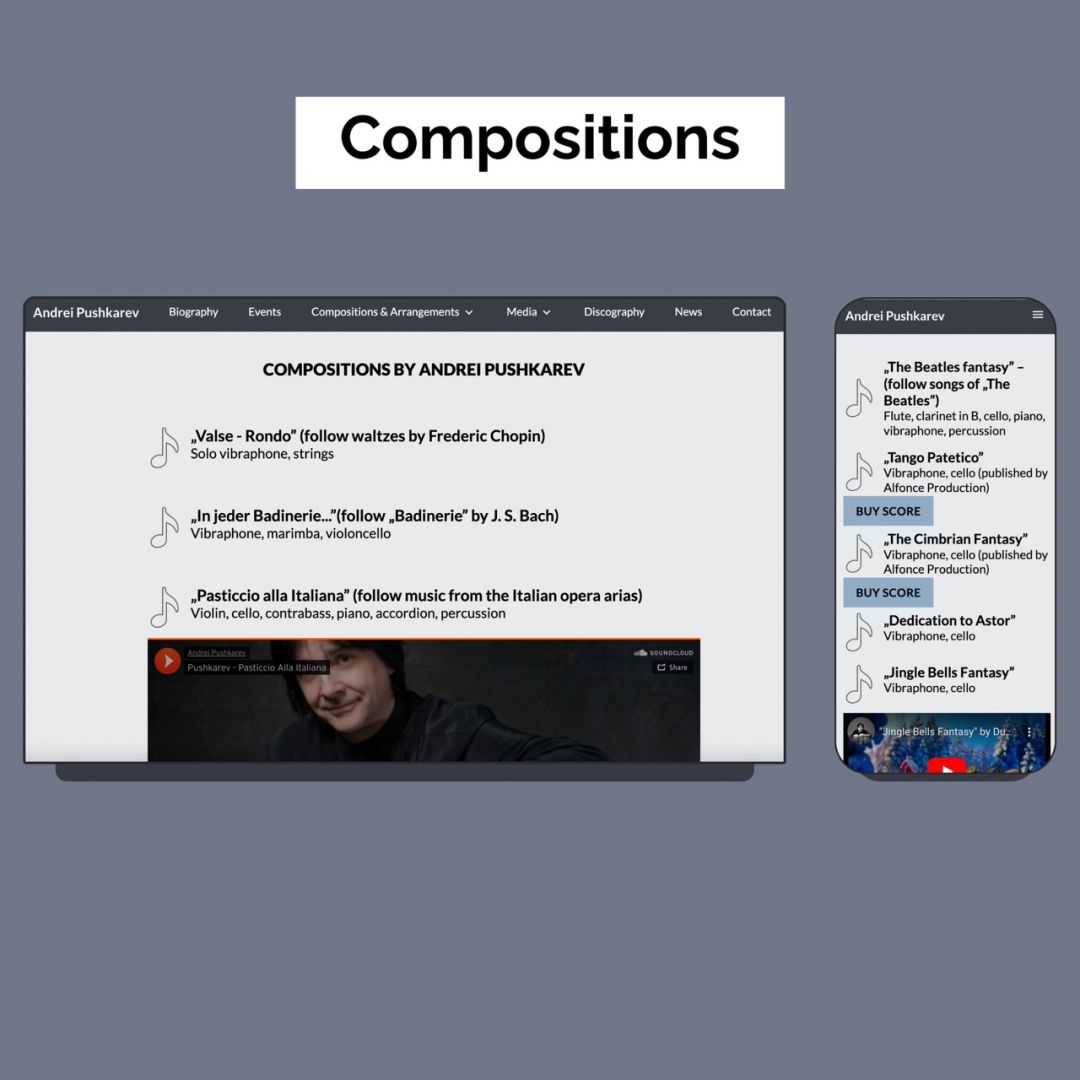
What are the "must have" pages of a music website?
Whether you choose to build a website yourself or hire a professional to do it for you, here is a quick guide to the pages you should have on your website.
Home page
The first page visitors see when they land on your website. They should be greeted with a nice image, clear navigation and the most important information (short "About" section, upcoming events, latest news, audio downloads).
About page
A page with a short bio and a few photos that tell your story
Contact page
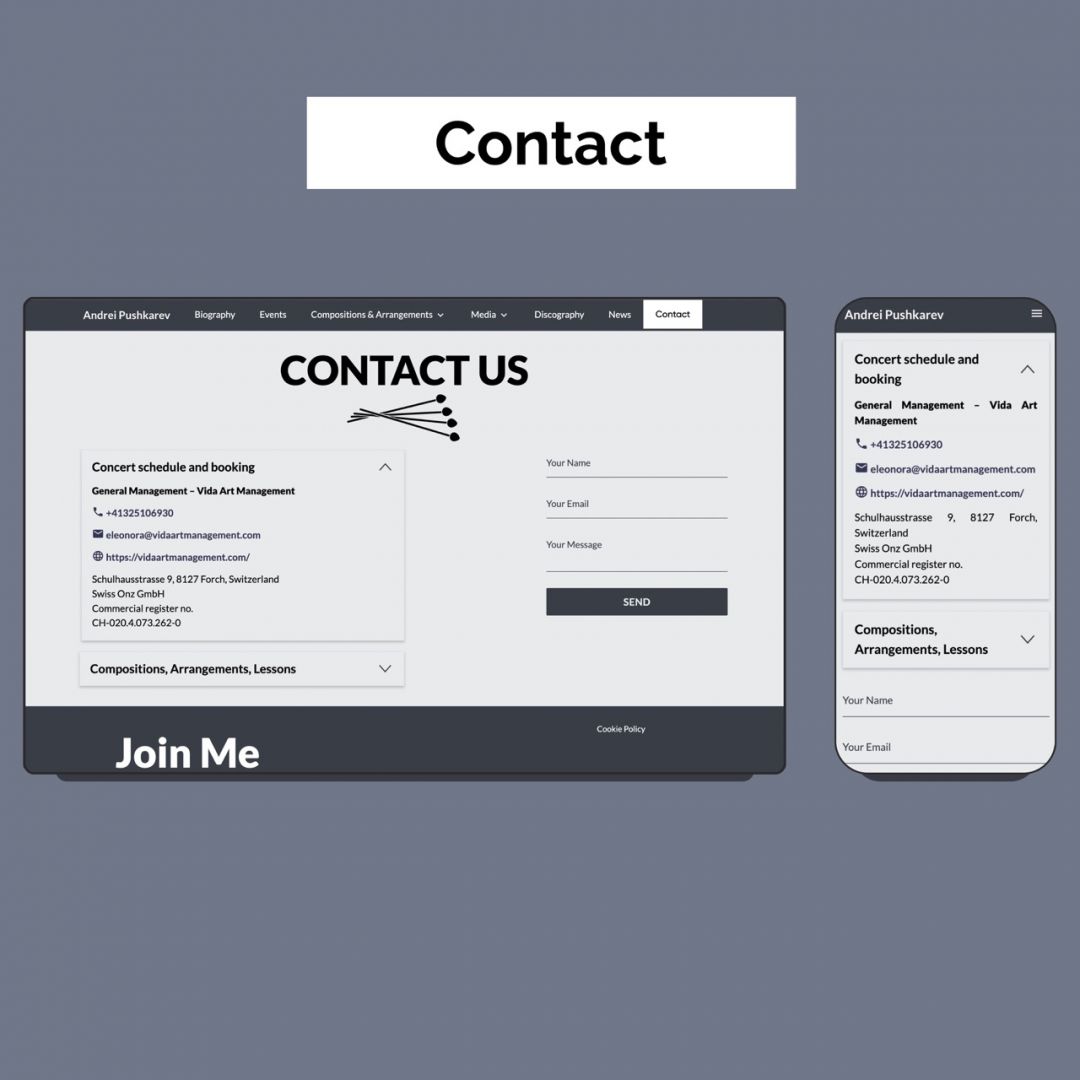
A way to get in touch with you - directly by email or via a contact form.
Watch and listen
Share audios and videos of your performance here. You do not always need a professional studio recording to impress your audience. A good quality zoom recording is often enough.
Make sure you website has a convenient music player.
Even if you do not have your own content yet, you can always share links to YouTube, Soundcloud, Spotify, Apple Music and every other platform where people can listen to your music online.
Upcoming events
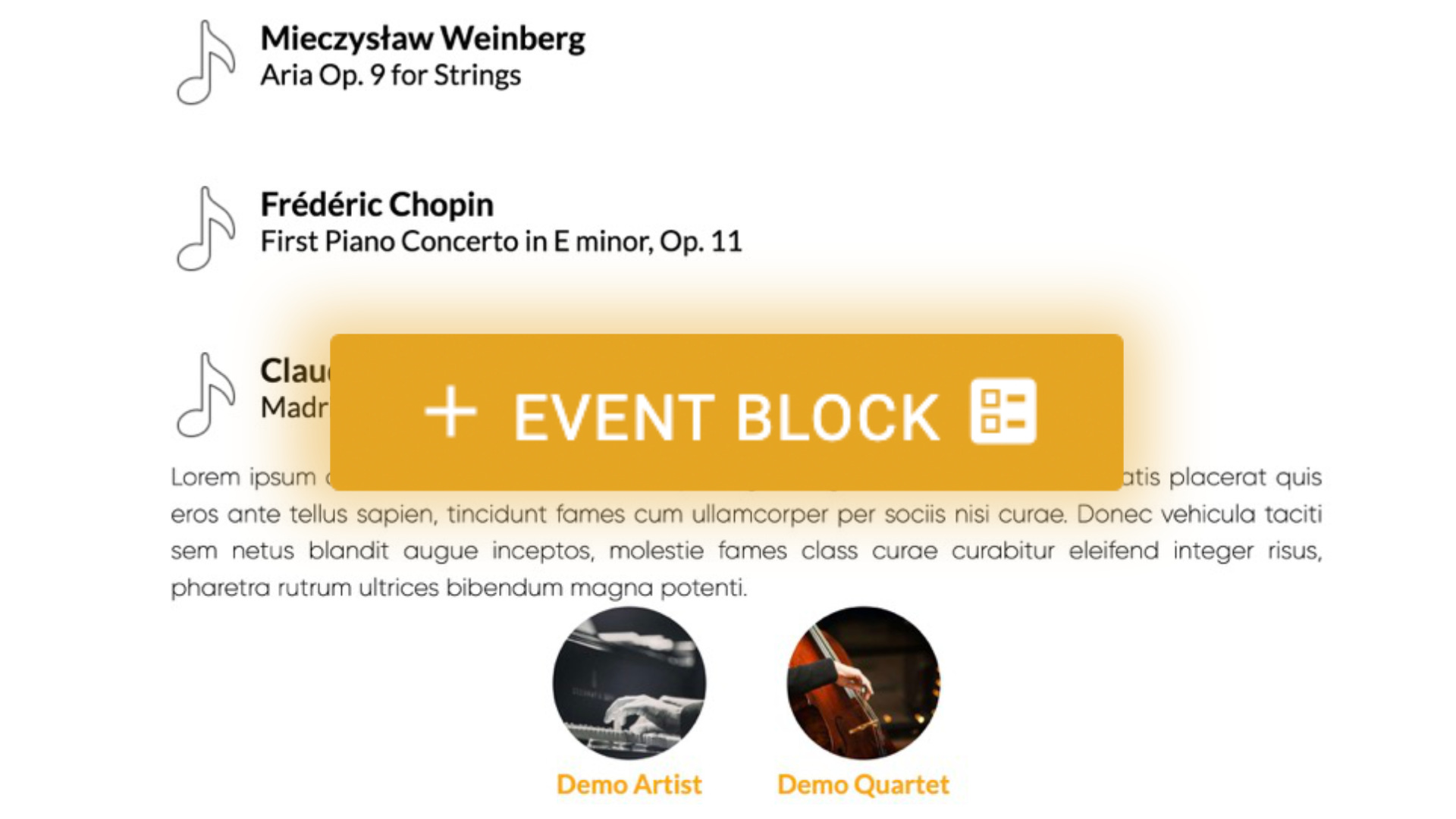
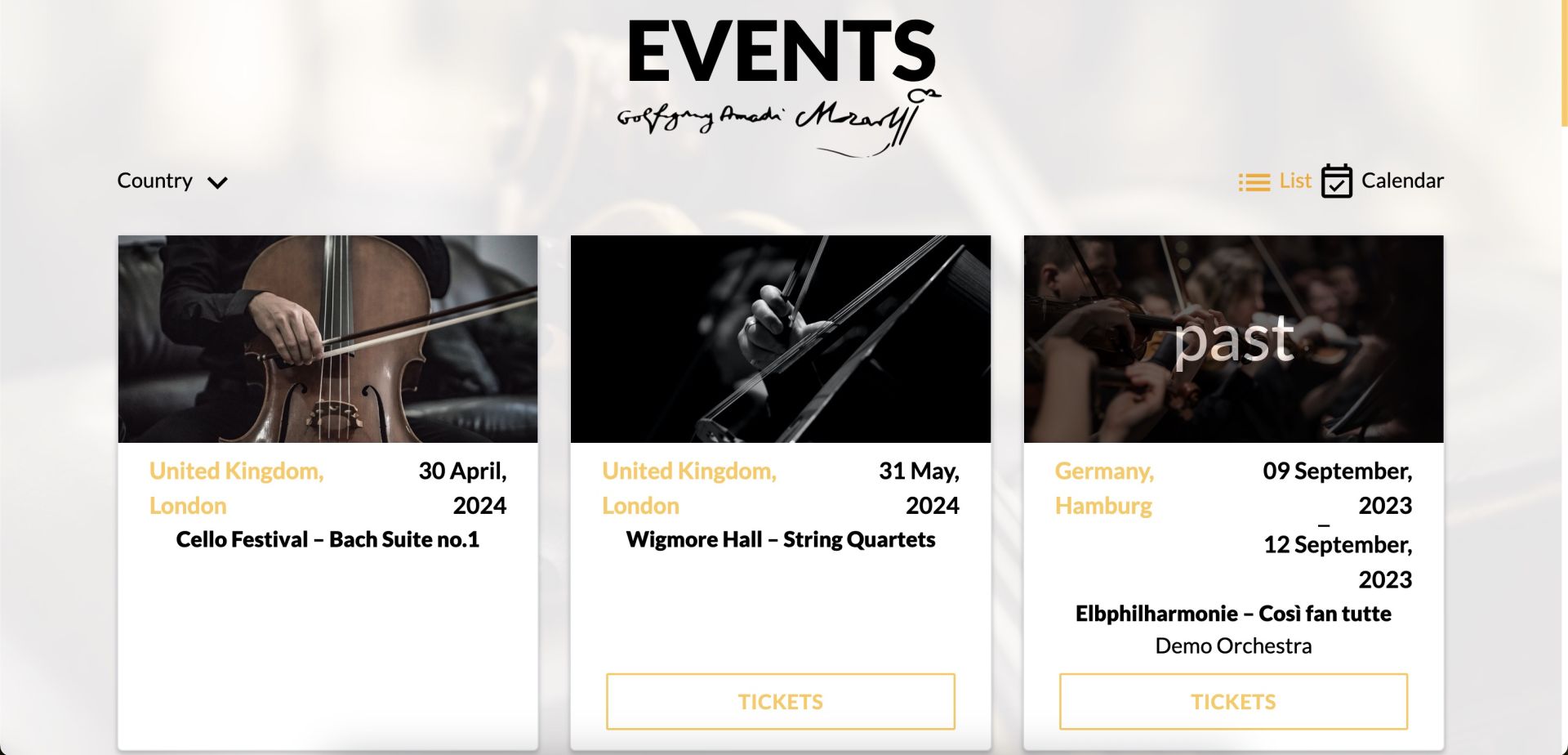
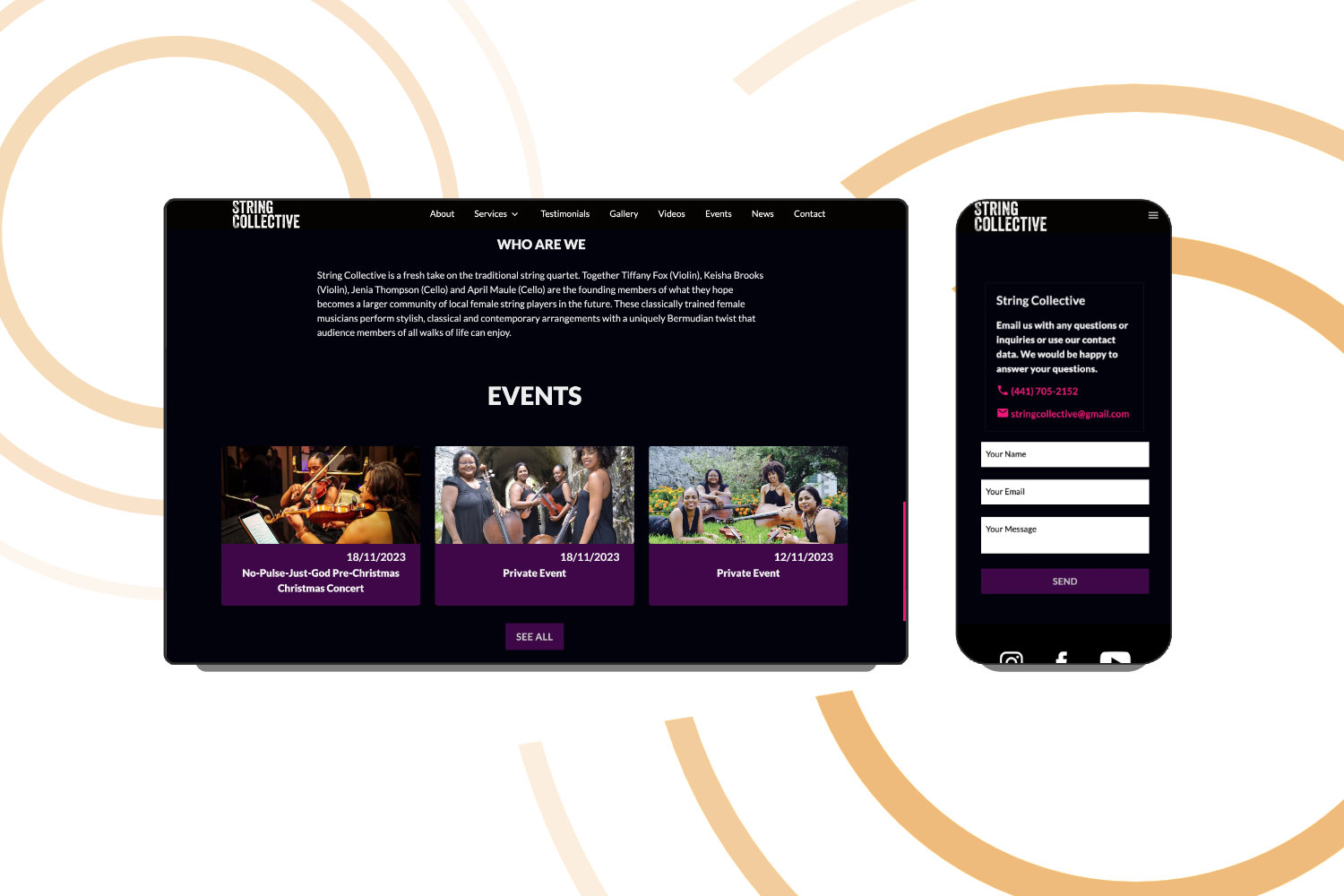
A page where you display your upcoming events. This can be as simple as listing the date, time and venue or as serious as listing the artists performing, concert schedule and program notes for each event. Do not think you do not have enough information to share here. At the beginning of your journey, you should indicate each event where you will be on stage - whether as a soloist or as part of a group.
Gallery
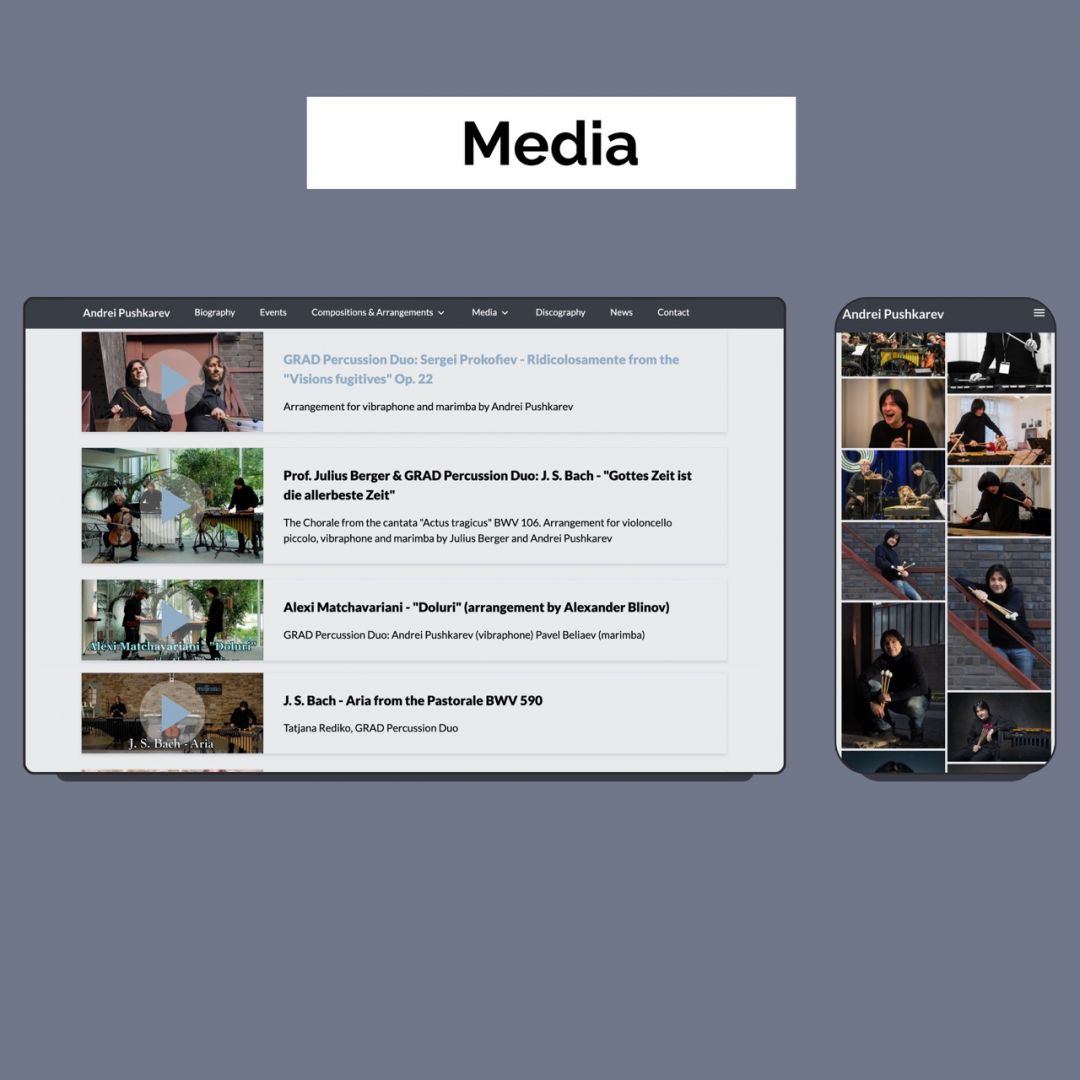
Many musician websites have a gallery with their portraits. While this feature is important, I think you would be better off using the gallery to show photos from your various events and performances. This way you can better tell about your life on and off stage and provide interesting content for visitors to browse.
News page
Share your upcoming concerts, projects and tours to draw more attention to your performances.
Blog
Every musician has something to say about the music they play. Whether you are performing your own music or that of other composers, people would love to hear your thoughts on these pieces and how you work. When you write online articles, you have a great chance of being discovered by others when they search for information you write about. Learn more in our article on content marketing for musicians.
Commissioned works, repertoire, arrangements.
If you have pieces that have been dedicated to you or your ensemble, you should create a special page to showcase them. You can also simply create a list of your concert programs to interest potential concert organizers and promoters.
Discography
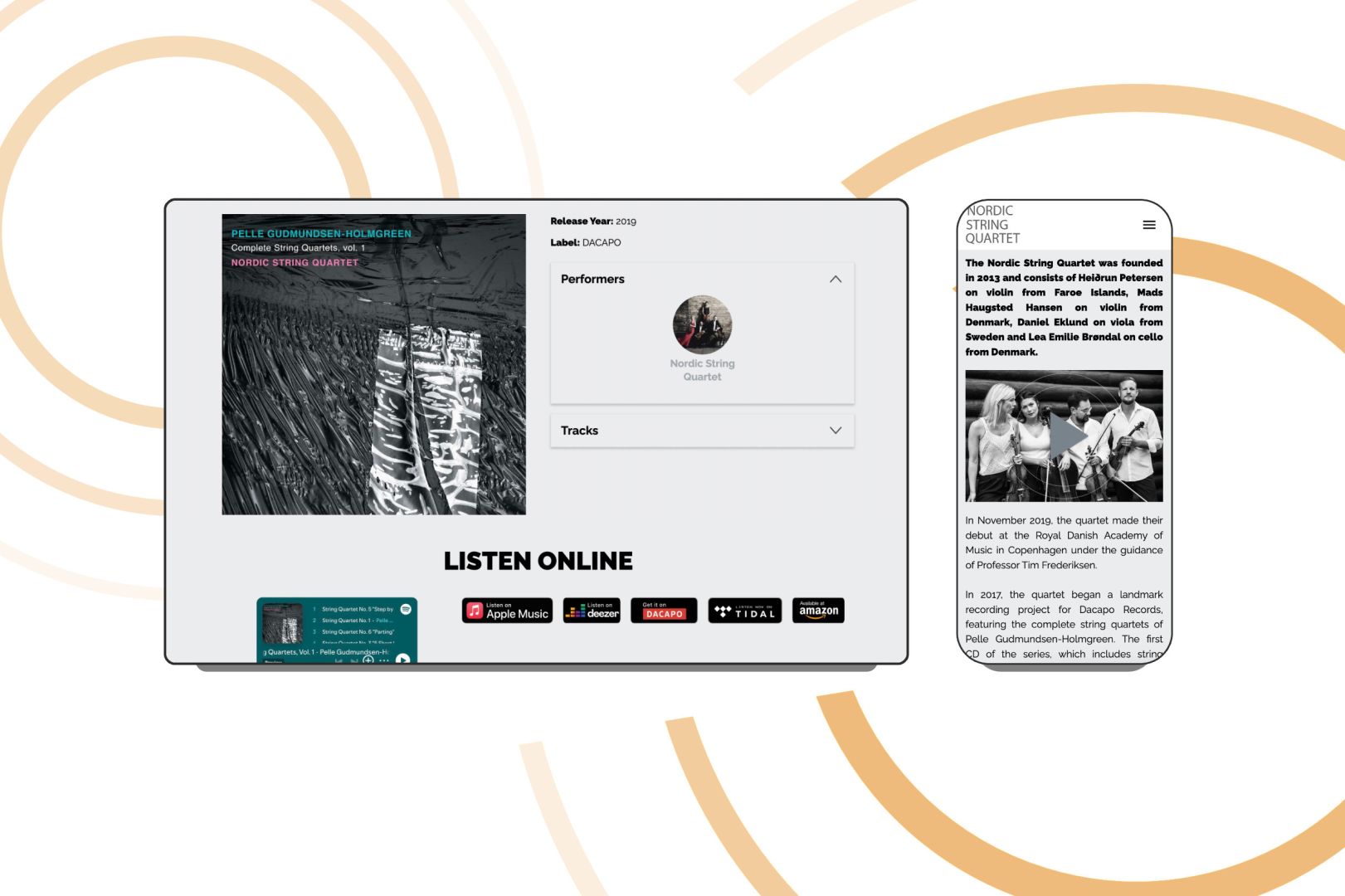
If you have a CD, it is important to show it on your website and provide links to all streaming platforms and online stores where people can listen to and buy your music.
For the press
Make it easy for music industry professionals to write and cover you. Include your short and long bios, photos, press releases and anything else worth talking about here. This is an important tool in your music marketing and music PR strategy.
History
You can write a story here about yourself or your group from the beginning to this moment. Include pictures from your archives, some old concert programs and the most memorable stories and anecdotes.
Selected projects and programs
There will always be concert programs, events and collaborations that you are particularly proud of. Create a separate page for each of these events and programs to showcase your work.
Artists, Ensembles, Composers, Collaborations
During our concert career, we perform with many outstanding artists and personalities. Create a page to showcase your most interesting and significant encounters.
Team members, supporters, donors
Whether you need a website for a soloist, ensemble, orchestra or choir, there will always be people to help and support you. Create a special page to thank these people and show your appreciation for their support.
Festivals
Have you started your own festival? Or have you been a frequent guest at other festivals? Share your programs, interesting stories and images from those festivals. Tell people why you enjoyed being a part of that festival and what makes them special. Do you have some recordings online of those festivals - include all the links here!
Online store
A site where you can showcase your products and process payments.
Links to social media
Add links to your social media profiles here.
Data collection tools
Newsletter signup form, Google Analytics, and Facebook Pixel. Start collecting data as soon as possible. You never know when you'll need to promote your next gig or do your next crowdfunding CD.
Donate and support button
There are many audience members who love to support artists. Give them an easy way to do so by setting up a donate button on your website where they can donate money to support your project with just a few clicks.
You do not have to create all the pages from scratch. Create pages for which you have content (Home Page, About Us, Current Events, and Contact Us) and add more pages as you need them.
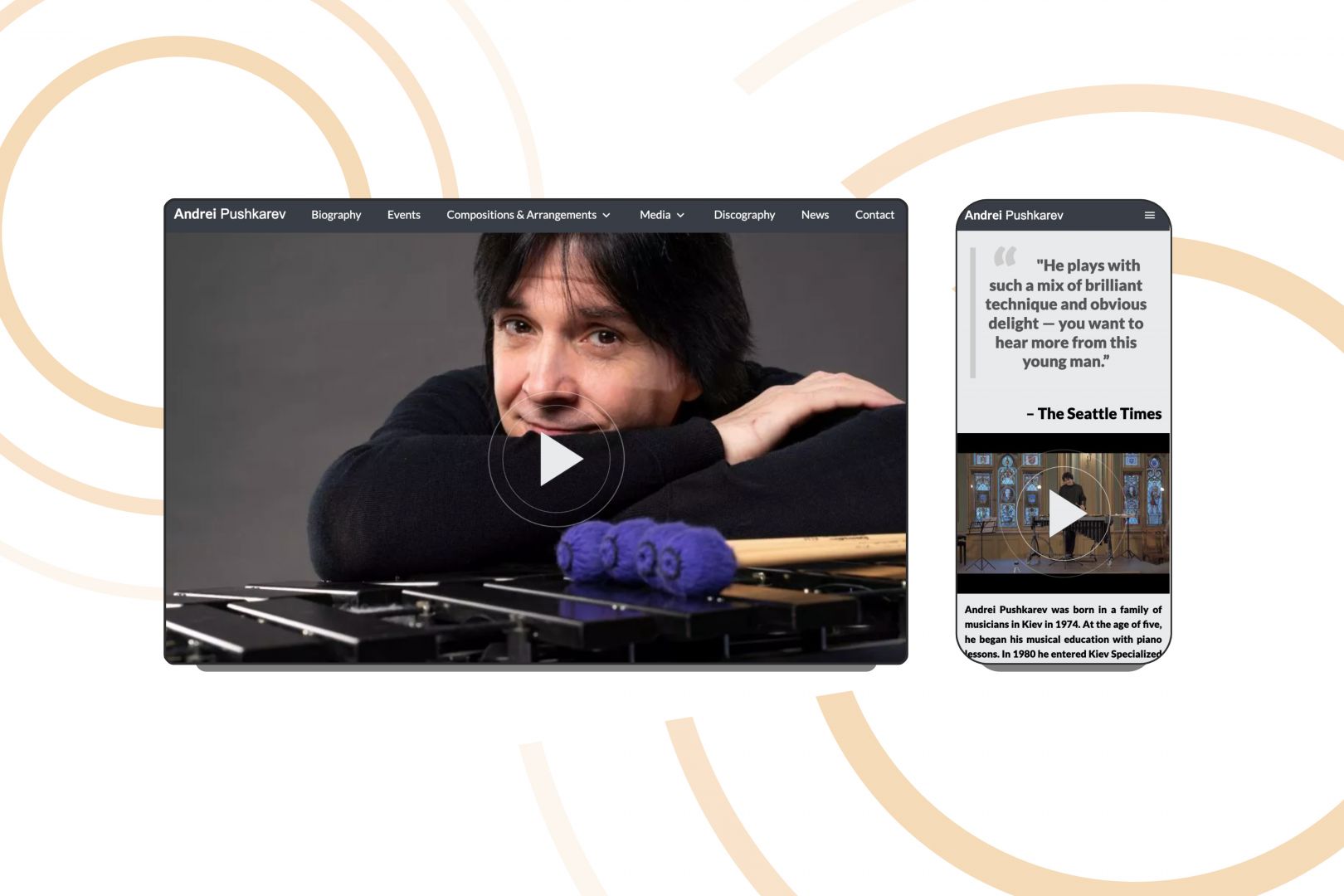
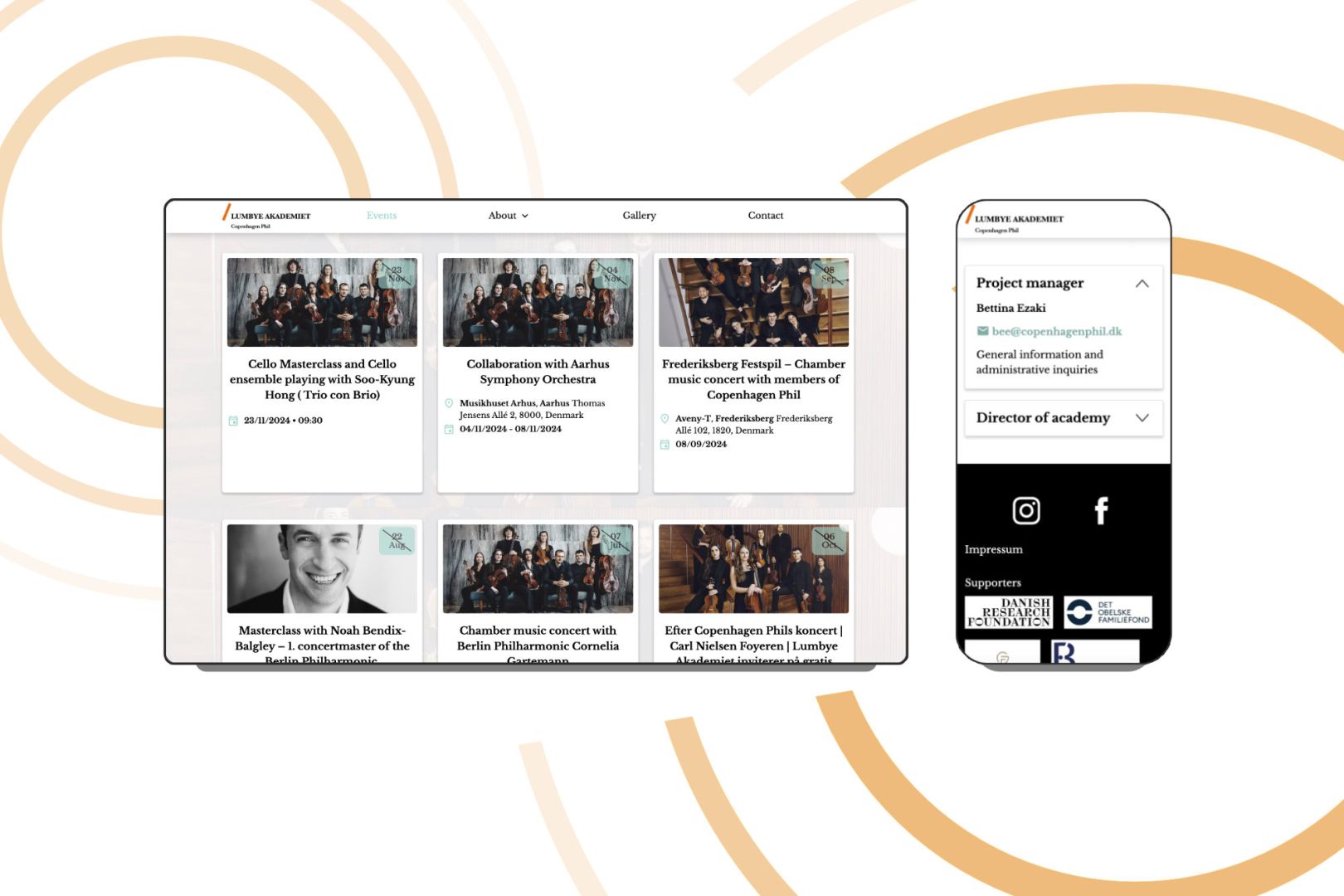
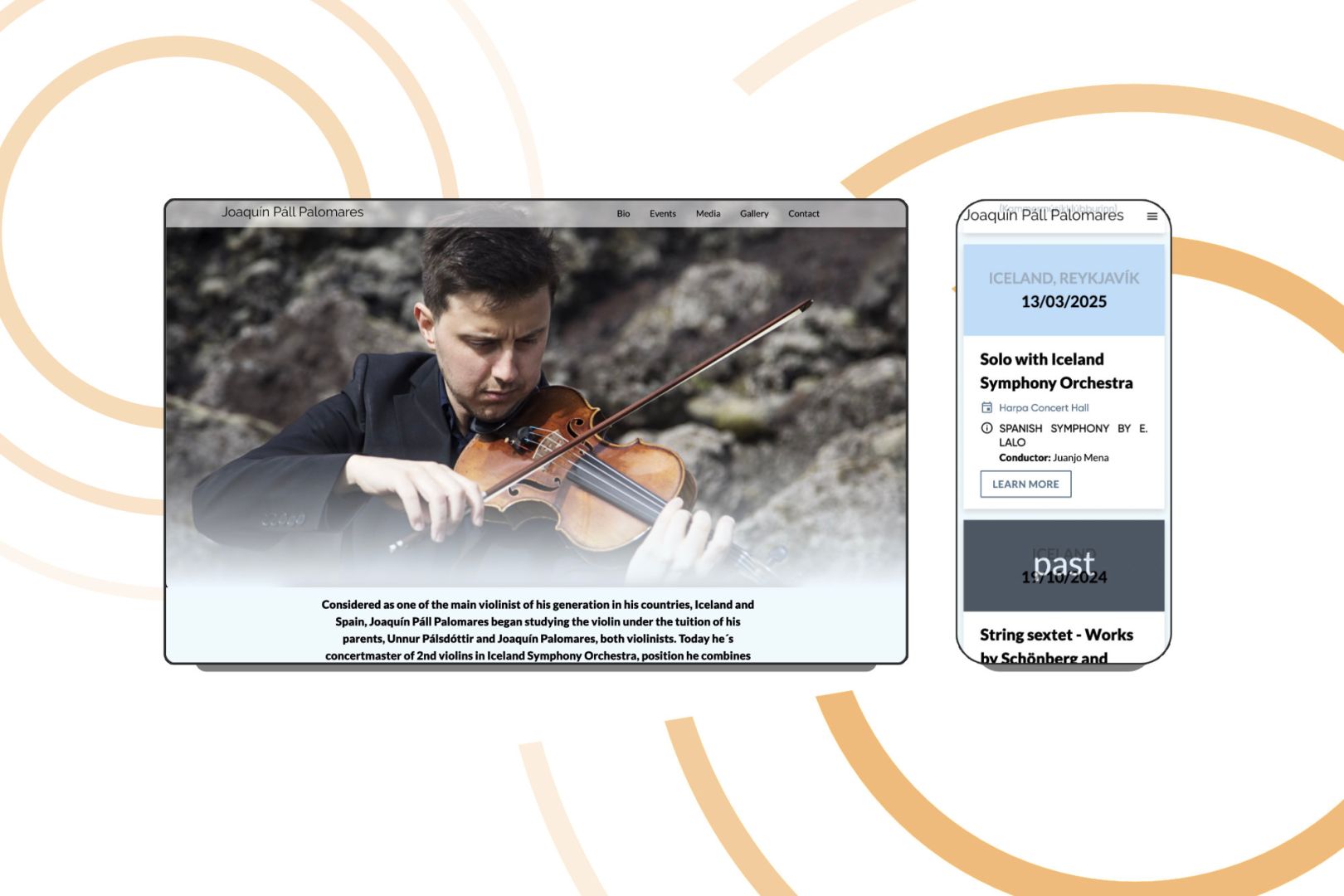
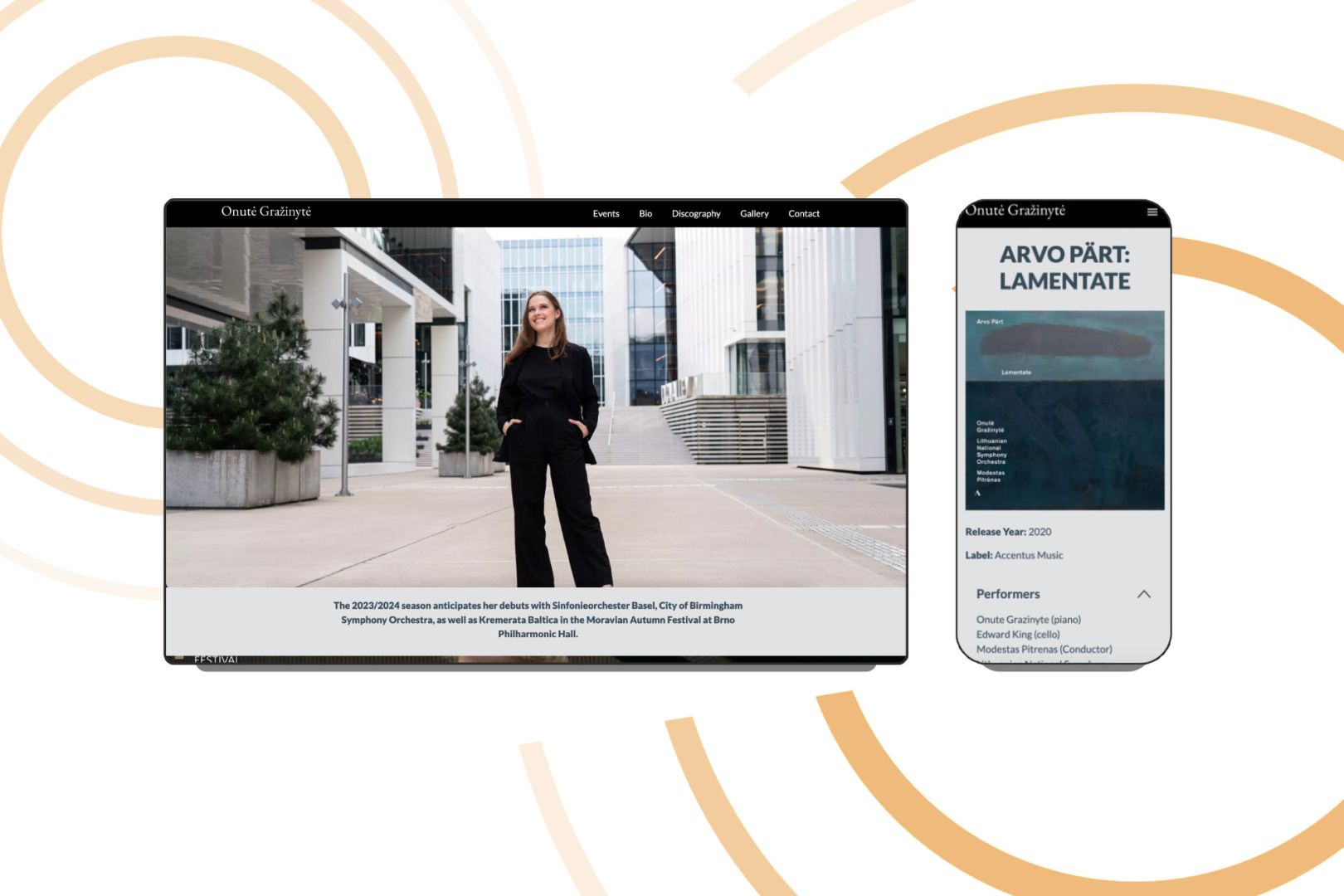
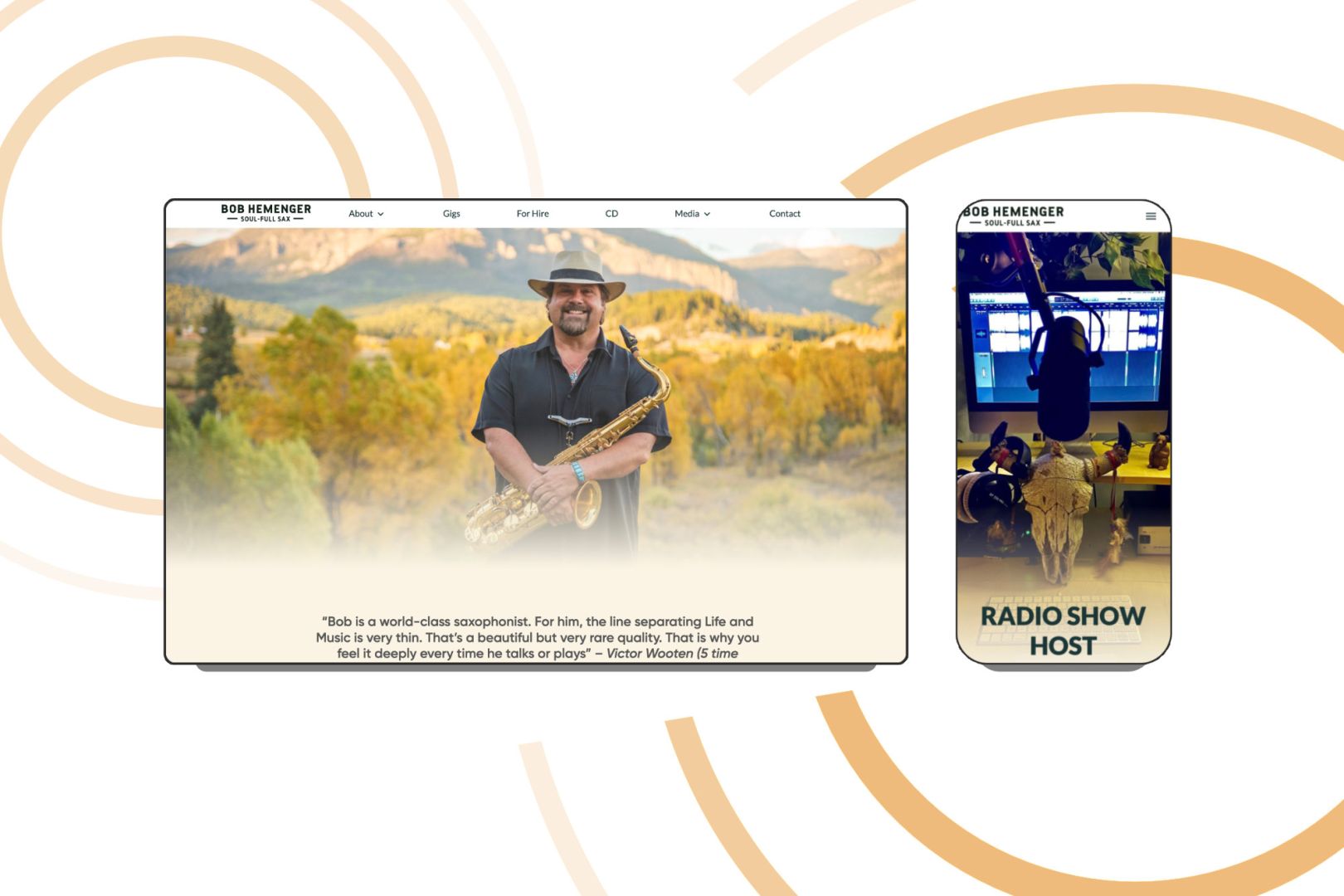
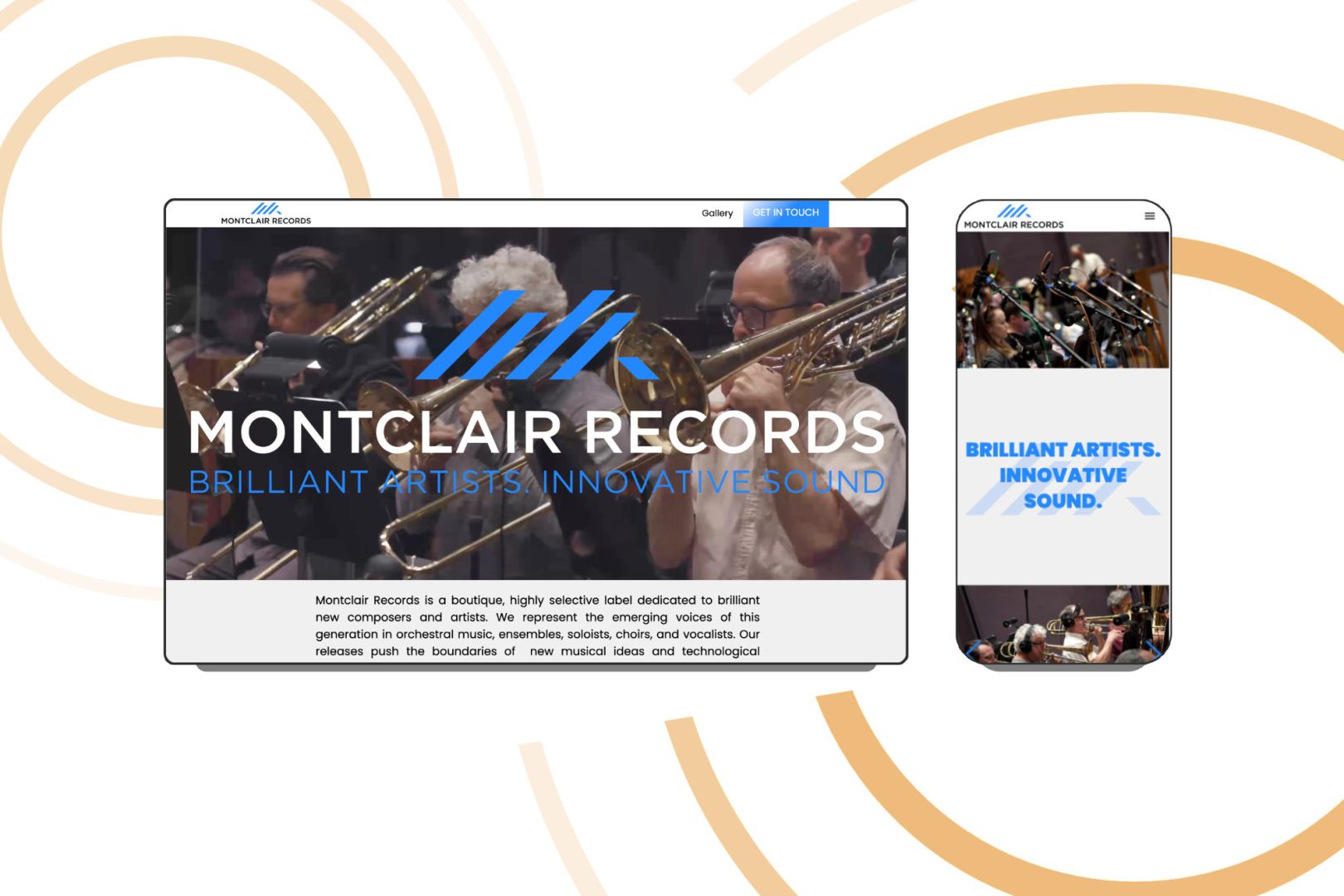
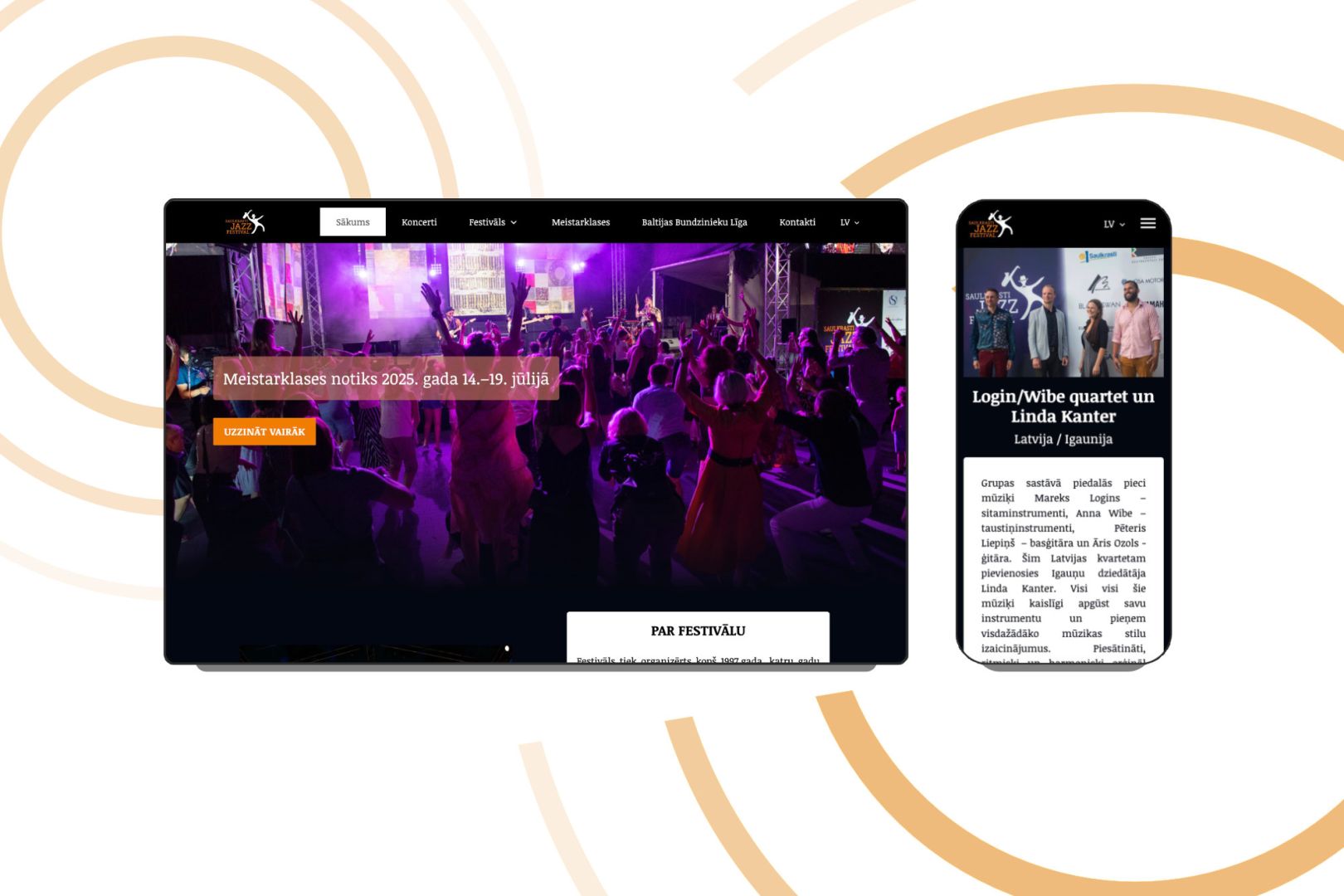
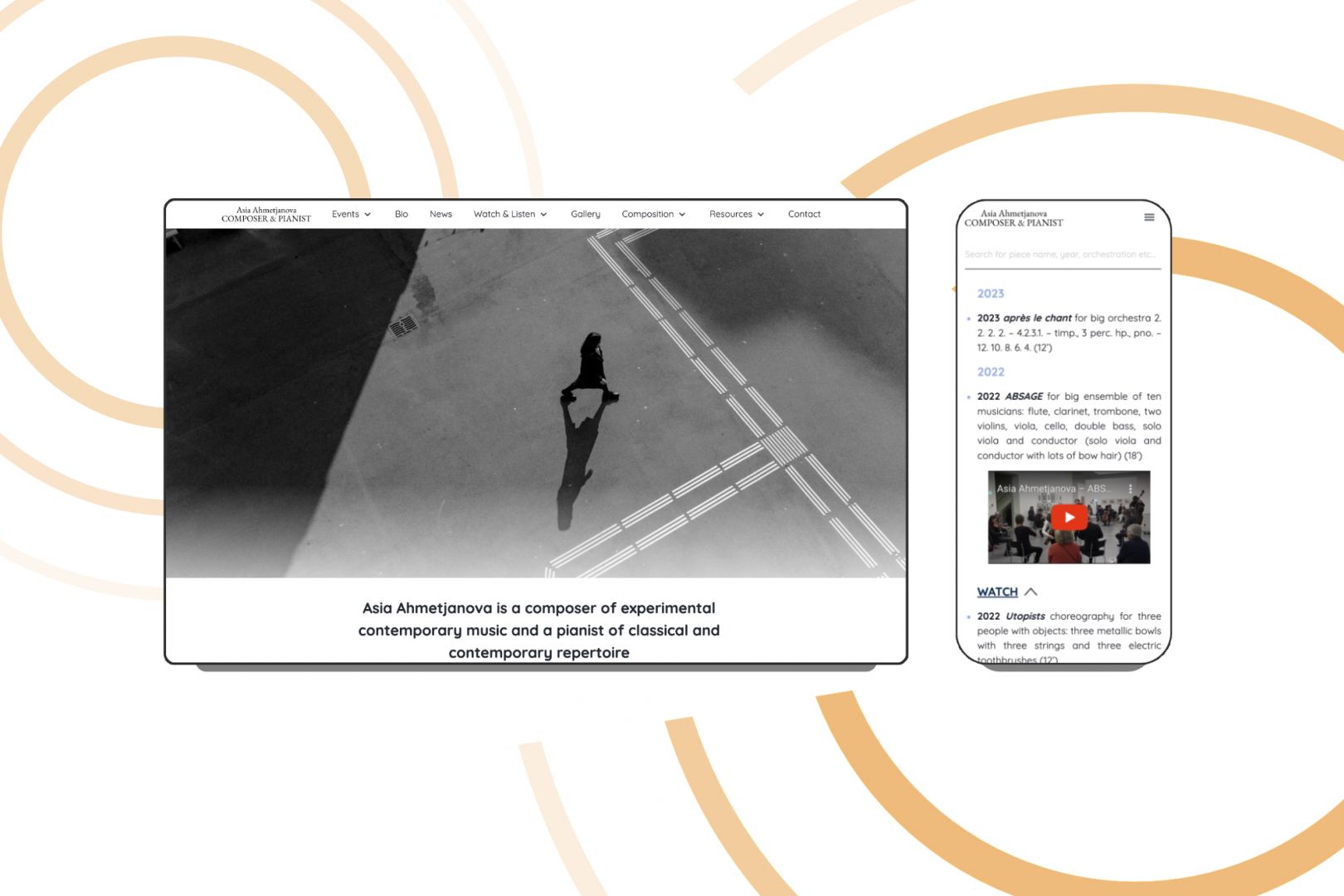
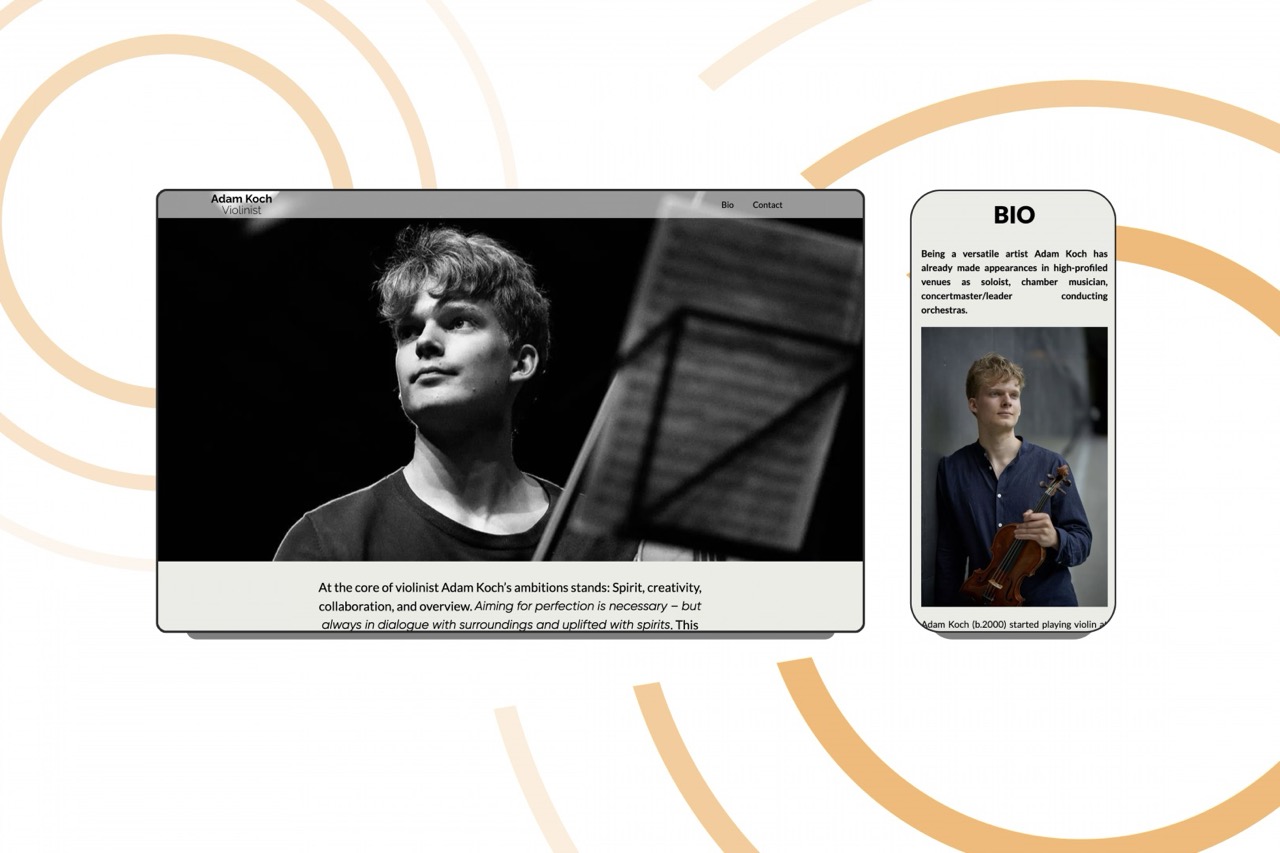
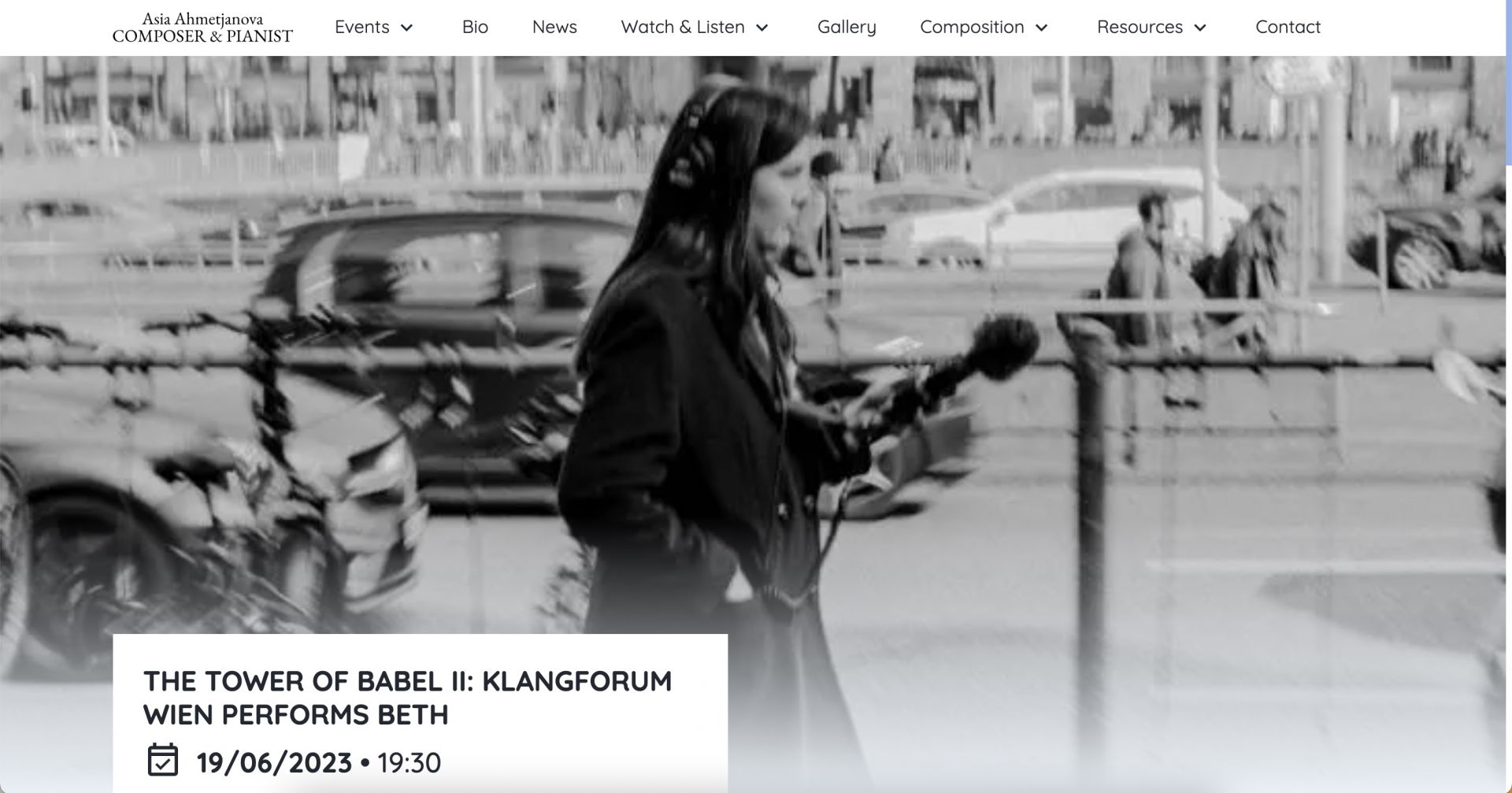
Musician websites inspiration and examples
Every good website, whether you build it by yourself or hire a professional to do it, starts with research.
You should browse the web looking for ideas and inspirations from the websites that are already out there.
Create a list with the links to the pages you like and notes on what exactly you liked on each page. Be detailed when doing this work and write notes in depth. This research will become a valuable guide in your website creation process.
Check our portfolio to look for inspiration!
Conclusion
In today's world that becomes more and more digital it is more more important than ever to have a strong online presence. While it is simple to be active on social media it is not enough to make a difference in your life.
To have a successful digital marketing and PR strategies you must have a website.
Your website can help you build credibility, establish trust and develop a great brand. It can help you build a relationship with your listeners and develop a loyal following.
Your website is your personal concert hall in a digital environment. It is a concert hall where you own the programming and message. Every artist has something important to say and your website is a platform which amplifies and transmits your message 24/7 all around the world.